QR codes have become a familiar part of the restaurant industry, but understanding how QR codes work for restaurants goes beyond replacing paper menus. When used thoughtfully, they connect the physical dining room with digital systems that support ordering, payments, feedback, and customer relationships.
This article explains, in practical terms, how QR codes work in restaurants when implemented with QRCodeKIT, focusing on real workflows rather than theory. The goal is to help restaurant owners and operators understand what happens behind the scan, what problems QR codes actually solve, and where their limits are.
How QR codes work for restaurants at the table
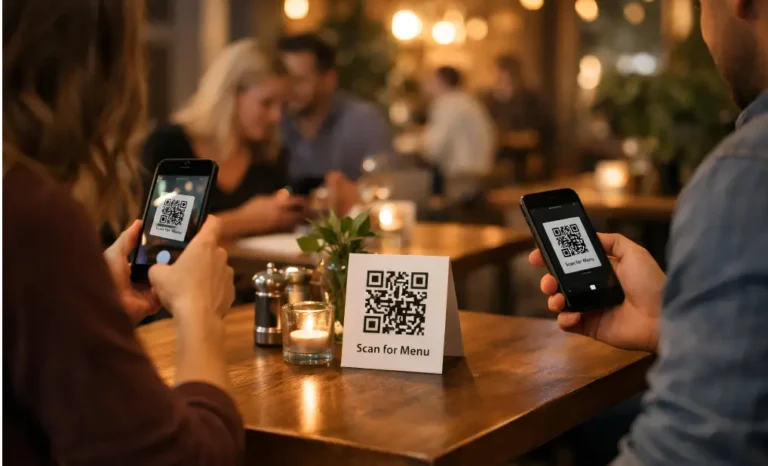
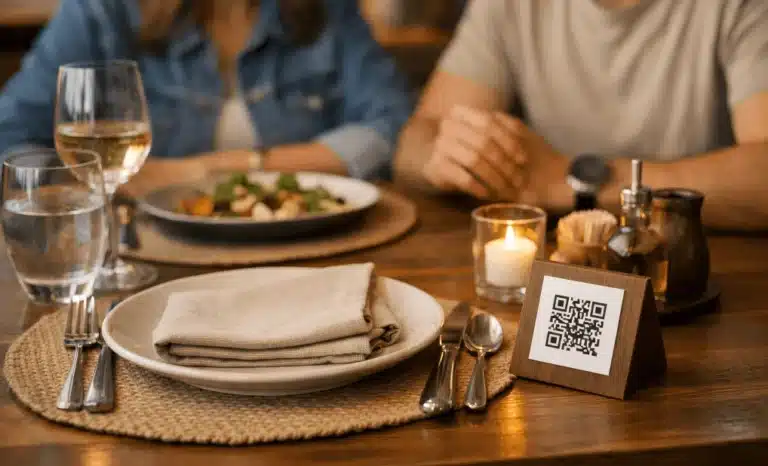
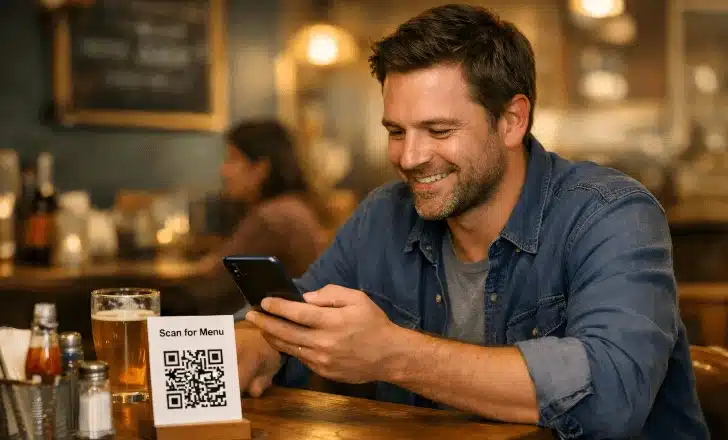
In a restaurant setting, QR codes usually start with a printed QR code placed on a table, table tent, menu cover, or host stand. When customers scan the code using their smartphone camera—something most smartphone cameras support by default—the code directs them to a digital destination.
That destination is typically a mobile-optimized digital menu, a QR code ordering interface, or a landing page designed for restaurant use. From the diner’s perspective, the experience feels simple: scan, browse, order, or pay. Behind the scenes, however, the QR code is acting as a bridge between the physical table and a digital system.
This is why QR codes in restaurants are more than just quick response codes on paper menus. They are entry points into an entire digital experience.
What actually happens when customers scan a restaurant QR code
A QR code is a two-dimensional barcode that encodes information, most commonly a URL. When customers scan a restaurant QR code, their phone reads the code and opens the linked digital version in the browser.
With dynamic QR codes, the printed QR code itself never changes. The destination can be updated at any time. This is a key difference between a static printed QR code and a dynamic one. Restaurants can keep the same printed materials on tables while changing menu items, prices, promotions, or even the entire ordering process behind the scenes.
This flexibility is what makes QR code technology practical for restaurants that need to adapt quickly.
Digital menus versus physical menus in daily operations
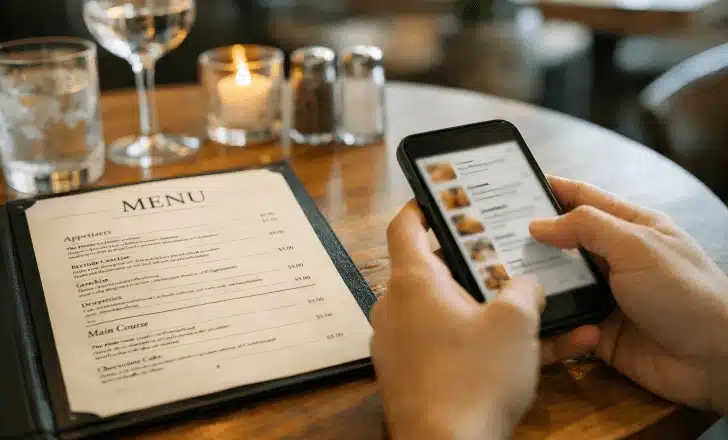
Traditional physical menus come with recurring costs and operational friction. Printed menus need to be updated when prices change, items run out, or allergens need clarification. This often leads to reprinting costs, wasted paper menus, and outdated information reaching customers.
Digital menus accessed through QR codes solve this problem by allowing real-time updates. Menu updates can be published instantly without reprinting anything. Restaurants can remove sold-out items, adjust prices, or add daily specials on the fly.
For restaurant owners, this means lower printing costs and less food waste caused by miscommunication. For customers, it means clearer information and fewer surprises at the table.
How QR code menus support contactless ordering and payments
QR code menus are often connected to contactless ordering systems. Instead of waiting for a server to take an order, customers can browse menu items and place orders directly from their phones, at their own pace.
In restaurants where QR code ordering is connected to a POS system, orders go straight into the kitchen workflow. This reduces wait times, improves order accuracy, and lowers labor costs associated with manual order taking.
Some systems also support contactless payments, including Apple Pay and Google Pay. Customers can complete the entire ordering process—from menu to payment—without physical contact, which has become especially relevant post-pandemic.
How QR codes streamline the ordering process
One of the most practical benefits of QR codes in restaurants is how they streamline operations. By allowing customers to input their own orders, restaurants reduce the chance of miscommunication between staff and diners.
Customers can customize dishes, remove ingredients, or add extras directly in the digital interface. This improves order accuracy and reduces the need for corrections or remakes. Over time, this can lead to faster service speed, better table turnover, and a smoother dining experience.
For quick service restaurants, these efficiencies can significantly improve throughput during busy periods.
Unique QR codes and traceability across tables and locations
Restaurants are not limited to using a single QR code. Unique QR codes can be created for individual tables, sections of the dining room, or even different locations within the same restaurant group.
This approach allows restaurants to understand how customers interact with QR codes in specific contexts. For example, scans from the bar area may behave differently from scans in the main dining room. While this article does not focus on analytics in depth, this traceability is part of how QR codes support smarter restaurant operations over time.
Leveraging QR codes beyond menus
QR codes in restaurants are often associated only with menus, but their use can extend much further. The same QR code technology can direct customers to loyalty programs, personalized offers, or sign-ups without requiring staff involvement.
Restaurants can also use QR codes to link customers to review platforms, feedback forms, or social media pages after the meal. This makes it easier to collect customer feedback and strengthen customer relationships without interrupting the dining experience.
Because the QR code destination can be updated, restaurants can rotate these experiences over time without changing the printed QR codes on tables.
QR codes and the balance between automation and hospitality
While QR codes improve efficiency, they also introduce trade-offs. Some guests prefer human interaction and may find fully digital ordering impersonal. Others may be less comfortable with smartphone-based systems or prefer physical menus.
For this reason, many restaurants adopt QR codes alongside traditional service rather than as a full replacement. Offering physical menus on request and keeping staff available ensures that QR codes enhance, rather than replace, quality service.
Understanding these limits is part of adopting QR codes responsibly in the restaurant industry.
Best practices for placing QR codes in restaurants
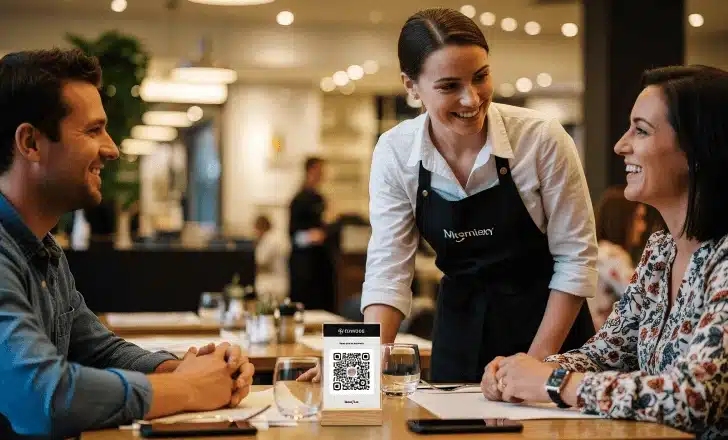
Placement plays a big role in whether customers actually use QR codes. QR codes should be easy to see and easy to scan, without requiring awkward angles or guesswork.
Common placements include table tents, table stickers, menu covers, receipts, and entryway signage near the host stand. Clear instructions such as “Scan to view the menu” help first-time users understand what to do, especially in restaurants with a diverse customer base.
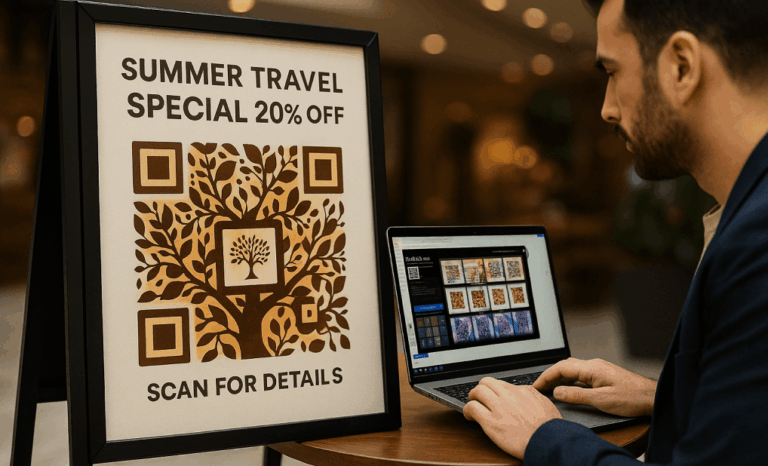
Customizing QR codes with restaurant branding can also improve trust and recognition, making customers more comfortable scanning.
How dynamic QR codes reduce long-term costs
From an operational perspective, one of the biggest advantages of dynamic QR codes is cost savings over time. By eliminating repeated printing of paper menus, restaurants reduce ongoing expenses and environmental impact.
Dynamic QR codes also protect printed materials from becoming obsolete. Even if the restaurant concept evolves, the same QR codes can continue to work by simply updating the linked content.
This long-term flexibility is why many restaurants choose dynamic QR code generators rather than static solutions.
Using QR codes to improve customer experiences over time
QR codes are not just a one-time convenience. Over repeated visits, they can support more personalized customer experiences. Returning guests can be recognized, loyalty rewards can be applied automatically, and menu suggestions can reflect past behavior.
While these capabilities depend on how the digital system behind the QR code is configured, the QR code itself is the gateway that makes these experiences possible.
Are QR codes right for every restaurant?
QR codes work best in environments where speed, clarity, and flexibility matter. Many restaurants benefit from digital menus and contactless ordering, but QR codes are not a universal solution.
Restaurants should consider their audience, service style, and operational goals before fully adopting QR codes. When used intentionally and supported by good service design, QR codes can improve efficiency without compromising the dining experience.
How QRCodeKIT fits into restaurant QR workflows
Within QRCodeKIT, restaurants can create and manage dynamic QR codes that connect printed materials to digital menus, ordering systems, or landing pages. The focus is on keeping QR codes flexible over time, so restaurants are not locked into a single setup.
Rather than acting as a replacement for restaurant systems, QRCodeKIT works as the layer that connects physical touchpoints to digital experiences. For restaurant owners exploring QR codes, learning how this connection works is often the first step toward using QR codes effectively.
If you want to explore how QR codes can support your own restaurant operations, QRCodeKIT offers resources that explain these workflows in more detail—without requiring technical expertise or complex setup.