
If you are asking what type of QR code converts best, you are already thinking beyond novelty. You are thinking about outcomes.
Not all QR code strategies are equal. Some drive measurable action. Others simply exist on signage, product packaging, or print campaigns without real impact. The difference rarely comes down to whether you used a QR code generator. It comes down to format, flexibility, tracking, and the business context behind the code.
Let’s break this down strategically so you can decide what actually converts in your situation.
Dynamic vs static: which one actually drives conversions?
The first decision point when asking what type of QR code converts best is the format: static QR codes or dynamic QR codes.
Static QR codes: simple but rigid
Static codes embed a fixed link directly into the code. Once you print them, the destination cannot be edited. There is no campaign tracking, no scan data, and no way to view data about device type, location, or total scans.
For personal projects or small scale uses such as a one time business card or a temporary poster, static codes may be sufficient.
But in real marketing workflows, they create trade offs:
- If the link breaks, you must reprint.
- If the offer changes, you must reprint.
- If you want campaign tracking, you cannot.
- If you are printing thousands, you are locked into that original QR.
For teams running QR code campaigns tied to real revenue, this lack of flexibility often limits conversion potential.
Dynamic QR codes: built for optimization
Dynamic QR codes allow you to change the destination URL even after printing. That flexibility alone makes them far more conversion friendly.
They also provide robust analytics, including:
- Total scans
- Time and date
- Location
- Device type
- Scan data across campaigns
If you are testing mobile landing pages, experimenting with offers, or managing large scale campaigns, dynamic features matter.
Conversion is rarely static. Your QR strategy should not be either.
Platforms like QRCodeKIT are built around dynamic links, built in analytics, and campaign tracking. Not as a luxury feature, but as a practical requirement for modern marketing teams.
If you care about campaign performance, dynamic QR codes almost always convert better.
What type of QR code converts best for marketing campaigns?
The answer depends on what you are asking users to do.
A QR code that links to a generic homepage will usually underperform. Users expect relevance. When scanning on mobile devices, they want immediate context and a seamless experience.
The best converting QR codes share three characteristics:
- They lead to mobile friendly landing pages.
- They offer a clear value exchange.
- They are placed in the right physical context.
For example:
- On product packaging, the code may reveal product details, tutorials, or gated content.
- On signage at events, it may trigger instant registration or follow ups.
- On print campaigns, it may unlock exclusive content or discounts.
Research shows that 39 percent of marketers report exclusive content as the top motivator for scanning QR codes tied to gated content or offers. Conversion increases when users understand exactly what they gain.
In other words, what type of QR code converts best is not just about format. It is about destination strategy.
Do branded QR codes convert better?
Design influences scanning behavior more than many teams expect.
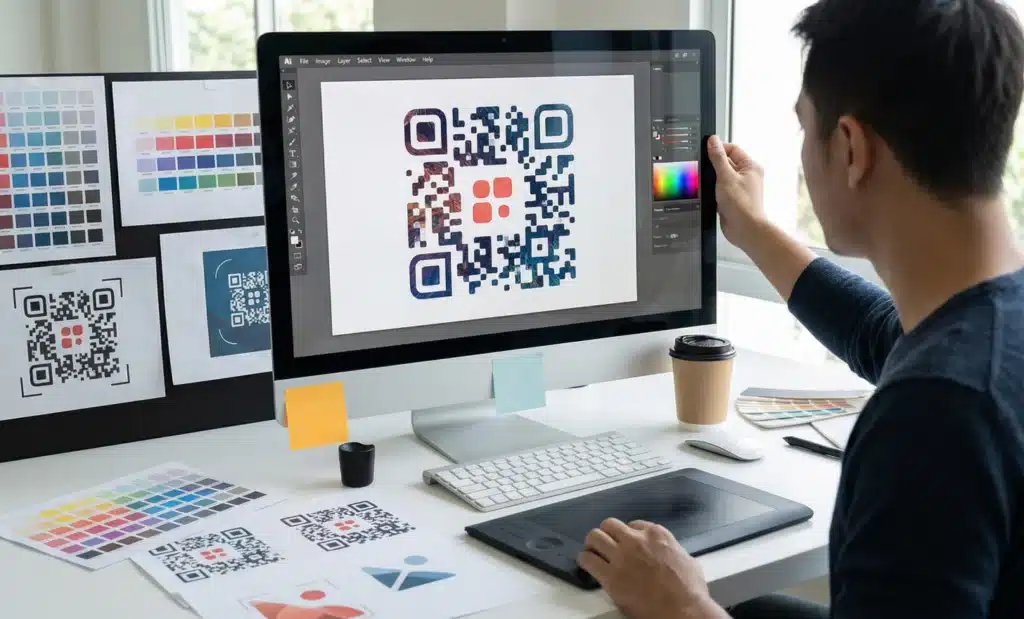
An eye catching QR with a logo, high contrast colors, and contextual design can significantly improve scan reliability and brand trust.
However, design has boundaries. If you push customization too far in Adobe Illustrator and distort the original QR code structure, you risk scanning issues. Using the wrong format such as PNG for large print can also reduce scan reliability. SVG or EPS are better for scaling in professional printing environments.
Branded QR codes tend to convert better when:
- The logo reinforces brand trust.
- The colors maintain high contrast.
- The size is large enough for reliable scanning.
- The format supports clean edges in print.
But design alone does not convert. The experience after the scan does.
Does analytics affect conversion rates?
Indirectly, yes.
Static QR codes provide no tracking. You cannot measure campaign performance. You cannot compare two print campaigns. You cannot conduct A B testing.
Dynamic QR codes allow you to view data in real time. You can measure:
- Which signage placement drives more scans.
- Which landing pages convert better.
- Whether a specific location outperforms another.
- How mobile devices behave differently.
This is where campaign tracking becomes essential. A/B testing two dynamic links behind the same printed QR can dramatically improve performance over time.
Conversion is not a one time decision. It is an iterative process.
Without scan data, you cannot improve.
What about password protected codes and security driven use cases?
In some cases, conversion is not about public engagement but about controlled access.
Password protected codes, file downloads, or internal workflows may prioritize security and tracking over volume. In these scenarios, dynamic QR codes with advanced features provide more control.
If your QR code usage involves sensitive documents, gated content, or controlled distribution, security and reliability are part of conversion strategy. A broken or exposed link damages customer experience and brand trust.Do mobile landing pages matter more than QR code type?
In many campaigns, yes.
Even the most reliable QR code generator cannot compensate for a poor mobile experience.
If your landing pages are not mobile friendly, load slowly, or redirect users multiple times, conversion drops. Users scanning from mobile devices expect immediate clarity.
Best practices include:
- Direct links to relevant content, not a generic website homepage.
- Clear call to action.
- Minimal friction.
- Value exchange within seconds.
Users need at least 15 seconds to scan comfortably. If your code appears in fast moving environments or cluttered signage, conversion will suffer regardless of format.
The QR code is a bridge. The landing experience is the destination.
What type of QR code converts best for different business scenarios?
Let’s consider realistic examples.
Large scale print campaigns
If you are printing thousands of brochures, product inserts, or packaging materials, dynamic QR codes are almost mandatory. The ability to update links without reprinting reduces cost and protects conversion rates over time.
You also gain tracking, follow ups, and better alignment with ad platforms and CRM workflows.
Product packaging and retail
On packaging, QR codes should connect to product details, AR experiences, or support resources. Some brands use dynamic links to personalize content by geography or campaign.
Branded QR codes increase trust in retail environments. Mobile friendly pages are essential.
Business cards and small scale use
For an individual consultant creating a digital business card, static codes might seem sufficient. But even here, dynamic QR codes offer flexibility if your website changes or you want to track engagement.
Multi user marketing teams
When multiple users manage campaigns, features such as multi user access, custom domains, built in analytics, and robust analytics dashboards matter. Conversion is not just about scans. It is about coordinated execution.
Why not just use free tools?
Free tools often generate static codes. They may not support campaign tracking, unlimited scans, custom domains, or advanced features.
If you are testing a personal project, free tools can be fine.
But if you are:
- Running QR code campaigns tied to revenue
- Managing multiple QR code types
- Integrating with CRM systems
- Monitoring scan reliability across locations
- Optimizing campaign performance
Then paid tiers and professional feature sets become part of the conversion equation.
It is less about cost and more about control.
A reliable QR code generator with dynamic features allows you to adapt, measure, and improve. That flexibility typically leads to higher conversion over time.

So, what type of QR code converts best?
There is no universal answer. Not all QR strategies perform equally, and not all business contexts require the same setup.
But in most commercial scenarios, the QR code that converts best is:
- Dynamic rather than static
- Connected to a focused mobile landing page
- Supported by campaign tracking and robust analytics
- Designed for scan reliability and brand trust
- Placed intentionally within the customer journey
Conversion is rarely about the code alone. It is about the workflow behind it.
If you approach QR creation strategically, combining the right QR code types with strong landing pages and measurable tracking, you move from guesswork to optimization.
That shift is what truly improves conversion.
Platforms like QRCodeKIT exist to support that multi QR mindset, not simply to create codes but to help teams manage, track, and evolve them as part of real business systems.
When you ask what type of QR code converts best, the most honest answer is this: the one designed for flexibility, relevance, and measurable improvement.
How should you choose your QR code strategy?
Start by asking:
- What action do I want after the scan?
- Will this campaign evolve over time?
- Do I need tracking or A B testing?
- Am I printing thousands?
- Does my team need shared access?
Your answers will determine whether static codes are sufficient or whether dynamic QR codes are essential.
Conversion is a moving target. The best performing QR strategy is the one built to move with it.
All images and visual content in this article were created using RealityMAX.