
Learning how to add QR codes to Christmas packaging is one of the simplest ways to turn festive designs into interactive experiences. A well placed QR code on holiday packaging connects physical products with digital content, helps brands stand out during the holiday season, and creates measurable customer engagement. From exclusive holiday deals to festive playlists and event invitations, QR technology adds a digital layer that customers can access with a quick scan on their mobile devices.
Christmas packaging already carries strong emotional value. By integrating QR codes thoughtfully, brands can extend that moment beyond the physical gift. Whether you run an online store, a physical store, or both, Christmas QR codes help you guide customers from gift packaging to a destination URL that delivers real value.
What does it mean to add QR codes to Christmas packaging?
Adding QR codes to Christmas packaging means embedding a scannable code directly into gift packaging, labels, gift tags, or printed materials used during Christmas campaigns. When customers scan the QR code, they are taken to digital content such as holiday offers, a coupon code, a playlist, or a festive landing page.
This approach transforms traditional packaging into an interactive touchpoint. Instead of being limited to static visuals, brands can update content behind dynamic QR codes in real time, track QR code scans, and adjust campaigns as Christmas sales evolve.
Why should you use QR codes for Christmas packaging?
The festive season is crowded with promotions, marketing materials, and competing messages. QR codes help your Christmas marketing strategy cut through that noise by offering something interactive and useful.
QR codes for Christmas allow you to create a direct bridge between physical packaging and digital experiences. Customers scan the QR code during gift wrapping, at a Christmas party, or while browsing store windows. That single scan can lead to exclusive discounts, holiday playlists, or augmented reality experiences that bring holiday cheer to life.
Another key advantage is measurement. With dynamic QR codes, you can track customer engagement, see how many people scan a QR code, and understand which promotional campaigns perform best during the holiday season.
How to add QR codes to Christmas packaging step by step
Understanding how to add QR codes to Christmas packaging starts with a clear process. While the creative part is festive, the technical steps are simple and accessible.
First, define the goal of your QR code campaign. Decide whether the QR code will lead to holiday deals, a Christmas marketing campaign page, event details, or a digital element like a video message from Santa Claus.
Next, use a QR code generator that allows you to create QR codes quickly. With QRCodeKIT, you can start with free QR codes and create dynamic QR codes that remain editable after printing. This flexibility is essential for Christmas campaigns where offers may change.
Then choose the QR code type that matches your goal. URL QR codes are common for directing users to online shopping pages, while a vCard QR code can be used for event invitations or brand contact details.
After generating the QR code, focus on QR code design. Customize colors, shapes, and backgrounds so the code fits your Christmas packaging without compromising scannability. Finally, test the QR code on multiple mobile devices before printing it on gift packaging, shipping labels, or promotional materials.

Where should you place QR codes on Christmas packaging?
Placement plays a major role in scan rates. The best place to add QR codes to Christmas packaging is where customers naturally look or interact.
Gift tags are a popular option. A small QR code on a gift tag invites customers to scan and discover a holiday message or exclusive discount. Gift wrapping is another effective spot, especially when the QR code is integrated into the background image or festive pattern.
For retail brands, placing QR codes on custom packaging, store windows, or shipping labels ensures visibility both in physical stores and during home delivery. Christmas cards included in the package can also feature a QR code that links to holiday playlists or a personalized message.
The key is to avoid hiding the QR code. Make sure it is clearly visible, easy to scan, and accompanied by a subtle call to action that explains what customers get when they scan.
What type of QR codes work best for Christmas campaigns?
Different Christmas campaigns call for different QR code types. Understanding your options helps you choose the right format.
URL QR codes are the most versatile. They can direct customers to a Christmas offers page, online shopping section, or a festive landing page. Dynamic QR codes are especially useful here because you can update the destination URL without reprinting packaging.
vCard QR codes are ideal for event invitations, Christmas parties, or brand experiences where contact details matter. Scanning the QR code instantly saves event details or contact information on mobile devices.
While static QR codes exist, they do not allow updates or scan tracking. For Christmas marketing, dynamic QR codes offer far more flexibility, especially when running time limited holiday deals or adjusting campaigns close to Christmas Eve.
How can QR codes increase customer engagement during the holiday season?
Customer engagement peaks during the festive season, and QR codes help sustain it beyond the initial purchase. When customers scan a QR code on Christmas packaging, they actively choose to interact with your brand.
You can leverage QR codes to deliver exclusive holiday deals, early access to Christmas sales, or loyalty rewards that encourage repeat purchases. A simple QR code campaign can turn one time buyers into long term customers by inviting them to join a mailing list or follow your brand on social media.
QR codes also support storytelling. A scan can reveal the inspiration behind the packaging design, share a behind the scenes holiday video, or showcase how the product fits into Christmas celebrations. These experiences create emotional connections that go beyond price based promotions.
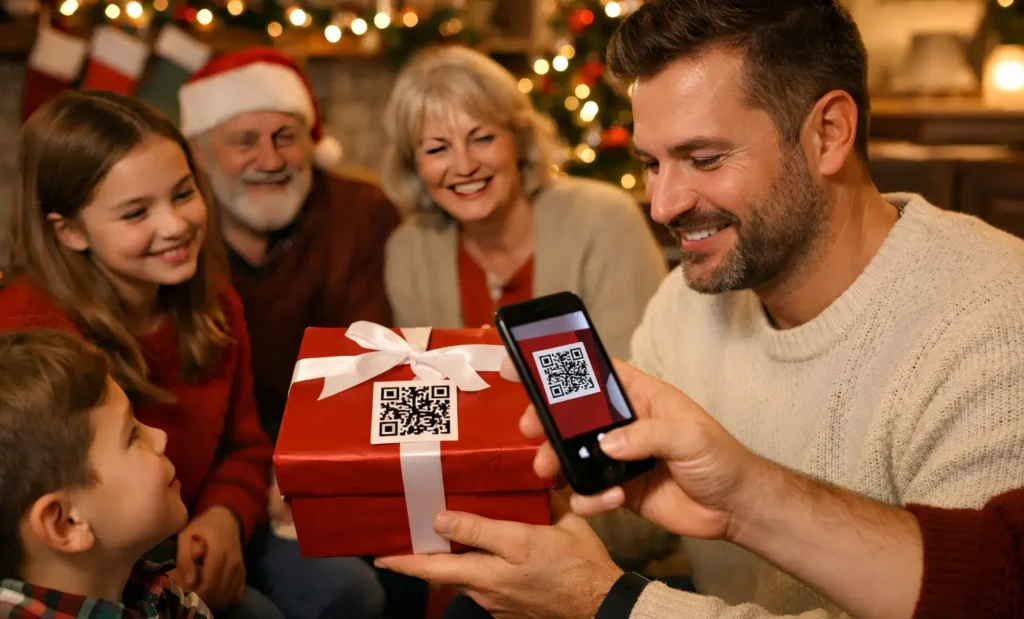
How to design Christmas QR codes that fit festive packaging
Good QR code design is essential for both aesthetics and performance. Christmas QR codes should feel festive without sacrificing readability.
Start with contrast. Even if you use festive colors like red, green, or gold, make sure the QR code stands out clearly from the background image. Avoid overly busy patterns directly behind the code.
Use customization carefully. Rounded corners, subtle frames, or holiday themed accents can enhance the design, but always test scannability. QR technology relies on clear modules, so readability comes first.
Adding a short call to action near the QR code helps customers understand why they should scan. Phrases like scan for holiday deals or discover your Christmas surprise work well without cluttering the design.
How can QR codes support Christmas sales both online and in store?
One of the strengths of QR codes is their ability to connect physical and digital channels. In a physical store, QR codes on packaging or store windows can guide customers to online shopping options, extended product details, or limited time Christmas offers.
For online stores, QR codes included in shipped packages encourage customers to engage again after delivery. A scan can lead to exclusive discounts for future purchases or invite customers to participate in a holiday marketing campaign.
This omnichannel approach supports holiday sales by meeting customers where they are, whether browsing in store, opening a gift at home, or shopping online late at night.
How to track QR code scans and measure Christmas campaign performance
Tracking performance is critical during busy promotional periods. With dynamic QR codes, you can monitor QR code scans in real time and understand how customers interact with your Christmas campaigns.
You can see how many customers scan the QR code, which devices they use, and when engagement peaks. This data helps you refine placement, messaging, and destination content even during the campaign.
If one holiday deal performs better than another, you can update the destination URL instantly without changing the printed packaging. This level of control is especially valuable when adjusting strategies close to Christmas Eve.

What digital content works best behind Christmas QR codes?
The success of a QR code campaign depends heavily on what happens after the scan. Digital content should feel festive, useful, and relevant to your target audience.
Popular options include exclusive discounts, coupon codes, and holiday sales pages. Many brands also use QR codes to share holiday playlists, Christmas videos, or augmented reality experiences that add surprise and delight.
Event invitations are another strong use case. A QR code on Christmas packaging can link to event details for in store celebrations, online launches, or private Christmas parties. The key is to offer something that feels like a gift, not just another promotion.
How can small brands and designers use QR codes creatively at Christmas?
QR codes are not limited to large retailers. Small brands, independent designers, and creatives can also leverage QR technology to enhance custom packaging.
A fashion designer like Talia Coles could use QR codes on Christmas gift packaging to share styling tips, behind the scenes content, or limited edition holiday collections. This approach adds personality and storytelling without increasing printing costs.
QR codes are also ideal for handmade products, pop up shops, and seasonal markets. They provide a digital touchpoint that scales easily, even with limited budgets.
How do QR codes fit into a long term Christmas marketing strategy?
Christmas QR codes should not be a one off experiment. When integrated into a broader Christmas marketing strategy, they become a repeatable tool for seasonal campaigns.
Each year, you can reuse the same packaging design while updating the destination URL behind a dynamic QR code. This saves time, reduces waste, and keeps campaigns fresh.
Over time, scan data helps you understand customer behavior across multiple festive seasons. You can identify trends, improve customer engagement, and plan future promotional campaigns with confidence.
Are QR codes easy for customers to use during Christmas shopping?
Ease of use is one of the reasons QR codes work so well during the festive season. Most customers already know how to scan a QR code using their smartphone camera or a QR code reader.
There is no need to download an app or enter a long URL. A quick scan delivers instant access to content, making QR codes ideal for busy holiday shopping moments.
To ensure a smooth experience, always test QR codes on different mobile devices and lighting conditions. Christmas packaging often includes reflective materials, so testing helps avoid scanning issues.
What mistakes should you avoid when adding QR codes to Christmas packaging?
While QR codes are simple, a few common mistakes can reduce their effectiveness. Avoid placing QR codes too small or on curved surfaces where scanning becomes difficult.
Do not overload the design. Festive packaging is visually rich, but the QR code still needs clear space around it to remain scannable.
Finally, avoid linking QR codes to generic pages. Christmas QR codes work best when the content feels seasonal, exclusive, and aligned with the festive season.
Is now the right time to add QR codes to your Christmas packaging?
If you are planning Christmas campaigns, now is the ideal time to explore how to add QR codes to Christmas packaging. QR technology is mature, widely adopted, and easy to implement across both physical and digital channels.
With tools like QRCodeKIT, you can create QR codes for free, experiment with dynamic QR codes, and track customer engagement without complex setup. Whether your goal is boosting holiday sales, enhancing gift packaging, or creating memorable festive experiences, QR codes offer a practical and creative solution.
By integrating QR codes thoughtfully into your Christmas packaging, you turn every gift into an interactive moment that extends the joy of the season and builds lasting connections with your audience.