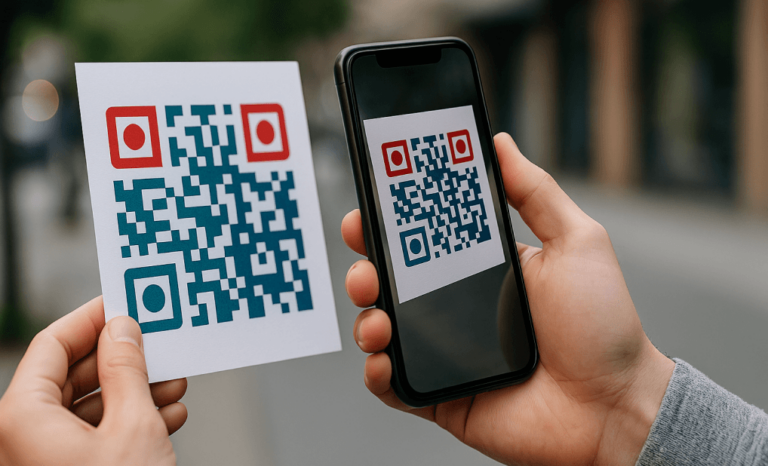
Agencies sit at the intersection of strategy, execution, and results. They manage multiple brands, campaigns, and channels at the same time, often blending physical and digital touchpoints into a single marketing experience. Understanding how QR codes work for agencies is less about the technology itself and more about how QR codes fit into real agency workflows.
This article explains, in practical terms, how agencies use QR codes inside QRCodeKIT to manage multiple clients, campaigns, and assets without losing control or clarity.
Why QR codes matter in agency work
QR codes have become a reliable bridge between the physical world and digital content. You see them everywhere: restaurants, retail shops, doctors’ offices, museums, and product packaging. For agencies, that ubiquity turns QR codes into a flexible production asset rather than a one-off tactic.
When someone scans a QR code with a mobile device, they expect instant access. A single scan should link directly to useful digital content: a landing page, contact details, a review form, or a social media page. In agency terms, that means QR codes work as connectors between offline campaigns and measurable online outcomes.
What makes them especially valuable is how easily they scale. The same QR code generator can support print ads, outdoor ads, direct mail, and product packaging, all while feeding data back into a broader digital marketing strategy.
Static vs dynamic QR codes in agency scenarios
To understand how QR codes work for agencies, it helps to distinguish between static and dynamic QR codes, without going too deep into technical detail.
Static QR codes store information directly in the black and white squares. Once printed, they cannot be changed. If a URL breaks or a campaign ends, the code becomes useless.
Dynamic QR codes work differently. The QR code itself stays the same, but the destination can be updated later. This is the model agencies rely on. Dynamic QR codes offer flexibility, error correction, and analytics, which are essential when managing multiple clients and evolving campaigns.
For agencies, dynamic QR codes are not a “nice to have”. They are the only realistic option when campaigns need to adapt after launch.
How agencies typically use QR codes across channels
Agencies rarely use QR codes in isolation. They incorporate QR codes into broader marketing efforts that span both physical and digital environments.
You might place QR codes on printed materials like brochures, posters, or t shirts, linking directly to mobile friendly landing pages. You can integrate QR codes into direct mail to drive traffic to a campaign page or a short URL with a single scan. On product packaging, QR codes provide instant access to product details without cluttering the design.
The same logic applies to social media pages, outdoor ads, or in-store signage. QR codes provide quick response access, turning passive exposure into interactive experiences and boosting customer engagement.
For agencies, the key is consistency. QR codes should always lead to relevant content, offer clear context, and feel like a natural part of the customer experience.
Multi-client management inside QRCodeKIT
Managing QR codes for one brand is simple. Managing them for ten or fifty clients is where agencies need structure.
Inside QRCodeKIT, agencies organize QR codes by client, campaign, or use case. This matters because QR codes are long-lived assets. A QR code placed on product packaging or print ads may be scanned months or years later. Agencies need to know who owns each code, what it links to, and why it exists.
This structure helps agencies avoid common mistakes, like reusing the wrong code, losing track of older campaigns, or sending potential clients to outdated digital content.

Updating campaigns without reprinting
One of the most practical advantages of dynamic QR codes is post-launch control. Agencies often need to adjust messaging, update landing pages, or redirect users based on performance or timing.
With dynamic QR codes, agencies can change the destination after printing. A QR code on a flyer can first promote a launch offer, then later link to a general landing page. The physical code remains the same, but the marketing experience evolves.
This flexibility reduces risk. If something goes wrong, agencies are not forced to reprint materials or explain broken links to clients.
Tracking scans and understanding performance
For agencies, data matters as much as creativity. QR codes work best when they provide valuable insights, not just traffic.
Dynamic QR codes allow agencies to track scan volume, location, time, and device type. This helps agencies understand customer behavior and measure how offline touchpoints contribute to digital marketing results.
Instead of guessing whether a print campaign worked, agencies can see how many people scanned the code, when they did it, and from which physical location. Over time, this data helps refine placement, messaging, and overall marketing strategy.
Designing QR codes that actually get scanned
A QR code is only effective if people scan it. Agencies need to think beyond just placing a code on a light background.
Reliable scanning depends on contrast, size, and placement. QR codes should be easy to spot, large enough for a quick scan, and supported by a clear call to action. Custom designs, when done carefully, can improve engagement without harming scannability.
Agencies often test QR codes before launch to ensure they scan easily across different mobile devices. This simple step avoids friction and protects the customer experience.
QR codes as part of the agency marketing experience
Today, QR codes are no longer experimental. They are a well suited, widely accepted part of the digital age. Since built-in scanning became standard on smartphones, scanning a QR code is as natural as tapping a link.
For agencies, QR codes are a valuable tool because they connect physical campaigns to digital content in a measurable way. They provide instant access, support creative use cases, and generate more data than traditional barcodes ever could.
Whether used for lead generation, reviews, payments, or interactive experiences, QR codes help agencies deliver cohesive marketing experiences that move smoothly from the physical world to digital engagement.

Why QR codes have become standard agency infrastructure
QR codes were originally developed for the automotive industry in 1994, but their modern role is very different. After a period of decline, their resurgence during the pandemic and continued growth since then have made them a standard part of agency toolkits.
In 2026, QR codes are no longer just quick response codes. They are infrastructure. Agencies use them to drive traffic, collect insights, and connect offline moments to online value.
If you want to understand how QR codes work for agencies, the answer is simple: they work best when they are flexible, trackable, and thoughtfully integrated into real campaigns. Platforms like QRCodeKIT are designed to support that reality, helping agencies manage QR codes as long-term assets rather than disposable graphics.
If you are exploring how to structure QR code workflows across clients, campaigns, and channels, learning more about how QRCodeKIT handles dynamic QR codes and multi-client organization can be a useful next step.