
QR codes for government that residents can trust.
Put one dynamic QR code on every letter, form, office door and notice. Open the right procedure in the resident’s own language, and change it when the rules change, without reprinting.
No credit card required•GDPR-compliant•Hosted in the EU
By continuing you agree to our Terms and Privacy Policy.
Trusted by more than a million companies worldwide
What are QR codes for government?
QR codes for government are dynamic QR codes on official letters, forms, office doors, noticeboards, vehicles and public signs that open content the administration can change at any time: the steps of a procedure, the documents to bring, an appointment page, a survey or a staff contact card. They can open the version in the resident’s own language, and every scan is counted. QRCodeKIT, launched in 2009 as uQR.me, is the dynamic QR code platform that creates, hosts and measures them, hosted in the EU.
Who it’s for
From the letter to the service desk
 Letters & forms
Letters that explain the next step
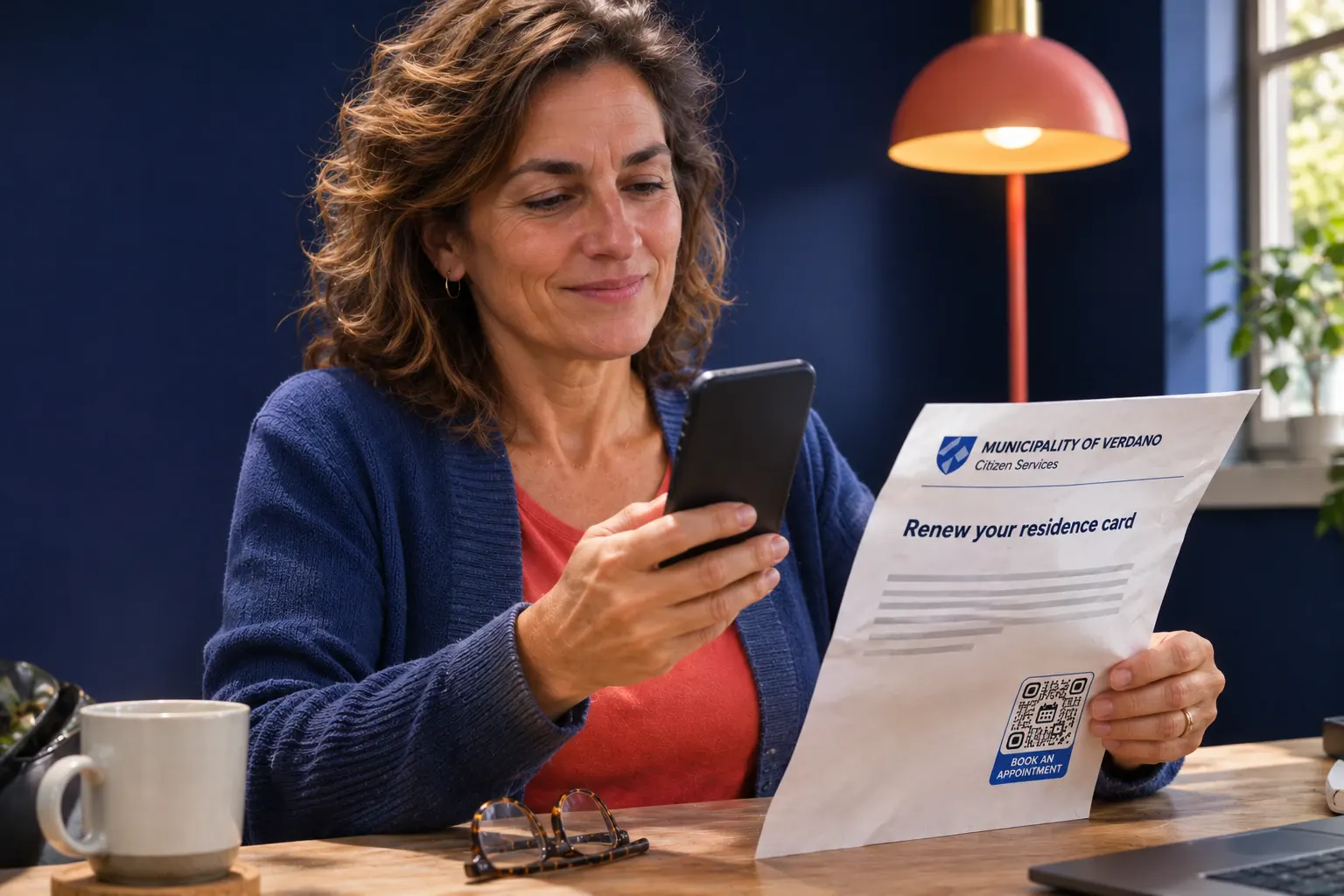
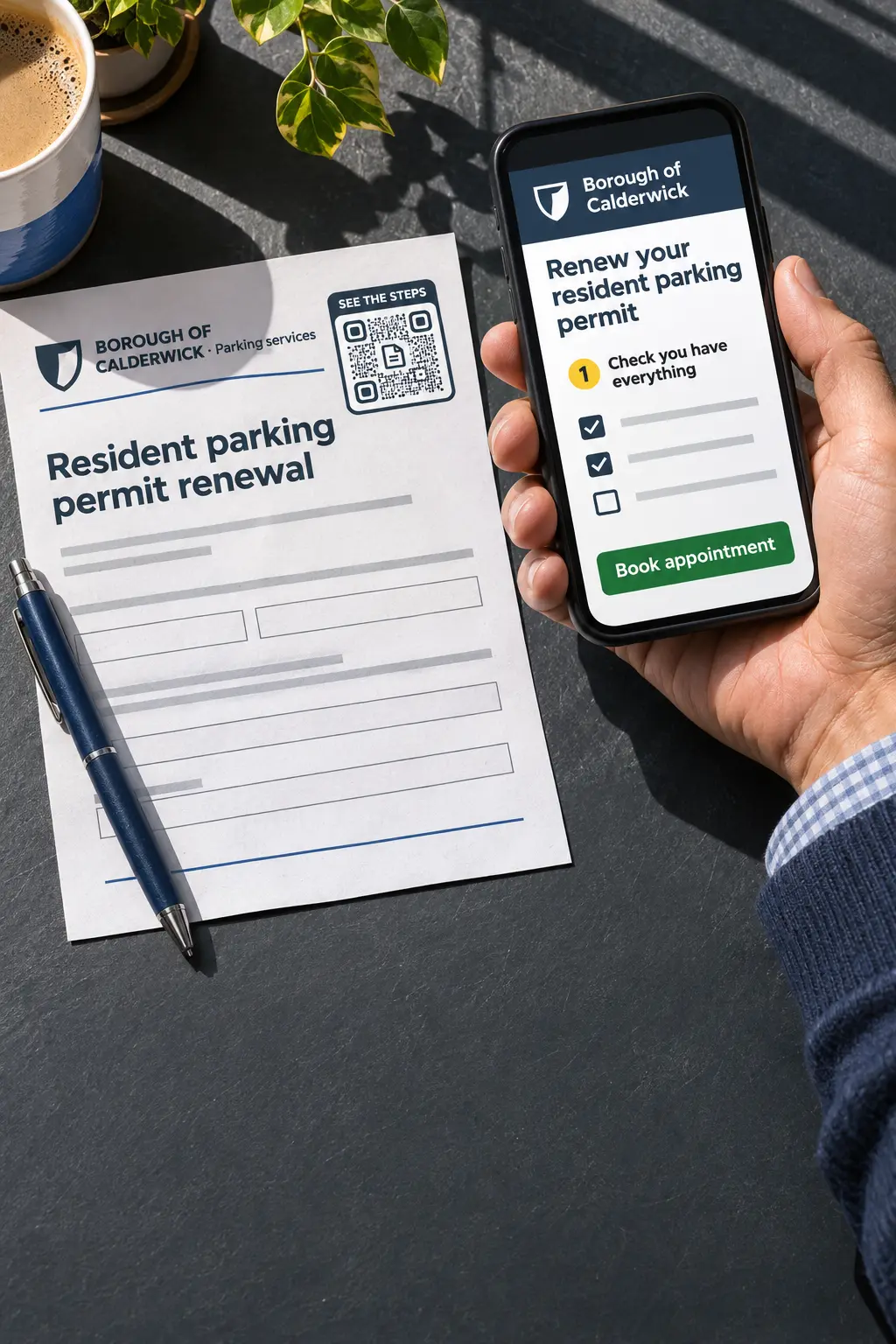
A code on the letter or the form opens the steps, the documents to bring and the appointment page, updated when the procedure changes.
PDF QR codes →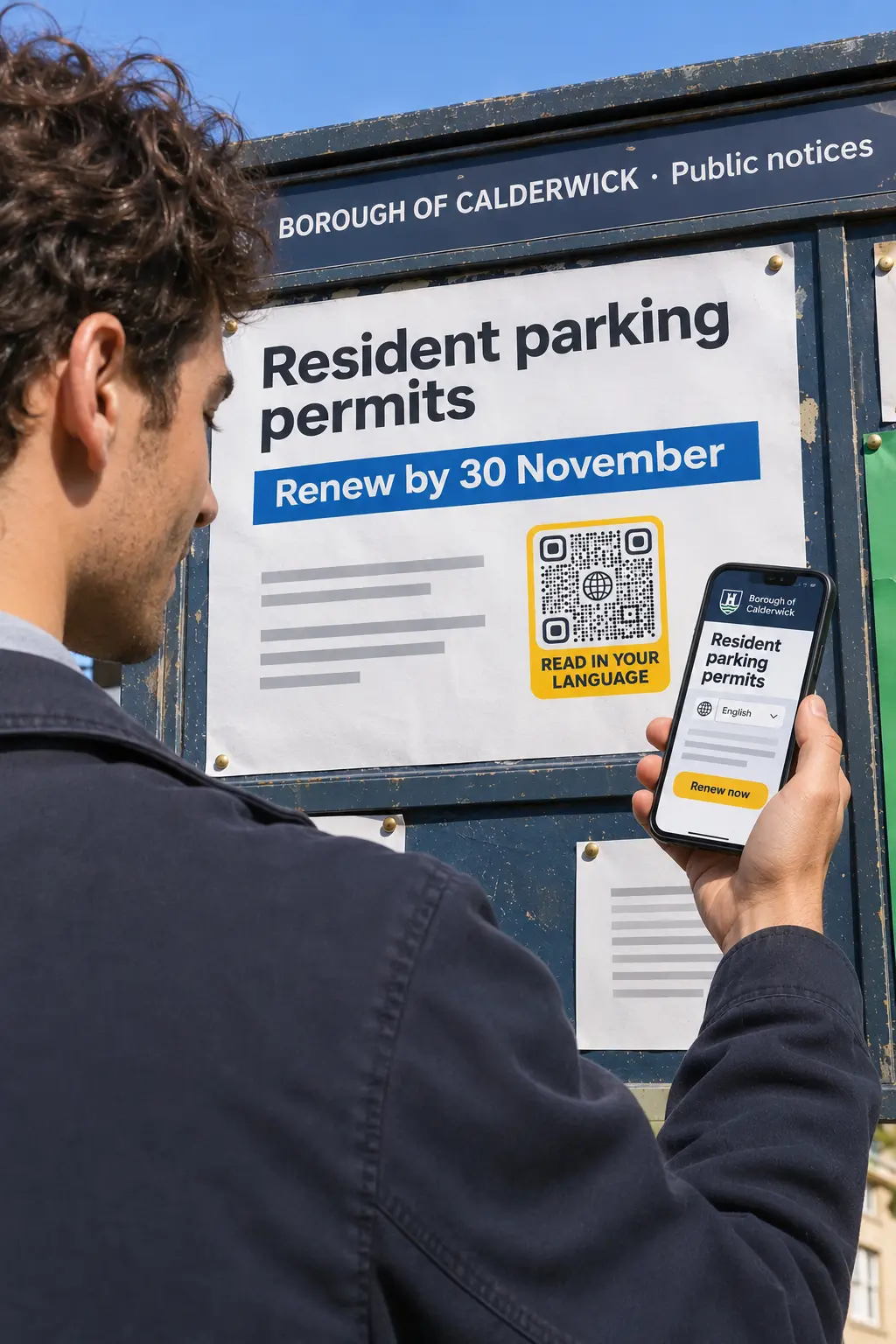 Notices & public information
Notices every resident can read
Codes on noticeboards, shelters and vehicles open the full notice in the resident’s language, or as an audio file, and stay current when the notice changes.
Multilingual QR codes →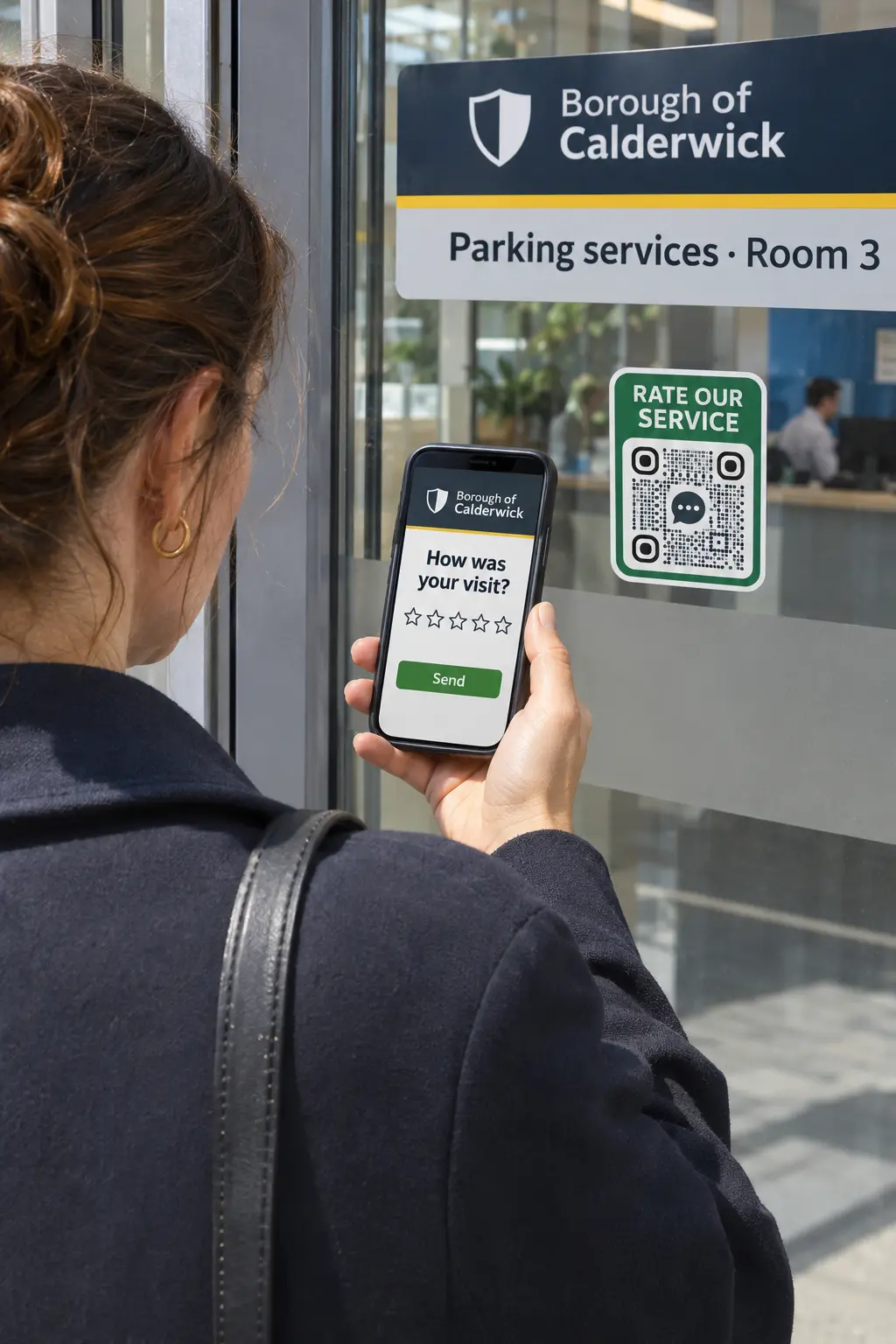 Offices & service desks
Feedback at every office door
Codes on doors and counters open a short survey on the service, with the office’s hours and contact details, so residents can tell you how it went.
QR codes for surveys →Platform
Every office, letter and notice, one dashboard
Create
One code per procedure, office and employee
Create codes in bulk from a spreadsheet, one per procedure, office or employee, group them by department, and change what they open when a rule or a date changes: the letters and signs stay as they are.
Bulk creation →Digital business cards →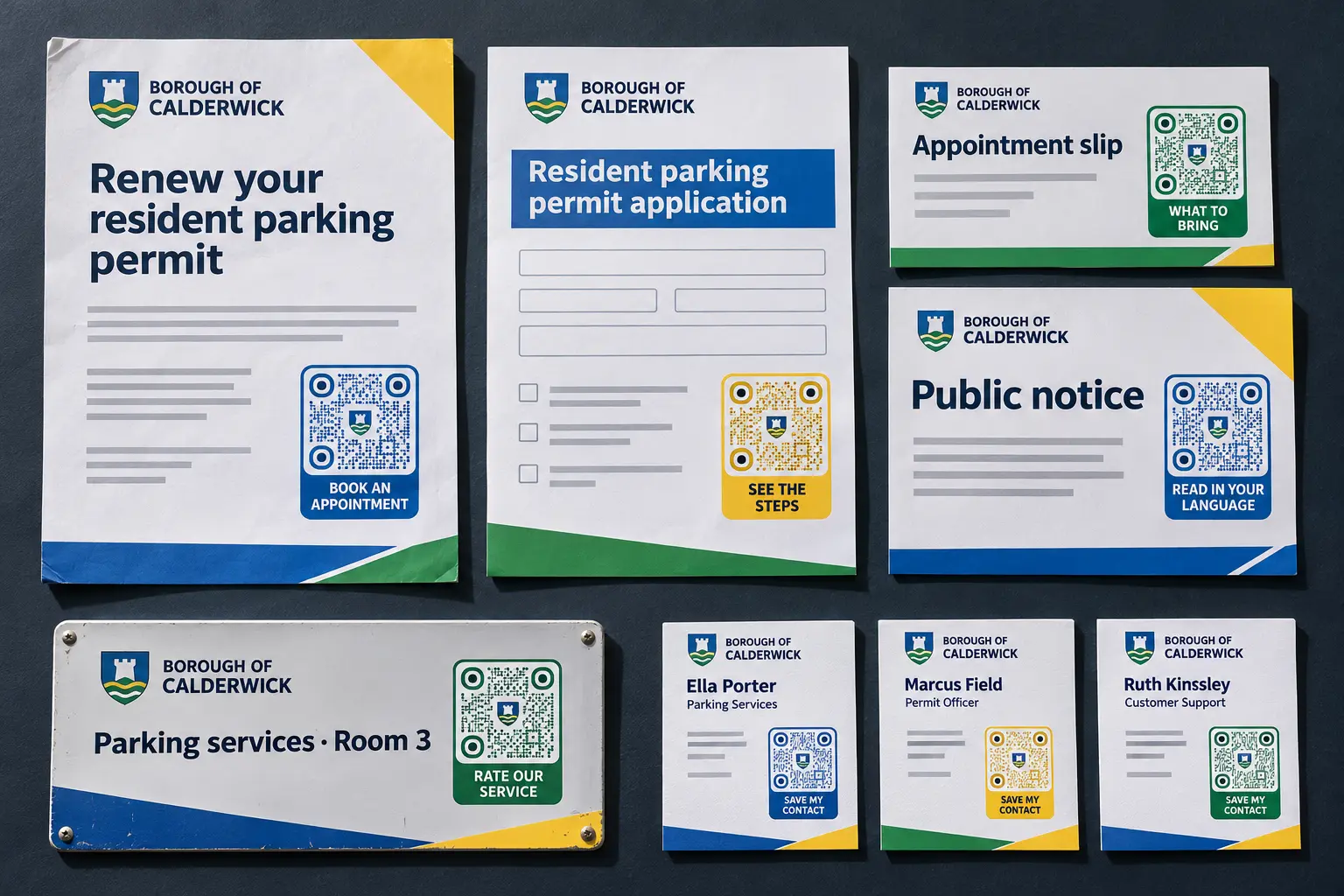
Design
Codes that belong on your letters and signs
Your crest, colours and frame on letters, forms and signs, with a live check that the code still scans. A multilingual QR code opens each page in the resident’s language.
Multilingual QR codes →Form QR codes →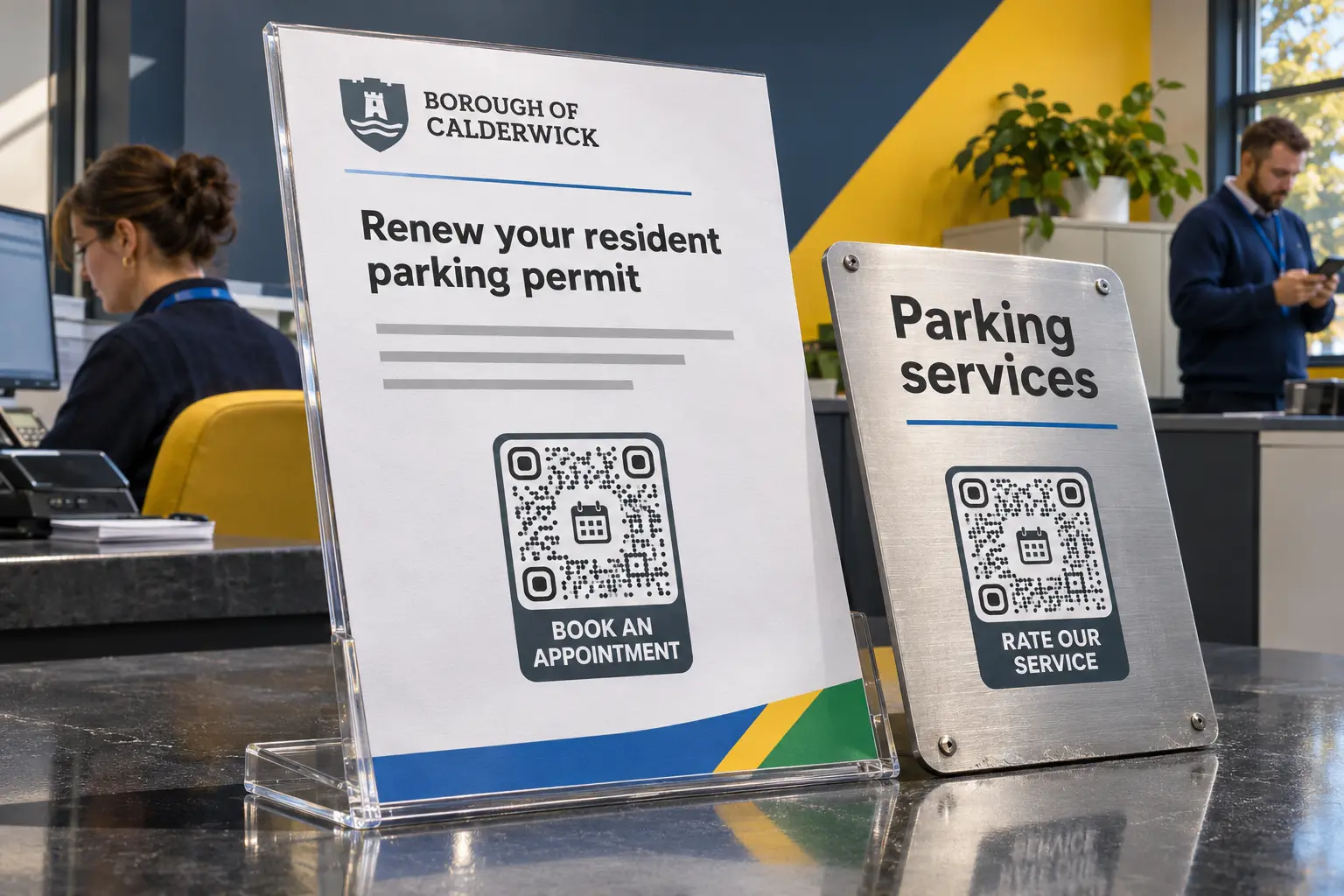
Track
See which services residents look for
Scans by office, city and device, first visits apart from repeat ones, and the hours residents scan. Compare letters, notices and offices, and send form answers to your own systems through the API and webhooks.
QR code analytics →QR code API →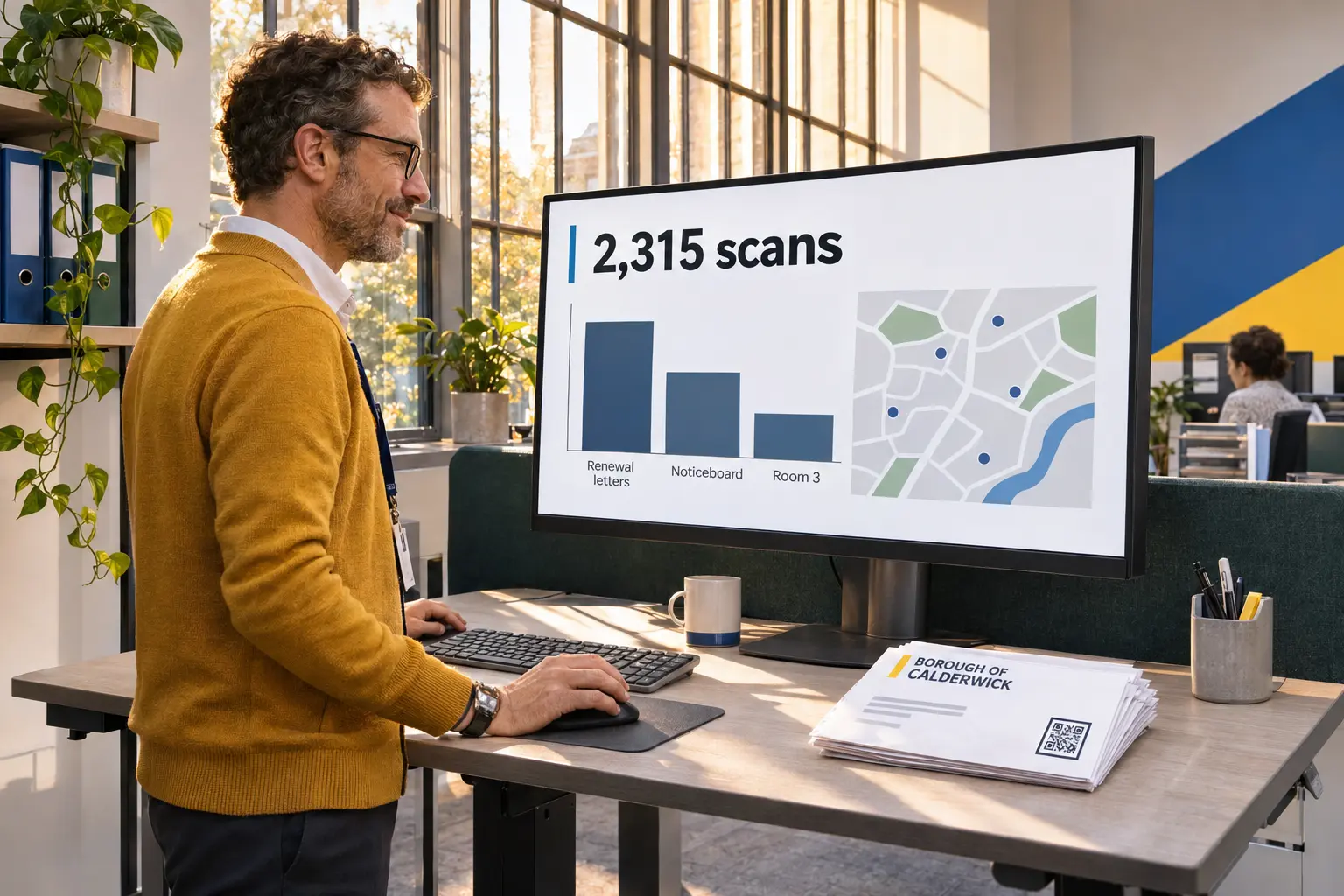
Cleo · AI agent
A help desk in every letter
Cleo is the AI agent that lives inside your QR codes. Train her on your procedures, office hours and forms, and she answers residents in their own language, at any hour, even when the offices are closed.
- Answers with no staff needed
- 24/7
- Languages supported
- 40+
Cleo answers from the documents you give her, so every answer matches your real procedures, dates and office hours. Questions about a person’s own case belong with your staff.

What do I need to renew my residence card?
Bring your current card, your passport and a recent photo, with the form on this page filled in. The full list is in the guide below.


Control
Codes residents can check are yours
Notices and signs are in public, where fake stickers appear, and residents need to know that a link is official. QRCodeKIT keeps your codes on your own domain and residents’ data in the EU, across every department.
- Your own domain. Residents see a link that is clearly the administration’s, which helps them tell your code from a fake sticker. On Pro and Enterprise.
- Hosted in the EU. GDPR-compliant, with European-based infrastructure.
- Teams and single sign-on. Up to 10 team members on Pro; SSO and up to 50 members on Enterprise, for departments that share one account.
- Forms with consent. Surveys and appointment requests with a required consent, and stored answers deleted automatically every week or month.
- Links, not personal data. A QR code holds a link, never a resident’s details. Keep ID numbers and case details out of codes and URLs.
- GDPR
- EU hosting
- ISO 27001 framework
- SSO
Questions public administrations ask us
QRCodeKIT is a dynamic QR code platform launched in 2009 as uQR.me and hosted in the European Union. Councils and public bodies can use it to run the codes residents scan on letters, forms, offices and notices.
What are QR codes used for in government?
To connect letters, forms and notices with information that changes: procedures and the documents to bring, appointment pages, office hours, public notices, surveys and staff contact cards. A dynamic QR code lets you update that information and count every scan without reprinting.
Can I update a QR code on a letter that has already been sent?
Yes, if it is a dynamic QR code. The letter stays as it is and you change the page or the file the code opens from the dashboard, for example when a date or a requirement changes.
Can one QR code show information in several languages?
Yes. A multilingual QR code reads the language set on the resident’s phone and opens the matching version. A file download QR code can also open an audio version of the same notice, for people who prefer to listen.
How do residents know a QR code is really from us?
With your own domain on Pro and Enterprise, the link shows your administration’s domain, so residents can tell your code from a fake sticker, and you can change any code at once if one appears. See trusted-domain QR codes.
Can we create a digital business card for every employee?
Yes. Upload a spreadsheet and QRCodeKIT creates one digital business card QR code per employee, ready for business cards and email signatures. When someone changes role, you update the card and the printed code keeps working.
Can a QR code answer residents’ questions?
Yes, with Cleo, QRCodeKIT’s AI agent that lives inside your QR codes. Train her on your procedures, office hours and forms, and she answers in the resident’s own language, at any hour. Questions about a person’s own case belong with your staff.
Is there a free trial?
Yes. Every new account starts with a 7-day free trial of Pro, with no credit card required, with up to 100 QR codes and 100 scans each. Teams that need SSO, API access or higher limits can compare the plans or book a demo.