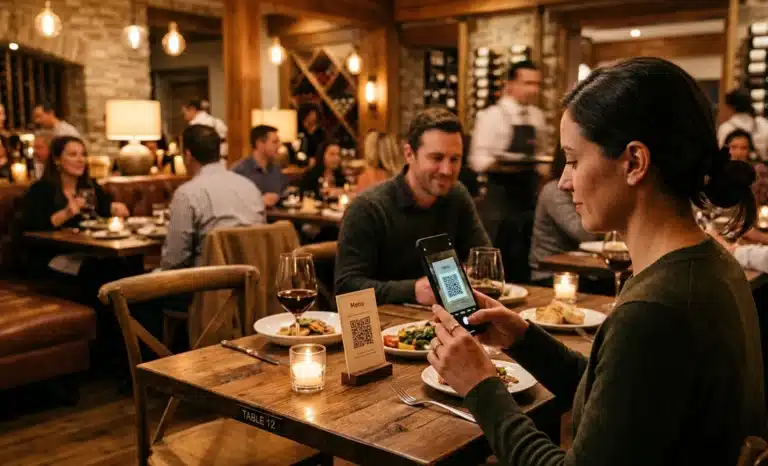
Food allergies are not a minor inconvenience. For millions of people, a single overlooked ingredient can mean a medical emergency. Restaurants know this. The problem has never been intention. It has been execution. An AI QR code for allergen information in a restaurant changes that execution entirely, making accurate allergen data available the moment a guest needs it, without putting the burden entirely on a server, a printed card, or a manager pulled away from the floor.
This article explores how that shift works in practice, what it means for daily operations, and why more restaurants in the hospitality industry are moving in this direction.
Why allergen information fails at the table
Most restaurants genuinely try to handle allergen disclosure well. They train staff. They mark menus. They prepare a separate allergen sheet on request. But the system has built-in weak points.
Printed menus go out of date the moment an ingredient changes. Allergen sheets get lost, ignored, or forgotten in a drawer. A server who was trained three months ago may not know that the sauce recipe changed last week. And when a guest with a serious allergy asks a direct question, the honest answer is sometimes “I’ll have to check,” which slows the table, creates uncertainty, and puts both the guest and the staff member in an uncomfortable position.
The core issue is that allergen data lives in a different place than the guest. It sits in a kitchen manual, in a supplier document, or in someone’s memory. The gap between that data and the person who needs it is where things go wrong.
What an AI QR code for allergen information actually does
A dynamic QR code linked to a conversational AI layer closes that gap in a direct way. When a guest scans the code at the table, they land on the restaurant’s digital menu or information page. Alongside that page, an AI assistant is ready to answer questions in real time.
A guest with a gluten intolerance does not need to flag down a server. They scan, ask “does the risotto contain gluten?”, and get a clear, accurate answer based on the current information the restaurant has provided. If the dish contains a gluten-based stock, Cleo by QRCodeKIT will say so. If it is safe, it will confirm that too.
This is not a guess. The AI draws only from the allergen data the restaurant has entered and maintained. That is the critical distinction between a useful system and a liability. The answer is only as good as the information behind it, which is why the dynamic nature of the QR code matters so much.
Why dynamic QR codes matter for food safety
All QR codes created through QRCodeKIT are dynamic. This means the information they connect to can be updated at any time without reprinting anything physical.
Menu changes are constant in restaurants. Seasonal ingredients come and go. A supplier substitution happens mid-week. A preparation method shifts. With a static printed menu or a fixed allergen sheet, any one of those changes creates a window of inaccuracy. A guest is reading information that is no longer correct.
With a dynamic QR code, the restaurant updates the allergen data in the system and that update is reflected immediately in every future conversation. The physical code on the table tent, the menu stand, or the front door stays exactly the same. What changes is the information behind it.
For allergy safety specifically, this is not a nice-to-have. It is the difference between confident disclosure and managed risk.
How guests actually use it
The experience requires nothing beyond a smartphone camera. No app download. No login. No form to fill out. The guest points their camera at the code, taps the link, and the conversation is available.
From there, the interaction is natural. A guest might ask about a specific dish. They might ask what allergens are present across the entire menu. They might ask about preparation methods for a dish they are considering, to understand whether cross-contamination is a risk. Cleo handles all of these within the same conversation, in whatever language the guest is using.
That last point matters in a city or tourist destination where guests arrive speaking dozens of different languages. The restaurant configures the allergen information once. Cleo responds in the language the guest chooses. A French-speaking visitor, a Japanese tourist, and a local regular all get the same accurate information without any additional effort from staff.
The effect on staff and service
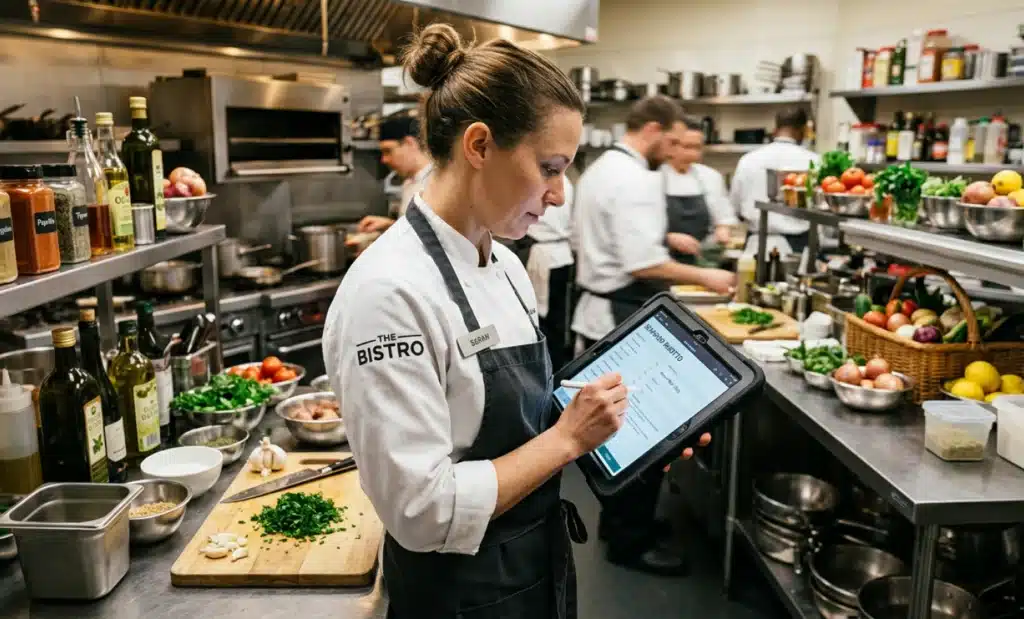
Reducing staff pressure is one of the clearest practical benefits. When a guest with a complex allergy arrives, the current model often requires multiple conversations, a trip to the kitchen, and a wait. That creates friction for the guest and pulls a team member away from other tables.
With an AI QR code in place, most allergen questions are answered before a server even approaches the table. The guest has already checked the menu, confirmed which dishes are safe, and made a shortlist. The ordering experience becomes faster and more confident for everyone.
This does not remove the human element from allergy management. There will always be situations that require direct staff involvement, and those situations deserve full attention. What the AI layer does is handle the informational part of the question efficiently, so that human attention goes where it is genuinely needed.
Building trust through transparency
For guests managing serious food allergies, dining out involves a constant calculation of risk. They are asking themselves whether to trust the information they are given and whether the restaurant takes their safety seriously.
Transparent, accessible allergen disclosure is one of the most direct ways a restaurant communicates that it does. A guest who can scan a code at the table and immediately access detailed ingredient lists, preparation methods, and allergen warnings is a guest who feels respected. That feeling translates directly into return visits and word of mouth.
This is the less obvious argument for AI QR codes in the hospitality industry. The safety benefit is clear. But guest trust is a business outcome too. Restaurants that make allergy safety easy and visible are building a relationship with a segment of diners who are intensely loyal to places that treat them well.
What data comes back to the restaurant
Every scan and conversation generates analytics. Restaurants using Cleo through QRCodeKIT can see which dishes prompt the most allergen questions, which allergens guests are asking about most frequently, and where guests are dropping out of the conversation without getting a complete answer.
That data is valuable beyond safety. If a particular dish generates a high volume of gluten questions, that might suggest the menu description is incomplete. If guests are consistently asking about dairy across several dishes, the restaurant may want to consider clearer labeling or a dedicated allergy-friendly section.
Allergy data in this context becomes operational intelligence. It helps the restaurant improve its menu, its descriptions, and its communication with guests, not just its compliance record.
Is an AI QR code the right fit for every restaurant?
The honest answer is that it depends on how allergen information is currently managed and how willing the kitchen team is to maintain accurate, up-to-date data in the system.
The technology works because the information behind it is reliable. A restaurant that cannot commit to keeping allergen data current should address that foundation first. An AI assistant that gives confident answers based on outdated information is not a safety tool. It is a risk.
For restaurants that already take allergen disclosure seriously and want a more efficient, accessible way to deliver that information to guests, an AI QR code is a strong fit. Setup is straightforward and requires no developer involvement. The ongoing commitment is to data accuracy, which is already a requirement for responsible allergen management regardless of technology.
How does a restaurant get started with AI QR codes?
QRCodeKIT allows restaurants to create AI QR codes natively for hospitality use cases including menus, reservations, and allergen information. The process does not require technical expertise. The restaurant provides the content, including allergen details for each dish, and Cleo draws on that content to answer guest questions.
Because all QR codes on the platform are dynamic, the restaurant can update allergen information at any time, as often as the menu changes. The physical code stays in place. The information behind it stays current.
For a restaurant that takes food safety seriously, that combination of accessibility, accuracy, and real-time updating is exactly what the problem requires.

What should restaurants know before adding allergen QR codes?
Three things are worth considering before implementation.
First, the quality of the information going in determines the quality of the answers coming out. Allergen data should be reviewed and verified before it is entered, not treated as a first draft to be corrected later.
Second, an AI QR code for allergen information supplements staff knowledge. It does not replace the need to train team members on allergy protocols and serious allergic reaction response.
Third, guests with the most serious allergies may want verbal confirmation from a team member even after checking the digital information. That is a reasonable expectation, and a well-run restaurant should accommodate it. The AI layer handles the information efficiently. The human layer handles the relationship and the edge cases.
Used with those boundaries in mind, an AI QR code is one of the most practical tools a restaurant can add to its allergy management workflow. It puts accurate allergen information in the right place at the right time, which is directly in front of the guest, the moment they need it.
All images and visual content in this article were created using RealityMAX.