April 30, 2026
GS1 Sunrise 2027: the complete dynamic QR code migration guide
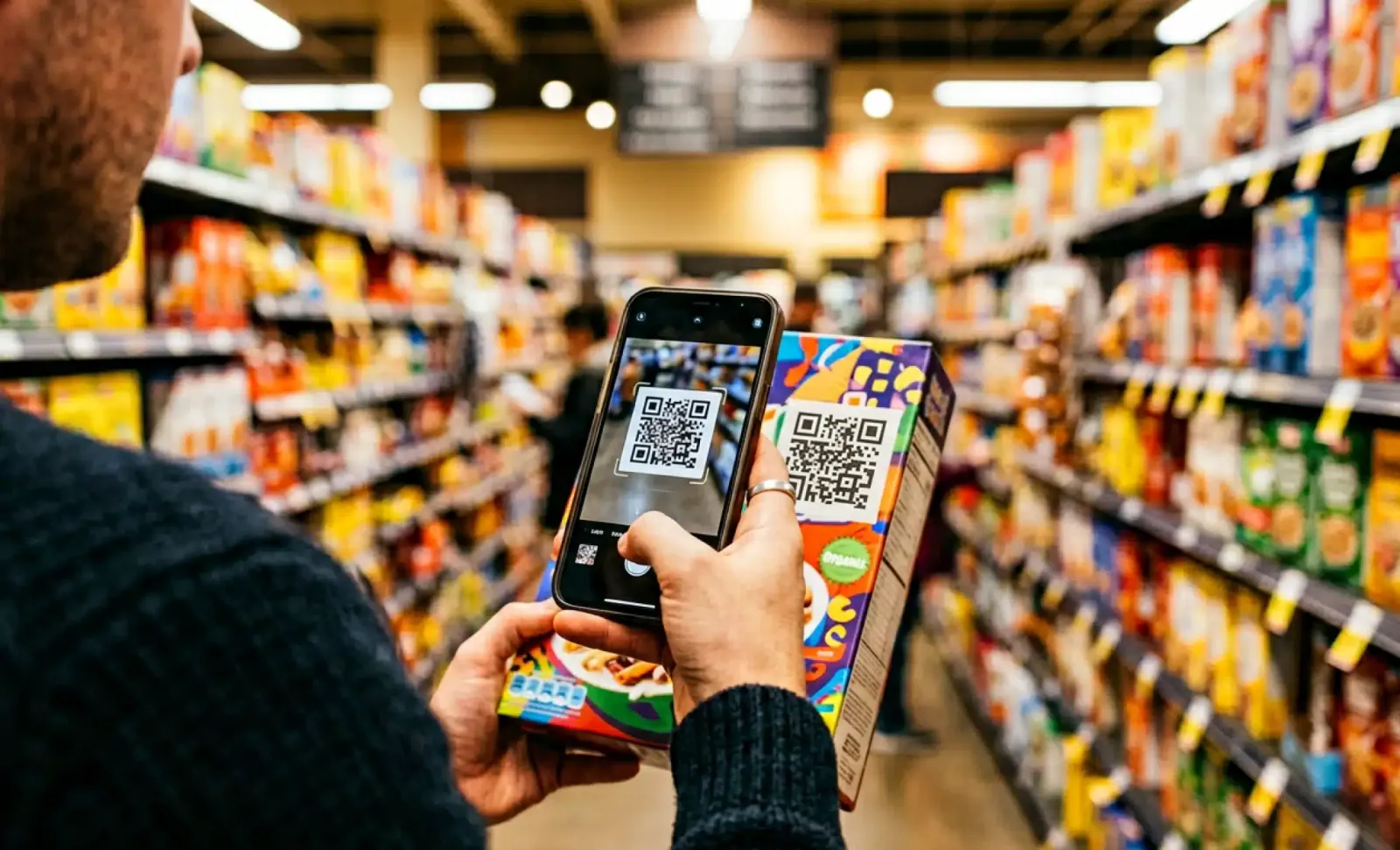
The barcode you have been printing on every product for the last forty years is on a deadline. By the end of 2027, the retail industry expects packaging to carry a different kind of code, one that does far more than identify a product at checkout. This shift has a name. It is called GS1 Sunrise 2027, and it is the largest coordinated change to retail identification since the original UPC barcode was scanned at a supermarket in 1974.
For brand owners, supply chain leaders, and packaging managers, this is not a small upgrade. It touches packaging design, point of sale systems, supply chain partners, retailer compliance, and how consumers interact with products on the shelf. Done well, it unlocks richer data, better traceability, and enhanced consumer engagement. Done poorly, it becomes a costly rework cycle that takes years to untangle.
This guide explains what is changing, why dynamic QR codes are the right foundation, and how to plan a migration that holds up over time.
What GS1 Sunrise 2027 actually is
GS1 Sunrise 2027 is a global initiative led by GS1 to transition retail point of sale from one-dimensional linear barcodes to two-dimensional barcodes by the end of 2027. The new codes are primarily QR codes powered by the GS1 Digital Link standard, although the family also includes Data Matrix in some industries.
The framing matters. This is not a hard regulation that fines you for non-compliance the day after the deadline. It is a voluntary industry transition with a very firm reality behind it: major retailers are aligning their POS systems and supplier requirements to the 2027 horizon. When the largest retailers in your category say they want 2D-ready products on their shelves, voluntary becomes effectively mandatory.
The reason GS1 set this timeline is straightforward. The traditional UPC encodes a single Global Trade Item Number. That GTIN works fine for ringing up a product, but it carries nothing else. No batch number, no expiration date, no link to product information, no path to authenticate the item. A 2D QR code built on GS1 Digital Link can carry all of that inside a single code on the package, while still scanning at the register exactly like the old barcode used to.
What changes at retail point of sale
The most visible change is the code itself. A linear barcode is a row of vertical bars with quiet zones on either side. A 2D barcode is a square pattern that holds far more information per square centimeter. Both can be scanned at checkout, but only the 2D version can also be read by a smartphone, link to a webpage, and carry product attributes the cashier never needs to see.
For POS systems, the transition has three layers.
The first is hardware. Many older laser scanners can only read 1D barcodes. Image-based scanners, which most retailers have been deploying for the last decade, can read both. Retailers aim to complete this hardware refresh well ahead of the deadline, but suppliers should not assume the entire installed base is ready on day one.
The second is software. The POS application needs to know what to do when it reads a GS1 Digital Link QR code. At minimum, it needs to extract the GTIN and treat the rest of the encoded data correctly, whether that is a batch number, a serial number, or an expiry date. Some retailers will use that additional data to enforce expiration checks, manage recalls at the lane, or improve inventory accuracy in real time.
The third is data. The new codes can carry far more information, but only if brand owners actually populate it correctly and consistently. Increased data capacity is only valuable if the data is accurate, governed, and aligned with retailer expectations.
Why dynamic QR codes are the right foundation
The single most important decision in this migration is whether to use static or dynamic QR codes.
A static QR code encodes its destination and data directly into the visual pattern. Once it is printed, it cannot change. If the URL behind the code needs to update, or the destination needs to redirect to a new product page, the only fix is to reprint the packaging.
A dynamic QR code encodes a short, stable address that resolves through a platform. The actual destination, the content shown to the user, and the routing logic can all be updated at any time without changing the printed code. The code on the package stays the same. Everything behind it can evolve.
For Sunrise 2027, this distinction is not a nice-to-have. It is the difference between a packaging investment that pays off for years and one that locks you into the assumptions you made on day one.
Consider what changes during a product’s lifetime on the shelf. Marketing campaigns shift. Regulatory disclosures get updated. Recall procedures need a fast path to consumers. Sustainability reporting requirements expand. Loyalty programs come and go. None of this should require a packaging change.
Dynamic QR codes also handle the operational reality of variable data better. Batch numbers, serial numbers, and expiration dates change with every production run. A platform that supports dynamic QR codes aligned with GS1 Digital Link, like QRCodeKIT, lets brand owners manage routing and content centrally while production lines encode the variable information specific to each unit. The fixed elements stay fixed. The variable elements vary. The destination behind the code remains under your control after the package leaves the factory.
There is one more reason dynamic codes matter for enterprise migration. Analytics. Every scan generates data about where, when, and how consumers and supply chain partners interact with products. With static codes, you have no visibility. With dynamic codes built on a mature platform, you see engagement patterns at the SKU level, identify which markets are scanning most, and understand how consumer engagement actually behaves in the wild.
GS1 Digital Link basics
GS1 Digital Link is the technical standard that makes the new codes work for everyone at once. It is worth understanding the principle, even at a high level, because it shapes every implementation decision.
A traditional barcode encodes a GTIN. A GS1 Digital Link QR code encodes a web address that contains the GTIN, optionally followed by additional identifiers like batch, serial number, or expiry. That same address can be resolved by a POS scanner to extract the GTIN for checkout, by a smartphone to load a consumer-facing product page, by a supply chain partner to retrieve traceability information, and by a retailer’s inventory system to update stock with full attribute detail.
One code, many uses. The information encoded depends on who is reading it and what they are authorized to see.

This is what makes the standard powerful. A brand does not need to print three different codes on a package for three different audiences. The same QR code serves consumer engagement at home, point of sale at the register, and the connected supply chain in between. The destination changes based on the resolver logic and the access permissions of the system reading it.
For brand owners, the practical implication is that product identification, product authentication, and consumer engagement all start to share the same physical asset on the package. That is a significant simplification, but only if the underlying platform handles resolution correctly.
Put it into practice
Create a dynamic QR code free and see it work. No credit card required.
Get started freeA practical three-phase migration timeline
Most enterprises underestimate how long a real migration takes. The work is not just printing a new code. It is aligning packaging, data systems, retailer requirements, and internal governance. A realistic plan has three phases.
Phase 1: assessment and planning. This phase usually takes three to six months. The work is internal. Inventory every SKU and every packaging line. Map which products go to which retailers and document each retailer’s specific 2D readiness timeline and technical requirements. Audit your master data to see whether GTINs, descriptions, and attribute data are clean enough to populate the new codes meaningfully. Identify which printers and packaging lines can already produce QR codes at production speed and quality, and which need upgrading. Decide which platform will manage your dynamic QR codes and the GS1 Digital Link resolver behind them. Define data governance: who owns batch numbers, who maintains the consumer-facing pages, who handles updates after launch.
Phase 2: pilot and validation. Three to six months. Choose a small set of SKUs in a single category, ideally with one or two retail partners willing to pilot 2D scanning at point of sale. Print real packaging, run it through the full supply chain, and validate that the codes scan correctly at every step. Pay attention to print quality, contrast, quiet zones, and scanner compatibility. Test the consumer experience end to end by scanning with different smartphones in different lighting conditions. Measure scan success rates and use the data to refine specifications before scaling.
Phase 3: scaled rollout. Twelve to eighteen months. Roll out by category, by region, or by retailer relationship, depending on your business structure. Keep the pilot SKUs running in parallel as a reference. Update packaging artwork and production specifications systematically. Coordinate cutover dates with retailers so that 2D-ready products arrive at distribution centers in line with their POS readiness. Maintain a fallback plan for retailers that lag the timeline, since many will still need 1D-readable codes during the transition window.
The biggest planning mistake is treating phase 3 as the whole project. The hard work happens in phase 1.
Common mistakes to avoid
A few patterns appear repeatedly in migrations that go wrong, and most are avoidable with discipline early on.
- Starting with static QR codes to save platform costs. The savings disappear the first time a destination needs to change and the only path forward is reprinting packaging. Static codes also forfeit the analytics that make the investment defensible internally.
- Ignoring retailer-specific requirements. Major retailers have different timelines, different scanner capabilities, and different data expectations. Treating “GS1 Sunrise 2027” as a single specification is a mistake. The standard is shared. The implementations vary.
- Underestimating data governance. The new codes can carry richer data, which means someone has to own it. Without clear ownership of batch numbers, expiry dates, consumer-facing content, and update workflows, the codes become inconsistent across SKUs and lose credibility with both retailers and consumers.
- Treating it as a packaging-only project. Sunrise 2027 touches POS systems, supply chain partners, regulatory disclosure, marketing, and IT. A migration led only by packaging will hit walls when other functions are not aligned.
- Skipping the pilot. The temptation to move from planning straight to scaled rollout is strong because the deadline feels tight. Skipping validation is how you discover at scale that your print quality fails on a particular substrate or that a retailer’s scanner rejects your codes.
- Forgetting about the long tail. Some products move slowly. Inventory printed today may still be on shelves in two years. Plan the cutover so you are not stuck with non-compliant stock at the deadline.
Connection to broader regulatory context
GS1 Sunrise 2027 does not exist in isolation. It overlaps with several adjacent regulatory and market shifts that enterprises should plan for in the same effort.
The EU Digital Product Passport is the most significant. Starting with batteries in 2027 and expanding across categories, products sold in the EU will need to carry a digital identifier that links to structured information about composition, repairability, recycled content, and end of life handling. The carrier for that identifier in most cases will be a 2D code on the package. Companies that build a clean GS1 Digital Link foundation for Sunrise 2027 are also building the spine of their Digital Product Passport readiness.
Traceability requirements are tightening across food safety, pharmaceuticals, and consumer goods. The ability to follow a specific batch from production to shelf to consumer scan is becoming a regulatory expectation, not a competitive advantage. Dynamic QR codes connected to a structured backend make this practical at scale.
Sustainability disclosure is moving from voluntary to mandatory in many jurisdictions. Linking a product to its environmental data through a scannable code is one of the cleanest ways to provide transparency without redesigning packaging every quarter.
Approaching Sunrise 2027 as a standalone project misses the leverage. Approaching it as the foundation for the next decade of product data infrastructure changes the conversation internally about budget and priority.
Frequently asked questions
What happens if our products are not 2D-ready by the end of 2027?
There is no universal penalty. The practical consequence is that retailers requiring 2D-ready products will deprioritize, delist, or charge back products that arrive without compliant codes. The risk is commercial, not regulatory, but for major retailers the commercial risk is significant.
Can we keep the old 1D barcode and add a QR code separately?
Yes, and many brands will do exactly that during the transition. Carrying both codes adds complexity and packaging real estate, but it preserves backward compatibility with retailers that have not yet upgraded their POS hardware. Most plans phase out the 1D barcode only when retailer readiness allows.
Do we need a different QR code for consumers and for the supply chain?
No. That is the point of GS1 Digital Link. A single QR code resolves differently depending on who is scanning it and what system is interpreting the result. One code on the package serves consumer engagement, retailer point of sale, and supply chain partners simultaneously.
How do we handle batch numbers and expiration dates that change with every production run?
The variable data is encoded at the production line, while the resolver logic and consumer-facing destinations are managed centrally. A platform built for dynamic QR codes lets brand owners control the destination and content centrally, while the printed code on each unit carries the batch and expiry specific to that production run.
Is GS1 Sunrise 2027 only for grocery and consumer goods?
It started there because retail point of sale is where the impact is most visible, but the underlying shift to 2D barcodes is happening across healthcare, pharmaceuticals, apparel, and durable goods. The principles in this guide apply across categories. The specific retailer and regulatory timelines vary.
The end of 2027 is closer than it looks once you map out a real migration plan. The brands that will navigate it well are the ones that started by understanding what is actually changing, chose dynamic QR codes as the foundation, and treated the transition as an investment in product data infrastructure rather than a packaging refresh. The deadline is fixed. The quality of the migration is not.
All images and visual content in this article were created using RealityMAX.
Related articles
How AI QR codes work?
An AI QR code is a dynamic QR code with a conversational AI layer waiting at the destination. The pattern on the wall looks like any other QR code. What…

European accessibility act
The European Accessibility Act entered into force on 28 June 2025. For businesses operating in or selling to the EU, it marks a genuine shift in how digital…
QR code on TV commercials
TV is back in the performance marketer’s toolkit. Not because the medium changed, but because the phone in the viewer’s hand now closes the loop that broadcast…
Two free dynamic QR codes. Yours forever.
No credit card. No expiry. The original dynamic QR platform since 2009.