TL;DR
- To generate a QR code for a playlist, copy the public link from Spotify, YouTube, or Apple Music, paste it into QRCodeKIT, and download the result.
- A dynamic QR code lets you change the playlist later and track every scan without reprinting anything.
- Add your code to posters, invitations, packaging, or social bios to turn any surface into a one scan link to your music.
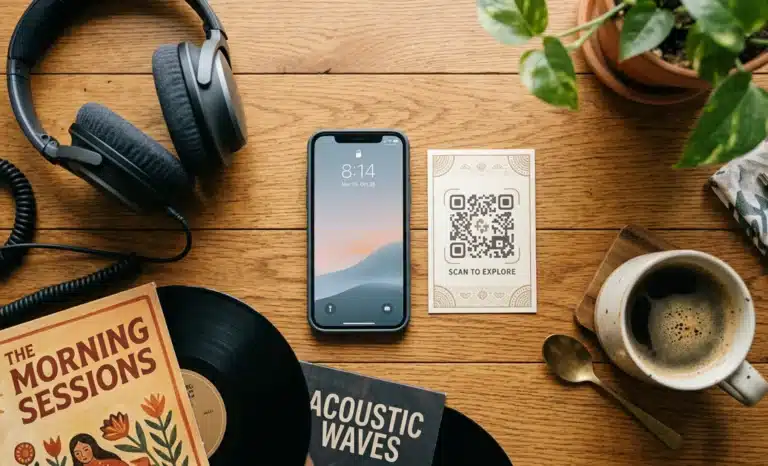
Sharing music used to mean sending a link and hoping it survived the group chat. A QR code does the job in one move. Whether you built a summer soundtrack, a gym mix, or a calm playlist for your waiting room, learning how to generate a QR code for a playlist makes sharing faster and far easier to remember.
This guide walks through the exact steps using the major streaming services, then covers design, tracking, and the smartest places to put your code.
Why create a QR code for a playlist?
A playlist QR code turns a long, messy streaming link into a single scan. Point a phone at it and the listener lands straight on your songs, with no typing and no searching. That speed makes it useful for personal sharing and for any brand that wants people listening within seconds.
It also removes friction in places where a link cannot go. You can print it on a poster in a coffee shop, drop it onto a wedding invitation, or add it to a flyer at a gig. The physical world becomes a doorway to your music.
What do you need before you start?
Before you generate your code, gather a few basics. The list is short, and most of it you already have if your playlist is public.
- A public link to your playlist from Spotify, YouTube, Apple Music, or another streaming service
- A QR code generator that creates dynamic QR codes, so you can edit the destination and track scans later
- Optional branding such as a logo, colors, or cover artwork if you want the code to match your style
That is the whole setup. With the link ready, the rest takes minutes.
How to generate a QR code for a playlist, step by step
Generating a QR code for a playlist is a four step process: copy the link, paste it into a generator, customize the design, then download and test. The whole thing fits into a coffee break, and you only do it once per playlist when you choose a dynamic code.
Step 1: Copy your playlist link
Open your streaming app and go to the playlist you want to share. In Spotify, for example, tap the three dot menu, choose Share, then Copy link. The same approach works for single songs and full albums, so you are not limited to playlists.
Step 2: Paste the link into QRCodeKIT
Open QRCodeKIT and paste your playlist link into the website or landing page field, then generate. You will see a preview right away. Because QRCodeKIT codes are dynamic, you can point the same code at a different playlist later without making a new one.
Step 3: Customize the design
Give the code a look that fits the playlist or the brand. You can adjust the colors, add a logo for instant recognition, and wrap it in a frame with a short prompt like “Scan to listen.” A code with context tends to earn more scans than a bare black and white square.
Step 4: Download and test
Before you share anything, scan the code with your own phone and confirm it opens the right playlist. Then download it in high resolution. PNG or SVG suit print, while JPG or WebP work well for screens and social posts.
Where can you use a playlist QR code?
A playlist QR code fits almost anywhere people pause with a phone in hand. The trick is to place it where the music adds to the moment, not where it competes for attention. A few settings tend to work especially well.
For artists and bands
Put a Spotify QR code on posters, flyers, album art, or merch. Every gig becomes a discovery point, and fans can follow your sound before they leave the venue.
For businesses
If you play music in store, let customers take it home. Add a playlist QR code to menus, window stickers, or the checkout counter so the in store mood follows them out the door.
For events
Drop your playlist QR code onto wedding invitations, birthday cards, or conference badges. Guests can set the tone on the way over, a small touch that people remember.

For content creators
Tuck a playlist QR code into video end screens, link in bio pages, or email footers. It is a quiet way to send your audience toward more of your music.
What is the difference between Spotify QR codes and Spotify Codes?
Spotify Codes and QR codes look similar but behave differently. A Spotify Code only scans inside the Spotify app, so anyone without the app installed hits a dead end. A QR code made with QRCodeKIT scans from any phone camera and can send people to Spotify or any platform you choose.
For wide reach across audiences and devices, a standard QR code is the safer bet. It meets people where they are instead of assuming which app they have open.
Can you make a playlist QR code for YouTube or Apple Music?
Yes. A playlist QR code is not tied to Spotify. As long as there is a public URL, you can turn it into a code. Paste a YouTube playlist link, an Apple Music playlist URL, or a public link from Deezer, Amazon Music, or Tidal into the generator and you are set.
This flexibility matters when your audience is spread across services. One code, pointed wherever you like, keeps your sharing simple even when listening habits differ.
Why choose a dynamic QR code for a playlist?
A dynamic QR code is the right choice for playlists because music changes and campaigns evolve. The code stays printed and fixed while the destination behind it stays editable. That single feature saves you from reprinting posters every time you refresh a mix.
Dynamic codes also give you data and control:
- Change the playlist link at any time without creating a new code
- Track scans by date, location, and device to see what is working
- Test different designs or prompts and compare which earns more listens
For seasonal playlists, promotions, or anything you expect to update, dynamic is the practical default. Every QRCodeKIT code is dynamic, so editing and tracking come built in.
Can you share podcasts with a QR code, too?
Absolutely. Podcasts work the same way as playlists. Grab the public link to a single episode or your whole show, run it through the generator, and you have a code that connects listeners in one scan. It fits neatly on flyers, event booths, business cards, or inside a newsletter.
For a real example, QRCodeKIT runs its own show, QR Code Tales, covering marketing stories and real use cases for QR codes. Like a playlist code, a podcast code can be tracked, customized, and updated whenever your content moves.
How do you link to multiple playlists with one QR code?
If you manage several playlists for different moods, days, or audiences, send the code to a mobile landing page instead of a single link. QRCodeKIT lets you list multiple playlists behind one code, which suits DJs, creators, and venues that switch sets often.
Think of it as a small music hub. One scan, then the listener picks the mix that fits the moment.
How do you boost scans on a playlist QR code?
Three habits make the biggest difference. First, add a clear call to action, since “Scan to listen” performs better than a code sitting alone. Second, place the code near a relevant cue, like a now playing sign or a song title. Third, keep it scannable.
On print, aim for a code at least 2 cm by 2 cm and test it from a few devices and distances. A code that fails at arm’s length earns nothing, no matter how good the playlist behind it is.

Can you add a QR code to Spotify playlist artwork?
Not directly inside Spotify, since the app does not let you embed a code into the cover image. What you can do is add your QR code to promotional graphics, printed sleeves, or social posts that feature the playlist. Export the code from the generator and place it with any photo editing tool.
That way the code lives alongside your artwork everywhere except the app itself, which still gives you plenty of reach.
Conclusion
A playlist QR code makes sharing music almost effortless. Copy a public link, generate the code in QRCodeKIT, give it a design that fits, and you have a single scan that carries your sound from a printed page to someone’s headphones. Choose a dynamic code and you keep the freedom to swap playlists and watch the scans add up over time. Next time you finish a playlist, do more than paste a link. Make a code and let the music do the talking.
All images and visual content in this article were created using RealityMAX.