Valentine’s Day is one of the busiest moments of the year for the restaurant industry. Dining rooms fill up quickly, online ordering spikes, and expectations are high. For many restaurants, it is a golden opportunity to boost sales, attract new patrons, and strengthen relationships with loyal customers.
In this context, QR codes have become a practical tool to connect in-store experiences with digital touchpoints, helping restaurants manage holiday traffic while creating more engaging and memorable Valentine’s Day campaigns.
This article explains how restaurants use QR codes for Valentine promotions inside QRCodeKIT, focusing on real workflows, decisions, and outcomes rather than generic ideas.
Why Valentine’s Day changes how restaurants use QR codes
Valentine’s Day campaigns are different from everyday promotions. Guests are not just looking for delicious food. They are looking for a special occasion, a festive atmosphere, and meaningful connections with loved ones, friend groups, or even solo diners celebrating self love.
During the holiday season, restaurants face several challenges at once. Reservations need to be managed efficiently. Special menus must be easy to access. Promotions should feel personal rather than generic. At the same time, local businesses want to calculate ROI across marketing channels like flyers, social media ads, email campaigns, and paid ads.
QR codes help bridge these needs by offering easy access to digital experiences without adding friction. Customers scan, land on the right information, and take action in seconds.
Using QR codes to promote Valentine’s Day menus
One of the most common Valentine’s Day approaches in the restaurant industry is the special menu. Many restaurants create limited-edition menus featuring multi-course meals, wine pairings, or themed desserts designed to celebrate love.
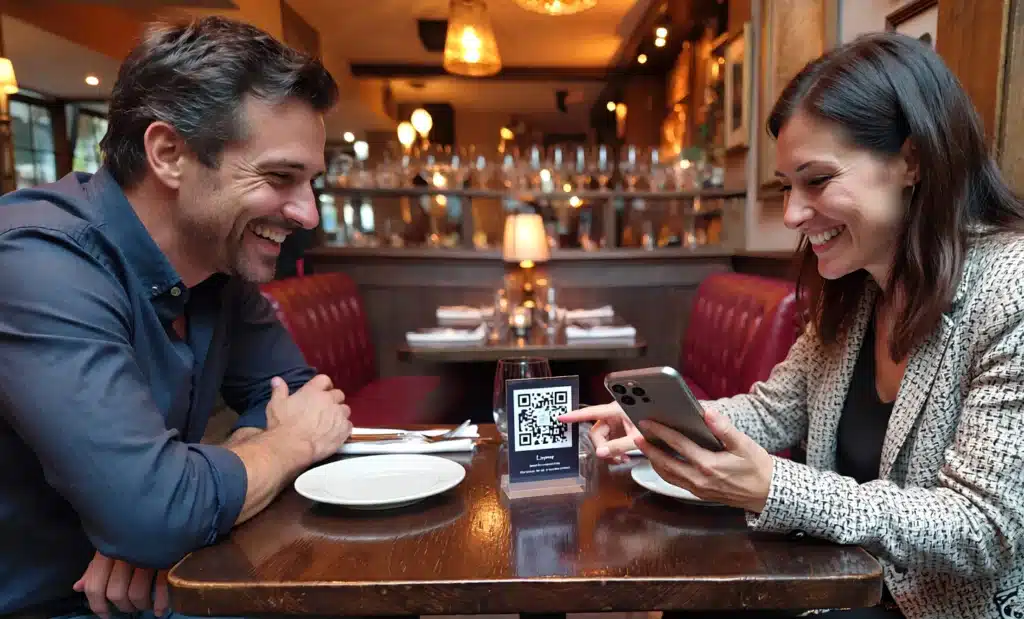
By placing QR codes on table tents, posters, or contactless menus, restaurants can link directly to online menus built for Valentine’s Day campaigns. This keeps printed materials clean while allowing the digital menu to include photos, allergen details, and engaging messages that set expectations before customers even arrive.
Dynamic QR codes are especially useful here. If a dish sells out or a special changes at the last minute, restaurants can update the menu behind the QR code without reprinting anything. This flexibility is critical during peak holiday traffic.
Simplifying reservations and special events with QR codes
Valentine’s Day is not just about dinner for two. Many restaurants host special events such as tasting nights, ticketed dinners, Galentine’s Day gatherings, or happy hour experiences for single diners.
QR codes linking to a reservation system or event page make it easier for potential customers to secure a spot. Instead of typing URLs or navigating multiple pages, customers scan and book instantly. This seamless experience reduces drop-off and improves customer satisfaction during busy periods.
Restaurants can place QR codes on flyers, digital ads, or social media posts to drive ticket sales and RSVPs while tracking which channels generate the most engagement.
Creating early access and loyalty experiences
Valentine’s Day campaigns are an ideal moment to reward loyal customers. Restaurants often offer early access to reservations, special seating, or exclusive Valentine’s specials for email subscribers or loyalty program members.
QR codes can trigger these experiences by linking to private landing pages or loyalty programs. For example, a QR code sent via email campaigns or SMS campaigns can unlock early booking or a complimentary treat for repeat visits.
This approach not only drives bookings but also strengthens customer loyalty by making guests feel valued during a special occasion.
Measuring flyer and in-store performance with QR codes
Traditional flyers generate no measurable data. Restaurants may distribute hundreds of flyers but have no clear way to calculate ROI or understand customer interactions.
By incorporating QR codes into Valentine’s Day flyer campaigns, restaurants gain visibility into performance. They can see how many customers scan, when they scan, and where those scans happen. In the restaurant industry, QR code flyer campaigns have shown scan-through rates significantly higher than many other industries.
Dynamic QR codes allow teams to compare results by flyer design, offer, or location. This makes it easier to refine marketing strategy not only for Valentine’s Day campaigns but for future promotions as well.
Engaging diners during the meal
Valentine’s Day dining experiences are emotional by nature. QR codes can enhance that moment instead of interrupting it.
Restaurants use QR codes to link to interactive polls, digital love notes, curated playlists, or social sharing prompts that encourage guests to share photos and user generated content. These interactions extend the experience beyond the table and increase brand visibility through social media posts.
When used thoughtfully, QR codes help engage customers without overwhelming them, adding a layer of meaning to the dining experience.
Supporting online ordering and takeout on Valentine’s Day
Not all Valentine’s Day customers dine in. Around February 14th, online ordering increases sharply as couples, families, and friend groups celebrate at home.
QR codes placed in store, on packaging, or in digital ads can link directly to online ordering pages or Valentine’s Day landing pages. This provides easy access to special menus and limited-time offers designed for delivery or pickup.
For local businesses, this helps attract new customers who may not be ready to dine in but still want to celebrate the occasion.
Dynamic vs static QR codes for Valentine’s campaigns
Many restaurants still rely on static QR codes, especially for simple use cases like contactless menus. However, Valentine’s Day campaigns often require more flexibility.
Dynamic QR codes allow restaurants to update offers, change landing pages, or adjust messaging as the campaign evolves. This is particularly useful when testing different Valentine’s Day approaches, running targeted promotions, or responding to unexpected demand.
Static QR codes, once printed, cannot be changed. For time-sensitive holiday campaigns, this limitation can quickly become a problem.
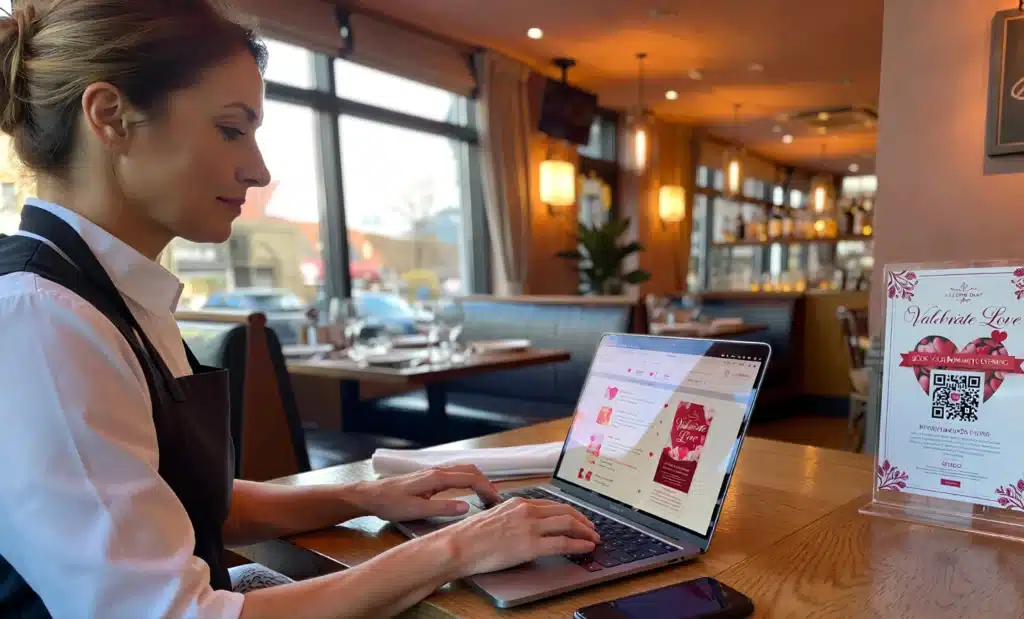
Using QR codes to connect marketing channels
Valentine’s Day marketing rarely relies on a single channel. Restaurants combine social media ads, email campaigns, digital ads, in-store signage, and local SEO efforts to drive traffic.
QR codes act as a connector across these channels. A customer might see a social media post, scan a QR code on a flyer, and later return through an email reminder. With the right setup, restaurants can understand how these touchpoints work together and drive engagement more effectively.
This visibility helps teams make better decisions during the holiday season and beyond.
Learning and adapting with QRCodeKIT
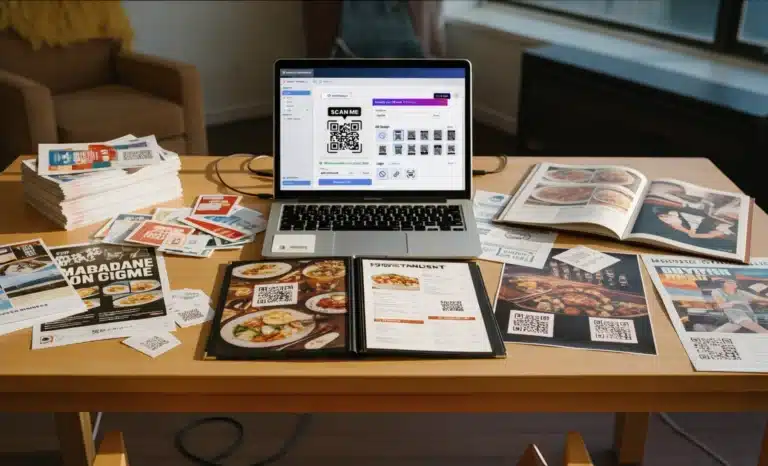
Inside QRCodeKIT, restaurants can create and manage dynamic QR codes that link to menus, landing pages, reservation systems, and loyalty programs. The platform makes it easier to adapt Valentine’s Day campaigns without guessing or overcomplicating workflows.
For many restaurants, QR codes are no longer just a convenience. They are a practical way to create memorable experiences, engage customers, and turn Valentine’s Day into a meaningful moment for both guests and the business.
If you are exploring how to incorporate QR codes into your own Valentine’s Day campaigns, understanding these real-world use cases is a good place to start.