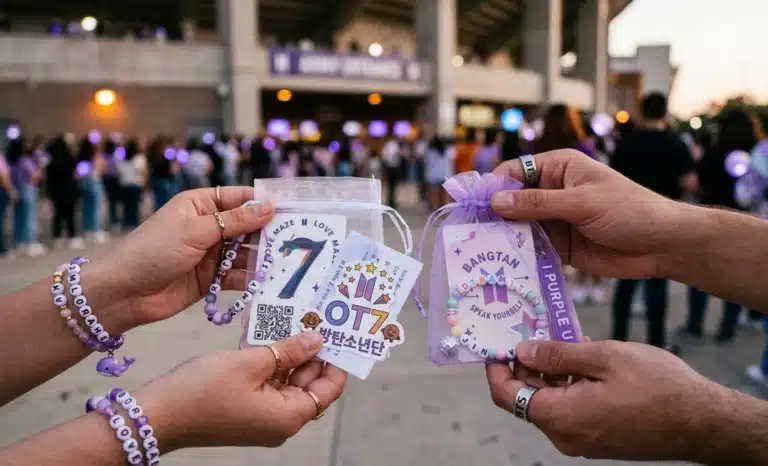
K-pop fandoms have always made things for each other. Photocards, hand fans, bracelets, washi tape, tiny prints handed across a barrier with a shy smile. A QR code for freebies is simply the newest tool in a tradition fans built themselves, a way to fold a whole world of links behind one small square so the gift stays beautiful and the message stays generous. None of this is new to the people reading it. What follows is for anyone making their first freebie, and a quiet nod to everyone who has been doing this for years.
What is a freebie in K-pop fan culture?
A freebie is a small, often handmade gift that K-pop fans exchange at concerts and fan events. Common freebies include photocards, stickers, hand fans, bracelets, washi tapes, mini posters, prints, and sometimes baked goods or handwritten letters. Many are customized around the recipient’s bias, their favorite member, or a shared theme from an era or tour.
Freebies are not merchandise. No one sells them. They are made to be given, often by fans who spend weeks designing and assembling them at home. The joy lives in the exchange, and in seeing your work end up with a stranger who loves the same group.
Why does a QR code work so well on a freebie?
A freebie is small, and space runs out fast. There is rarely room for a long message, several social handles, a playlist, and a letter all at once. A QR code for concert freebies solves that quietly. It holds the extra content off the page, so the design stays clean and the recipient decides when to scan and explore.
That is the real appeal of good freebie QR code design. The printed object keeps its look, and everything the giver wants to share lives one scan away. A sticker the size of a coin can open a playlist, a gallery, or a note that would never have fit on the card itself.
What do fans usually link their freebie QR code to?
Fans link freebie QR codes to whatever they most want to share, and the choice is personal. A fandom QR code usually reflects how the giver connects with the community. A photocard QR code might open a single playlist, while a Linktree-style page can gather everything in one place.
Common destinations include:
- Social media handles on Twitter/X, Instagram, TikTok, Bluesky, or sometimes Tumblr, so the recipient can follow back.
- A Spotify or Apple Music playlist, often a curated set of the giver’s favorite songs from a group or era.
- A personal letter or message written for whoever ends up receiving the freebie.
- A fan art gallery the giver has drawn or collected.
- YouTube videos of fan covers, dance covers, or compilations.
- A Linktree-style page that collects every link in one tidy spot.
A fandom social media QR is the most common choice, but the warmest freebies tend to be the ones hiding a handwritten letter behind the code.

Where do BTS and ARMY fit into freebie culture?
ARMY, BTS’s fandom, has long been one of the most active freebie communities in K-pop, and freebies themselves are a tradition that predates any tour. BTS opened the European leg of their 2026 world tour in Madrid on June 26 and 27, 2026, a natural moment to talk about K-pop freebies QR codes, though ARMY and fans of many other groups were already making them for years.
This is not unique to one fandom. Stays at Stray Kids shows, MOAs at TXT events, ATINYs for ATEEZ, Carats for Seventeen, and many others have made and traded freebies for years. ARMY does the same with BTS concert freebies, and ARMY freebies often carry a QR code linking to a playlist or a message. A QR code is simply a useful addition to a practice fans across K-pop built and refined themselves.
How do you make a QR code for freebies?
Making a QR code for freebies takes minutes. Decide what to share, generate the code, match it to your design, then test it before you print. The steps below work whether you are making one photocard or a hundred stickers for a whole tour.
- Decide what you want to share. One link, a playlist, a letter, or several links gathered on a Linktree-style page. This choice shapes everything else.
- Understand your code options. QR generators generally offer two kinds. A static code is fixed once created and cannot be edited later, and some tools offer these for free. A dynamic code lets you change the destination afterward without reprinting. If your handles might change or you want to refresh the content for a future date, dynamic is the safer choice.
- Use a QR code generator. There are many to choose from. QRCodeKIT offers a free plan with two dynamic QR codes, which is plenty for a fan making freebies on a budget, and the destination can be updated whenever you need.
- Match the code to your freebie. Many generators let you adjust colors, add a frame, drop in an icon, or place your username inside the design so it fits the aesthetic of the rest of the piece.
- Test before you print. Scan the finished code with a few different phones, in different lighting, to be sure it works. Always do this before printing in bulk.
- Print on something durable. Cardstock or sticker paper holds up well. Keep the code large enough to read reliably, usually at least 2 by 2 cm.
What design choices keep a freebie QR code scannable?
A freebie QR code only matters if it actually scans, so a few design choices count more than they appear to. High contrast beats brand colors every time. A soft pastel code can be lovely and still fail to read, so if you want pastel, test it hard before you commit. Leave a clear quiet zone, the empty margin around the code, so phones can lock onto it. Pair the code with a short line of text saying what it links to, since a mystery scan is easy to ignore. And place it with intention in your layout rather than squeezing it into a corner. The best freebie QR code design treats the code as part of the artwork.
Why are dynamic QR codes worth it for tour season?
If you plan to hand out freebies across several dates of a tour, dynamic QR codes are worth the small bit of extra setup. A dynamic code lets you change where it points without reprinting, so the same printed sticker can link to a different playlist or message in each city. You design and print once, then update the content as the tour moves.
That flexibility suits the rhythm of a tour. A fan event QR code printed for an opening night in one country can quietly become a fresh welcome message weeks later somewhere else. Nothing on the freebie changes. Only what waits behind the scan.
How do you keep a freebie QR code safe and accessible?
A freebie is a gift, so the link behind it should feel safe to open. Avoid sending people to anything that asks for personal data without a clear heads-up first. Skip direct downloads of copyrighted material like ripped songs or album leaks, both out of respect for the artists and to keep recipients safe.
Accessibility matters just as much. Make the code easy to scan in poor lighting and outdoors, where most freebies actually change hands. Remember that the person receiving it may read a different language or have different needs, so keep the linked page simple, clear, and easy to navigate on a phone.
Fandoms built this, and it shows
There is something quietly moving about the care fans put into freebies. A printed square, a folded note, a sticker designed at two in the morning, all made to be given to a stranger who loves the same music. A QR code does not change any of that. It just makes a little more room for generosity. Fans perfected this long before any platform noticed, and the creativity on display during tour season speaks for itself.

Can I use a free QR code for my freebies?
Yes. A free QR code is enough for most freebies. QRCodeKIT’s free plan includes two dynamic QR codes, which covers a fan making a small batch for a show. Free options are common, so cost should never be the thing standing between you and a beautiful freebie.
What should a freebie QR code link to?
Link it to whatever you most want to share. Popular choices are a playlist, your social handles, a fan art gallery, or a short personal letter. A Linktree-style page works well if you want to combine several links behind a single photocard QR code without crowding the design.
How big should a QR code be on a photocard?
Keep it at least 2 by 2 cm so phones can read it comfortably. On a small photocard, give the code a clear margin and resist shrinking it to fit. A K-pop fan QR that looks neat but will not scan defeats the point, so size and contrast come before tidiness.
Will my freebie QR code still work after the tour?
That depends on the type. A dynamic QR code keeps working and can be updated later, which makes it ideal across multiple tour dates. A static code keeps pointing to its original link, but it cannot be edited, so plan accordingly if you intend to reuse the same design down the line.
Do I need an app to scan a freebie QR code?
No. Most modern phones scan QR codes straight from the camera with no app required. That is part of why concert giveaway QR codes work so well in a crowd: the recipient just points their phone, and the link opens in their browser.
Is it safe to scan QR codes on freebies?
Generally yes, especially among fans sharing links to playlists, art, and social accounts. As a giver, keep your links honest and avoid anything that quietly collects personal data. As a recipient, a quick glance at the link preview before opening is always sensible.
Can I customize how my freebie QR code looks?
Often, yes. Many generators let you change colors, add a frame, include an icon, or place your username inside the code. Thoughtful freebie QR code design helps it match the rest of your work, as long as you keep enough contrast for it to scan.
All images and visual content in this article were created using RealityMAX.