June 18, 2026
FMD pharma serialization: paid for, never monetized

TL;DR
- Pharma spent billions making FMD pharma serialization work, from line equipment and master data to EMVS integration and ongoing operations, and almost all of that value stops at the pharmacy counter.
- Every prescription pack in Europe already carries a unique, verifiable, web-resolvable identifier. The hardest and most expensive part of a patient-facing experience is already built and already paid for.
- The same code that proves a medicine is authentic could open dosage guidance, multilingual patient information, adherence support, and pharmacovigilance reporting. Almost no brand has done this at scale, which leaves one of the most valuable assets in any consumer industry sitting unused on every box.
The pharmaceutical industry has built one of the most expensive identification infrastructures of any sector on earth, and it uses that infrastructure for almost nothing beyond the legal minimum. FMD pharma serialization put a unique, machine-readable, verifiable identifier on every prescription pack sold in Europe. The technical achievement is genuine. The strategic waste is just as genuine, and far less discussed.
Consider what the industry actually paid for. The Falsified Medicines Directive, Directive 2011/62/EU, required serialization equipment on every packaging line, master data systems to generate and manage unique identifiers, integration with the European Medicines Verification System, and an operating model to keep all of it running across thousands of products and dozens of markets. The directive took full effect on 9 February 2019. The investment across the European industry runs into the billions. None of that is in dispute.
Here is what is rarely said out loud. The technical foundation that resulted is extraordinary, and it is almost entirely idle. Every serialized pack carries a unique code that is verifiable and, with the right format behind it, web-resolvable. The data is structured. The hardware is installed. The most difficult prerequisite for a direct relationship with the patient, which is a trusted identifier on a physical object already in their hands, is finished and funded. And yet the code does one thing: it gets scanned once, at the pharmacy, to confirm the pack is real and to remove it from circulation. After that, silence. The patient never scans. The brand never speaks.
What FMD pharma serialization actually cost
FMD pharma serialization was never a small project. It touched the physical line, the data layer, and the regulatory interface all at once, and it had to do so reliably enough that a single mismatch could stop a product reaching patients.
On the line, manufacturers installed printing and vision systems capable of applying and reading a unique 2D code on every saleable unit, usually a GS1 DataMatrix, alongside an anti-tampering device. Behind the line sat the harder and more expensive layer: systems to generate serial numbers, manage them without collision across markets, and reconcile them through aggregation from unit to case to pallet. Each pack then had to be reported into the European Medicines Verification System so that pharmacies could check authenticity and decommission units at the point of dispense.
The cost did not end at go-live in 2019. Serialization is an operating commitment, not a capital project that finishes. Master data has to be maintained. Connections to national verification systems have to stay live. Exceptions, recalls, and market changes all flow through the same machinery. For most large manufacturers, pharma serialization became a permanent line item, a quiet tax on every pack, justified entirely by compliance.
That framing matters, because it shaped how the industry measured success. The goal was a clean verification record and an audit trail that satisfied regulators. By that measure, the program worked. By almost any other measure of value creation, it has barely begun.
A verifiable identifier on every pack in Europe
Strip away the compliance language and look at what the infrastructure can technically do. Every prescription pack in Europe now carries a unique identifier that is verifiable against a central system and capable of resolving to digital content. That is a starting point almost no consumer industry can claim at this scale.
Retailers spend years and large budgets trying to connect a physical product to a digital experience. They print campaign codes, run loyalty schemes, and redesign packaging to earn a single scan. Pharma already has the connection built. The identifier is unique to the individual pack, not just the product line, which means it can carry not only what the medicine is but which batch, lot, and expiry the patient is holding. The structure to express all of that already exists in the GS1 Digital Link format, which packs GTIN, batch, lot, expiry, and serial into a single web-resolvable address.
The same scan can serve different audiences without changing the code on the box. A pharmacy system reads it for verification. A logistics partner reads it for traceability. A patient could read it for information written for them. The form factor is the only meaningful gap. The industry has printed DataMatrix codes optimized for industrial scanners rather than QR codes optimized for a phone camera, and that single design choice has kept patients out of a system that was technically ready to include them. When the carrier is a dynamic QR code, the destination behind it can also evolve across the product lifecycle without reprinting a single pack.
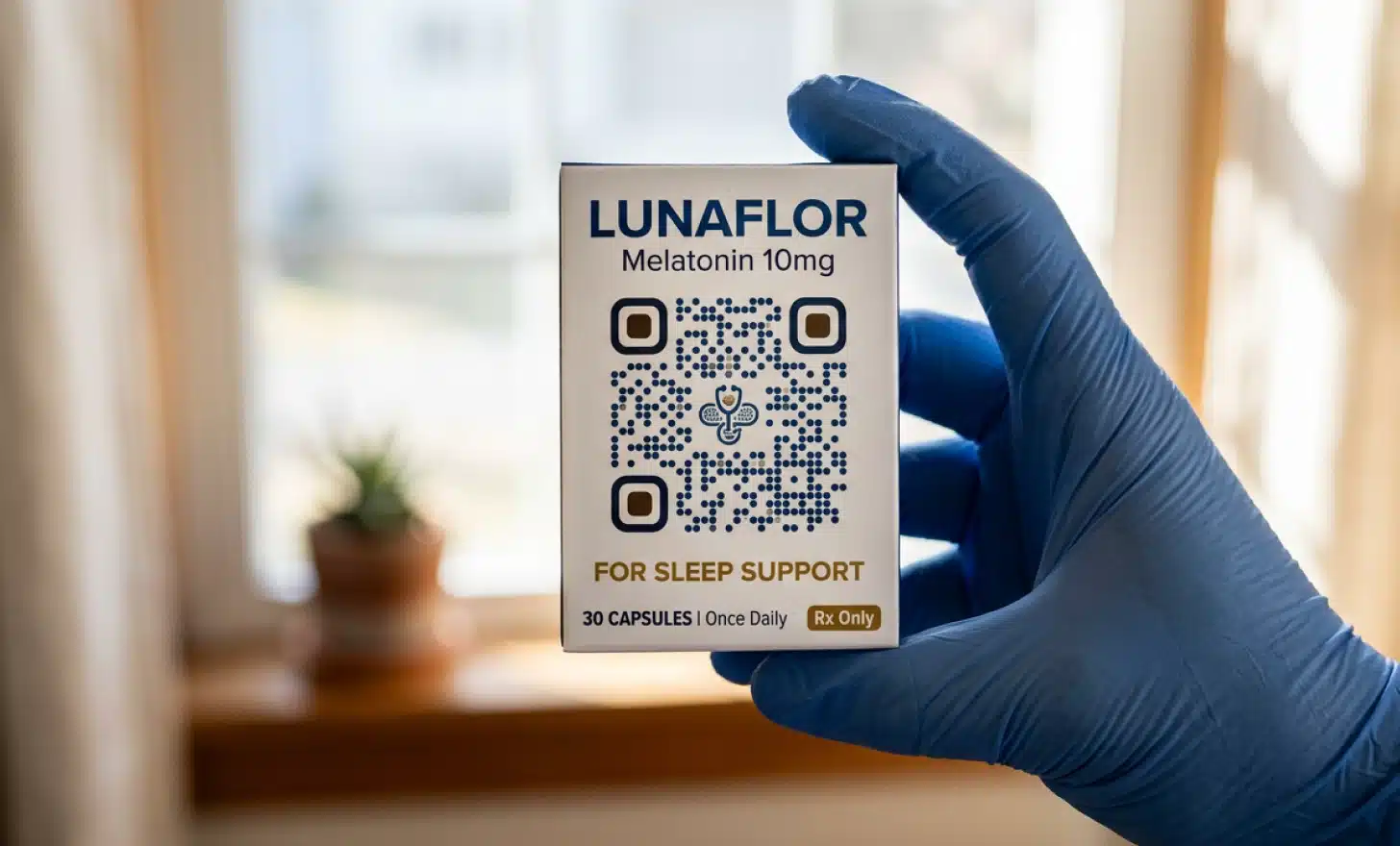
Verify, decommission, done
So what has the industry chosen to do with this asset? In practice, almost nothing. The code is scanned once, by a pharmacy, to confirm the medicine is genuine and to mark it as dispensed. That single transaction is the entire intended life of the identifier. Authenticity is proven, the unit is decommissioned, and the relationship ends before it begins.
This is the quiet failure at the center of pharma serialization. The investment was sized for a verification problem and delivered a verification solution, and then the thinking stopped. The patient, the one person who actually swallows the product, lives with its effects, and decides whether to keep taking it, was never part of the design brief. The most engaged audience the brand will ever have stands in their kitchen holding a uniquely identified pack, and the code on it has nothing to say to them.
It is worth being precise about the scale of the omission. This is not a missed marketing opportunity in the ordinary sense. It is a missed relationship with the patient at the exact moment of highest relevance, repeated across every pack, every refill, every market, every day, for years.
Put it into practice
Create a dynamic QR code free and see it work. No credit card required.
Get started freeWhy the value was never extracted
The honest answer is that the gap was not an oversight by careless people. It is the predictable result of how pharma is structured and governed, and it deserves to be understood rather than mocked.
Regulatory caution is real and largely justified. Pharma operates under restrictions that consumer industries never face, particularly around anything that touches the line between information and promotion. A misstep here is not a brand embarrassment, it is a regulatory event. That weight makes every patient-facing decision slower and more conservative by default.
Liability shapes the rest. Anything a patient reads after scanning a pack could, in principle, influence how they take a medicine, and that possibility raises questions that legal and medical affairs teams are right to ask carefully. The safe choice has always been to say nothing through the code, because saying nothing carries no obvious downside on a compliance scorecard.
Then there is organization. Serialization was owned by supply chain, quality, and regulatory functions whose mandate was compliance, not patient experience. Marketing and digital teams, who might have seen the asset for what it was, were rarely in the room when the architecture was decided. The code became a compliance artifact because compliance teams built it, measured it, and had no reason to imagine it as anything else. None of these forces is insurmountable. Together they explain, completely, why the opportunity has sat untouched.
What a patient-facing layer could be
The interesting question is not whether pharma could have done more, but what specifically becomes possible the moment a patient can scan the code that is already there. The examples below are deliberately grounded in what is technically feasible today, not in speculation.
- Dosage and timing guidance tied to the specific pack and batch in the patient’s hand, rather than a generic leaflet.
- Multilingual patient information accessible on scan, so a patient reads in their own language regardless of which language the printed leaflet happens to use.
- Adherence support for chronic medicines, including reminders that fit the actual course the patient is on.
- Side-effect reporting that routes straight to pharmacovigilance with the batch already identified, removing the friction that suppresses real-world reporting today.
- Refill reminders and a pharmacy locator for the moment the pack runs low.
- Authenticity that the patient can see for themselves at scan, not only a check that happens invisibly at the counter.
Layered on top of these is the possibility that changes the experience most: a conversational layer that answers the patient’s actual questions about the specific medicine, in their language, at the moment they are holding it. This is the kind of capability QRCodeKIT has built into Cleo, a conversational AI that sits on the destination behind a scan and responds in real time. A patient asking whether they can take a dose with food, or what to do about a missed dose, does not want to parse a folded leaflet. They want an answer. The infrastructure to deliver one already exists on the pack.
Is this pharma marketing or regulatory communication?
Most of what a patient-facing serialized code could deliver is not marketing at all, and treating it as marketing is precisely the category error that has kept it from happening. Patient information, authenticity verification, and pharmacovigilance support sit much closer to regulatory communication than to promotion, which means the heaviest restrictions that govern pharma advertising do not straightforwardly apply.
The regulatory direction of travel supports this reading. Several frameworks already encourage or accommodate digital patient information, including the ongoing transitions toward electronic Patient Information Leaflets in the EU. The thrust of that work is to make medicine information more current, more accessible, and more multilingual than a printed insert can be. A QR code on the pack is the carrier that pharmacies, regulators, and patients already understand, and the serialized identifier is a natural anchor for it. The point is not to bend the rules. It is to recognize that much of the highest-value patient content was never the kind of content the rules were written to restrict.
Who owns the patient relationship?
If the brand will not speak through the code, someone else eventually will. The patient relationship is not going to stay vacant, and the brands that decline to occupy it are not choosing neutrality, they are choosing absence.
Pharmacy chains already have a direct line to the patient and a clear commercial interest in deepening it. Digital health platforms and adherence apps are building patient relationships from the outside in, often around the very medicines whose manufacturers stay silent. Aggregators are happy to become the trusted interface for medicine information when the original brand offers none. Each of them is, in effect, building a relationship on top of a product the manufacturer made and serialized and then walked away from. The brand that moves first on its own serialized infrastructure can own that relationship directly. The brand that waits will find it has been intermediated, and that reclaiming the patient later costs far more than reaching them now would have.
What should pharma do with the code it already paid for?

The first step is the smallest one: stop thinking of the serialized code as a finished compliance object and start thinking of it as an unfinished brand asset. The expensive part is done. The identifier exists, it is unique, it is verifiable, and with the right format and a scannable QR carrier it is ready to resolve to content built for the patient.
From there the path is incremental rather than heroic. Begin with content that is unambiguously on the regulatory side of the line, such as multilingual information, authenticity, and pharmacovigilance support, where the value to the patient is clear and the promotional risk is low. Use a dynamic destination so the experience can mature without touching the physical pack. Bring marketing, digital, regulatory, and medical affairs into the same conversation early, because the asset belongs to all of them and to none of them alone.
The QR on every prescription pack in Europe is one of the most underused brand assets in any consumer-facing industry. The infrastructure is paid for. The data is structured. The patient is already holding the pack. The only thing missing is the decision about what the code should say when, at last, someone scans it on purpose.
All images and visual content in this article were created using RealityMAX.
Related articles
QR code geography heatmap
A QR code geography heatmap of scans by country in 2026: why Asia leads on payments, Europe on regulation, and what regional QR adoption means for strategy.

QR code for marina and yacht clubs
A QR code for marina and yacht clubs gives summer charter guests instant arrival steps, briefings, harbor maps, menus, and multilingual answers from their…

UTM QR code
Learn how a UTM QR code turns every offline scan into trackable data in Google Analytics, and how QRCodeKIT now builds UTM parameters into Website QR setup.
Two free dynamic QR codes. Yours forever.
No credit card. No expiry. The original dynamic QR platform since 2009.