June 25, 2026
How much is your PDF menu really costing you?
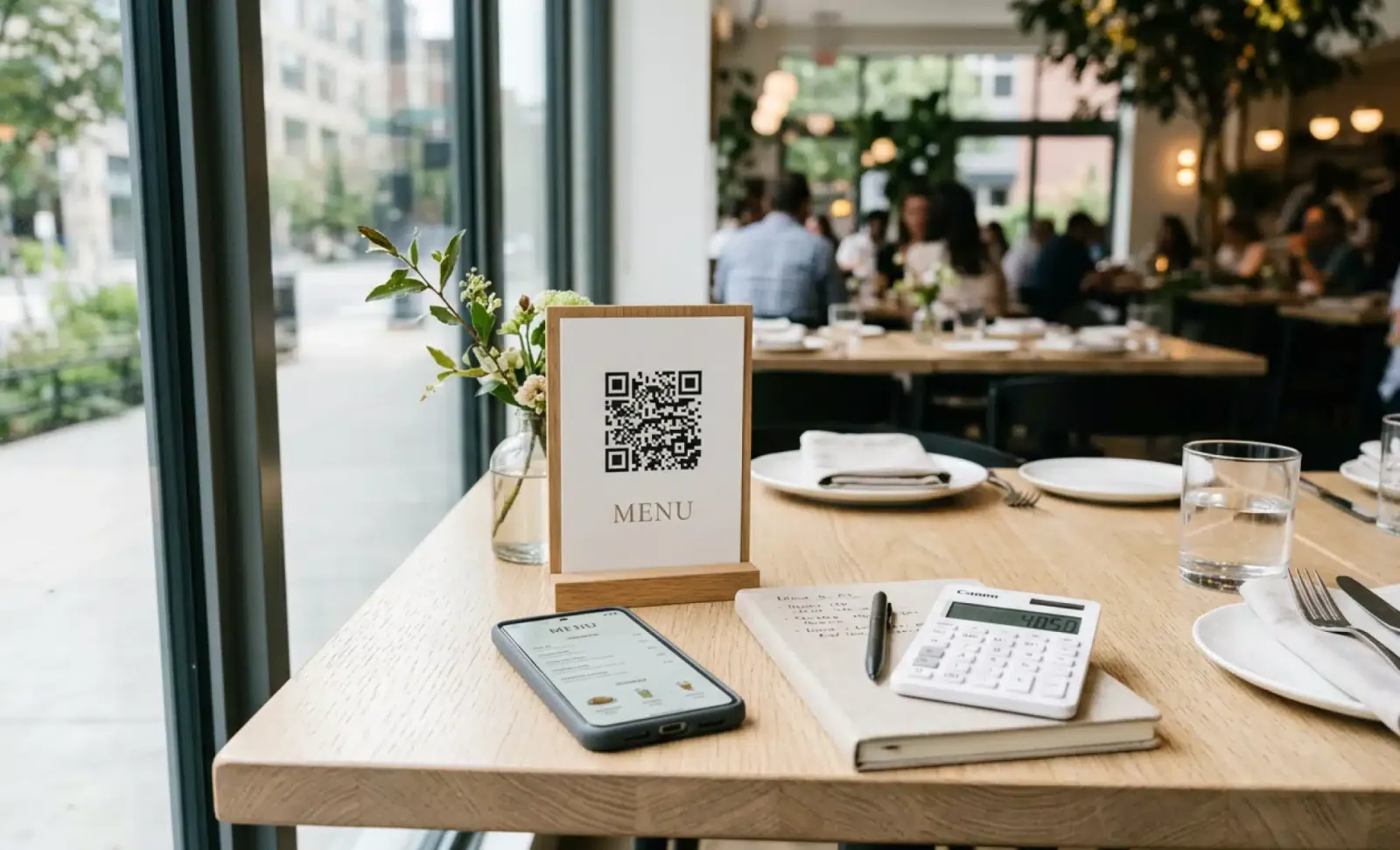
TL;DR
- A PDF menu looks free, but the real PDF menu cost shows up in update time, lost upsells, abandoned mobile sessions, untranslated international guests, allergen questions, and missing analytics.
- This article puts honest, swappable numbers on each component so you can calculate your own figure instead of trusting one dramatic claim.
- For a busy tourist-area restaurant the yearly total can reach into the thousands of euros, while a dynamic conversational menu runs roughly the price of a monthly subscription.
- For small, stable, low-traffic restaurants a PDF can still be the cheaper choice, and the article shows you how to tell which group you are in.
Most restaurants treat the PDF menu as the free option, the sensible step up from reprinting paper every season. That instinct hides the real PDF menu cost. A PDF is cheap to create, but it carries a running cost made of small leaks: the time spent re-exporting the file when a price changes, the wine that never gets recommended, the tourist who orders the safe dish because nothing is translated. None of these appear on an invoice, which is exactly why they go uncounted. This article counts them, with assumptions you can change, so you can decide for your own restaurant rather than the one in this example.
Why do most restaurants underestimate the PDF menu cost?
Because the only number they compare is printing. Set against the cost of paper menus, a PDF looks free, so the analysis stops there. The real PDF menu cost is not the file itself. It is everything the file cannot do: answer a question, update itself, translate, or report back. Those gaps cost money quietly, every service.
The mistake is understandable. Printing is a line item on a supplier invoice, so it feels like the whole story. Restaurant menu economics are messier than that. A menu is the moment a guest decides what to spend, and anything that weakens that moment, a question left unanswered, a stale price, a language barrier, has a financial effect even though no one writes it down. The PDF removed the printing cost and quietly added several smaller ones.
What are the six hidden costs of a PDF menu?
A PDF menu carries six recurring costs that rarely get measured: design and update time, lost upsells, abandoned mobile sessions, lost multilingual customers, allergen handling, and missing analytics. None is dramatic on its own. Added across a year of service, they form the PDF menu hidden cost that most restaurant menu cost analysis leaves out entirely.
Design and update time
Every price change, new dish, or seasonal rotation means someone opens the source file, edits it, exports a new PDF, and re-uploads it. The menu update cost is your update frequency times minutes per update times the hourly value of whoever does it. The more often your menu changes, the larger this gets.
Lost upsells from unanswered questions
A PDF cannot tell a guest that the pasta of the day pairs well with a particular wine, that a dessert can be made gluten-free, or that two small plates beat one main. Every question that ends in the cheaper option, or no order at all, is a lost upsell. It is hard to see, because the sale that never happened leaves no trace.
Abandoned sessions from poor mobile experience
PDFs were built for paper, not phones. Guests pinch, zoom, and pan across a document never sized for a small screen, and a share of them give up, skim, or default to something familiar. The cost is a quiet downward nudge on the average ticket of every table that finds the file annoying.
Lost multilingual customers
In a tourist area, a single-language PDF leaves international guests with two options: ask staff repeatedly, which consumes service time, or order safely, the chicken, the pizza, the salad. The multilingual menu cost is the gap between what they would spend with a menu they understood and what they spend when half of it is invisible.
Allergen handling and liability
A PDF cannot answer “does this contain nuts.” So either staff field every allergen question, which is staff time, or guests guess, which is risk. The allergen menu compliance cost is whichever of those prices you pay, and most restaurants pay a bit of both. This is not about fear, it is about an interaction the menu cannot handle alone.
Missing analytics
A PDF tells you nothing. You cannot see which dishes guests linger on, which they skip, what they ask about, or when they browse. Pricing and menu engineering decisions then rest on intuition instead of data. The cost is the better decisions you never got to make, real even though it shows up as no number.
What does a PDF menu actually do well?
Quite a lot, and a fair analysis has to say so. A PDF is cheap to set up, needs no learning curve, works without any platform subscription, and is perfectly sufficient for a small, low-traffic operation with a stable menu. If your menu rarely changes and your guests rarely have questions, the PDF is doing its job.
It has no recurring software fee, which matters for a tight operation. PDFs are not bad. They simply stop being the cheap option once the six costs start adding up, and only running the numbers tells you whether that has happened to you.
What is a dynamic menu with a conversational layer?
A dynamic menu is a QR menu whose content can be updated any time without reprinting the code, paired with a conversational layer that answers guest questions on the spot. On QRCodeKIT that layer is Cleo, an AI assistant that replies in the guest’s own language. The printed code never changes; the information behind it always can.
This is where the digital menu vs PDF comparison gets interesting, because the dynamic version changes all six costs at once rather than one. Update time drops, since a price change is a quick edit with no re-export. Cleo addresses three costs directly: it answers ingredient and pairing questions that drive upsells, responds in whatever language the guest chooses, and handles allergen questions without pulling a server off the floor. The mobile experience improves because the guest reads a real page instead of a zoomed document, and every scan produces analytics a PDF never could.
The cost on this side is a subscription. A platform such as QRCodeKIT runs an entry paid plan at around $20 a month, roughly €240 a year, which becomes the single number you weigh against the six costs you just estimated. That comparison is the whole point of a dynamic menu ROI calculation: not whether the new option is free, but whether the recurring fee is smaller than the recurring leaks.
Put it into practice
Create a dynamic QR code free and see it work. No credit card required.
Get started freeWhat does a PDF menu cost a mid-sized restaurant per year?
Take a realistic example: a restaurant doing 100 covers a night, an average ticket near €35, in a tourist-friendly city, open 300 days a year. With honest mid-range assumptions the PDF menu here costs between €2,500 and €6,000 a year, with a worked midpoint near €4,800. Every figure below is an assumption you should replace with your own.
Design and update time: two updates a month at 30 minutes each is 12 hours a year at €25 an hour, about €300, with a reasonable range of €150 to €600.
Lost upsells: the hardest to estimate, so treat the assumption as yours. Assume the menu misses one extra €6 item per service night that an answered question would have prompted. Across 300 nights that is €1,800. Set it near zero if your guests rarely ask, higher if your room is busy.
Abandoned mobile sessions: assume the awkward document quietly trims a few tickets a week. Illustratively €300 a year, range €0 to €600 depending on how attentive your floor staff are.
Lost multilingual customers: assume 20 international covers a night who, faced with a single-language file, spend about €3 less than with a menu they could read. That is roughly €1,800 a year, near zero in a mostly local town.
Allergen handling: assume staff spend 10 minutes a night fielding questions a menu could answer, at €15 an hour. About €600 a year, before any risk.
Missing analytics: left unpriced on purpose, because it is an opportunity cost, not a cash leak. Real, but a confident euro figure would undercut the honesty of the rest.
Add the priced components and this example lands near €4,800 a year, the range showing how much your assumptions move it. Against that sits a dynamic conversational menu at roughly €240 a year. Here it pays for itself many times over, but only because the assumptions hold. Change them and the gap narrows. Read it as a template, not as proof.
When does a PDF menu still make sense?
For a meaningful number of restaurants, it does. If your menu almost never changes, your guests are mostly local, your dishes carry little allergen sensitivity, and you have no appetite for analytics, the six costs barely register and a PDF may genuinely be cheaper. Honesty cuts both ways.
A PDF is likely the sensible option when:
- You run a small operation with a low cover count and tight margins.
- Your menu is stable and rarely changes prices or items.
- Most of your guests are local and read your language comfortably.
- Your dishes carry little allergen complexity and questions are rare.
- You have no plans to act on menu analytics even if you had them.
If most of those describe you, keep your PDF with a clear conscience.
What are the costs that resist calculation?
Some costs are real but refuse to sit neatly in a spreadsheet, and pretending otherwise would be dishonest. A PDF that asks guests to pinch and zoom can make a well-run room feel dated, and brand perception shapes spending in ways no formula captures cleanly. That impression is not nothing, even if you cannot invoice it.
There is also a human cost on your side. Staff who answer the same allergen and ingredient questions every shift carry a low-grade frustration that wears on service over time. And every pricing or menu decision made on a hunch, because no data existed to check it, has a cost too. These three, brand feel, staff strain, and decisions made blind, are easy to dismiss because they carry no number. They still shape your results.
How can you calculate this for your own restaurant?
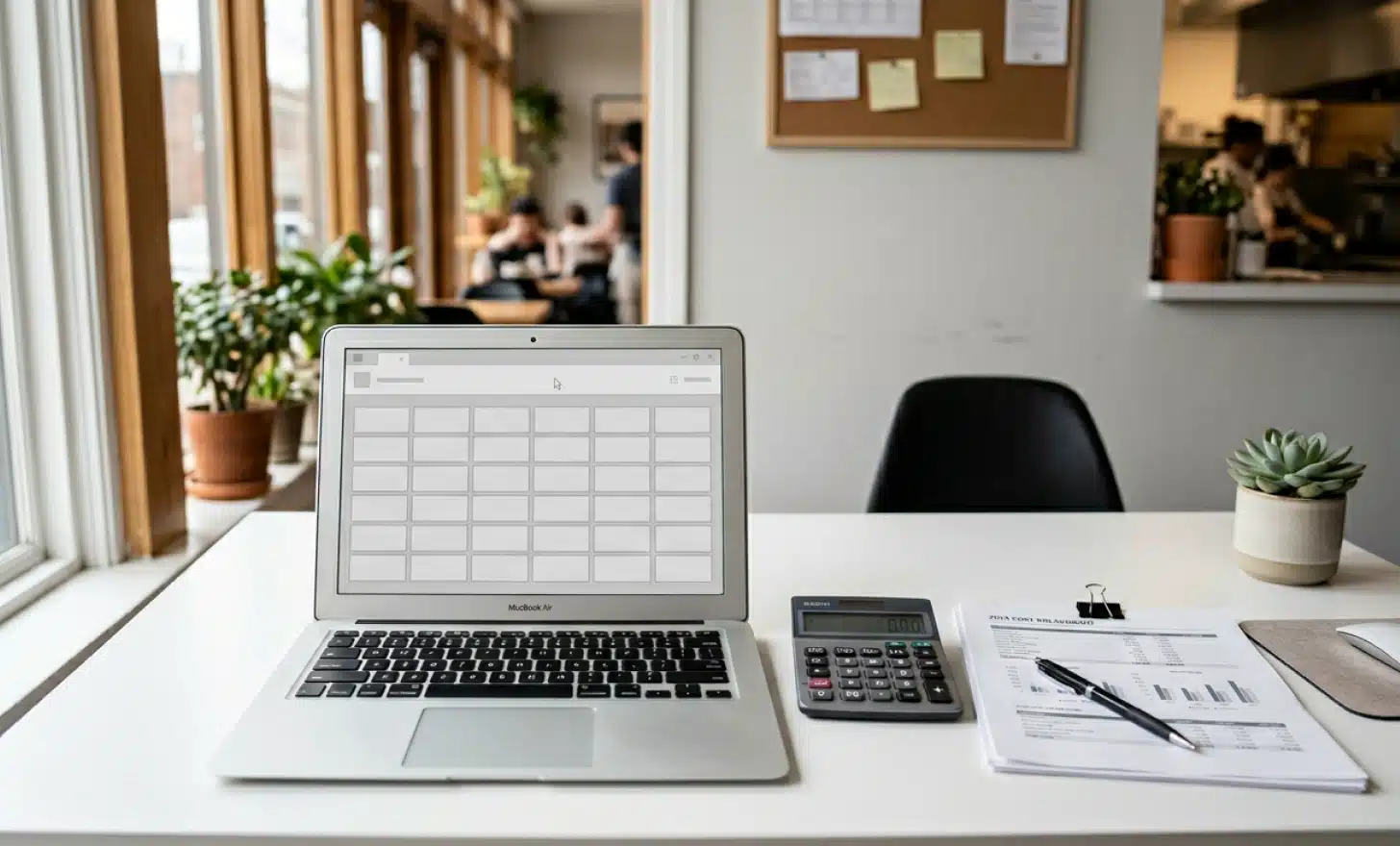
Run the same method with your figures instead of the example’s. The goal is not to reach the answer above, it is to reach yours. It takes an evening and gives you a number you can defend rather than a sales claim you take on faith.
Work through it like this:
- List the six components: update time, lost upsells, abandoned sessions, multilingual loss, allergen handling, and missing analytics.
- Estimate each with your own covers, ticket size, update frequency, guest mix, and staff hourly rates.
- Total them into a yearly figure, and write down every assumption next to it.
- Compare that total to the annual cost of a dynamic conversational menu.
- Revisit the math once a year, because your menu, traffic, and guest mix all change.
If your total clears the subscription, the case makes itself. If it does not, you have confirmed the PDF is right for you, which is a useful answer too.

How much does a PDF menu cost a restaurant?
There is no single figure, because the real PDF menu cost depends on how often you update, how many guests have questions, how international your room is, and how much you would act on data. The recurring costs around it range from negligible for a small stable operation to several thousand euros a year for a busy multilingual restaurant.
Is a QR menu cheaper than a PDF menu?
Sometimes, and only your numbers can say. A dynamic QR menu carries a subscription a PDF does not, often around €240 a year. It is cheaper when the six hidden costs of your PDF add up to more than that fee. A high-traffic tourist restaurant crosses that threshold easily; a quiet local spot may not.
What is the hidden cost of a PDF menu?
The PDF menu hidden cost is the set of expenses that never reach an invoice: update time, upsells lost when questions go unanswered, guests who give up on an awkward mobile document, international guests who order safely, allergen questions that consume staff time, and decisions made without analytics. Each is small alone and meaningful together.
Do digital menus increase the average ticket?
They can, mainly by removing the friction that suppresses spending. When a guest can ask whether a dish is gluten-free, get a pairing, or read the full menu in their own language, they order with more confidence and add items a static file would never prompt. The lift depends entirely on your guests, so estimate it conservatively.
How does a multilingual menu affect menu cost?
A single-language PDF carries a quiet multilingual menu cost wherever international guests come, because they either occupy staff with questions or order the few dishes they recognize. A menu that answers in the guest’s own language recovers that spending without adding service time, which is why this component often moves the calculation most in tourist locations.
Does a PDF menu create allergen risk?
A PDF cannot respond to “does this contain nuts,” so allergen handling falls on staff or on the guest’s own judgment. The allergen menu compliance cost is the staff time spent answering repeatedly, plus the risk when a busy floor cannot answer fast enough. A menu that handles those questions directly reduces both, without replacing trained staff judgment.
All images and visual content in this article were created using RealityMAX.
Related articles
QR code for guest welcome
TL;DR: A QR code for guest welcome should answer the practical questions guests have in their first hours: how to reach the room, the Wi-Fi password, check-in…
FMD pharma serialization
Pharma spent billions on FMD pharma serialization, then used it only to verify packs. Here is the patient-facing brand value left unused on every box.
QR code geography heatmap
A QR code geography heatmap of scans by country in 2026: why Asia leads on payments, Europe on regulation, and what regional QR adoption means for strategy.
Two free dynamic QR codes. Yours forever.
No credit card. No expiry. The original dynamic QR platform since 2009.