September 11, 2025
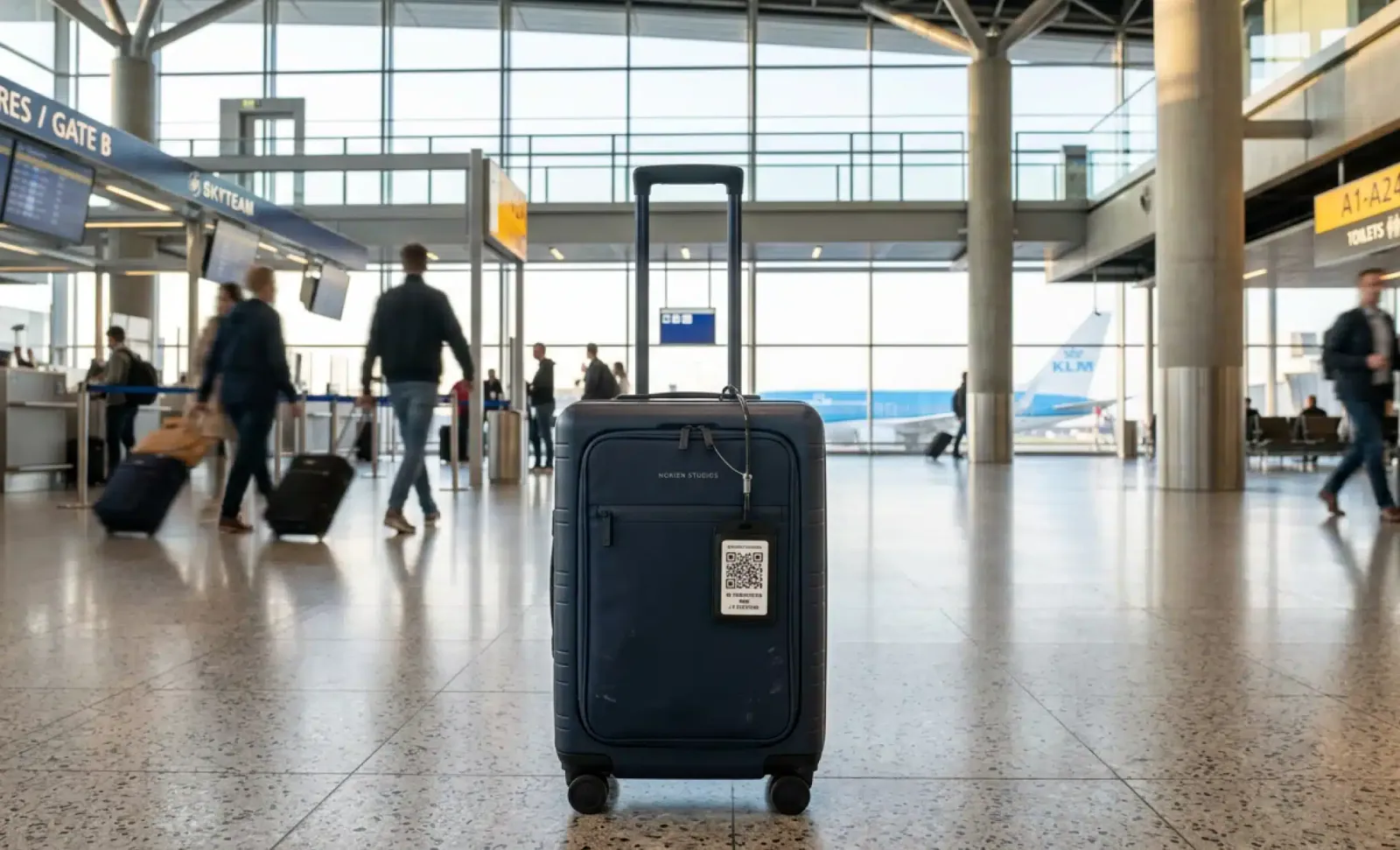
QR codes on baggage tags for safer, smarter travel
TL;DR
- QR codes on baggage tags turn any suitcase into a digital point of contact, so a finder can reach you with a single scan.
- Because QRCodeKIT codes are dynamic, you update your contact details anytime without reprinting the tag.
- You control exactly what a finder sees, protecting your address and phone number while keeping the bag returnable.
- The result is fewer lost luggage incidents and a smoother experience for travelers and airlines alike.
QR codes on baggage tags are scannable tags that link a suitcase to your contact details and travel information online. Anyone who finds your bag scans the code with a phone camera and reaches you in seconds. No smudged handwriting, no exposed home address, no outdated phone number slowing down the return.
What are QR codes on baggage tags?
QR codes on baggage tags are dynamic codes attached to luggage that connect a physical bag to a digital page of owner information. When scanned, the code reveals only the details you choose, such as a contact form or an itinerary. Unlike a printed name and number, the information behind the code can change at any time.
For decades, traditional luggage tags were the first line of defense against lost bags. A name, a phone number, an address written by hand. Useful, but limited by the space on the tag and the moment it was filled in. The instant your details change, the tag is wrong. QR codes on baggage tags remove that ceiling by moving the information off the tag and onto a page you control.
Why are QR codes better than traditional luggage tags?
Traditional luggage tags display fixed text that anyone can read and that quickly goes out of date. QR codes on baggage tags replace that exposed, unchangeable text with a private, updatable link. You reveal less, you control more, and the information stays current without rewriting a single tag.
This matters most when plans shift. Imagine changing your phone number while abroad, or redirecting messages to a travel companion mid-trip. With a printed tag you would need a new one. With a dynamic QR code you log in, edit your details, and the code reflects the change immediately. The square on the bag never moves. The information behind it always keeps up.
How do QR codes on baggage tags protect personal details?
They protect personal details by separating the bag from the information. Instead of printing your home address on a tag, you decide what a scan reveals, such as an email form or a secure message option. Sensitive details stay hidden until you choose to share them, even in a crowded airport.
For frequent travelers, this balance of safety and accessibility is the whole point. Whether you carry expensive gear, professional equipment, or everyday personal items, the tag no longer broadcasts who you are or where you live. A finder gets exactly enough to return the bag, and nothing more.
How do QR code luggage tags work in practice?
You create a code through a platform like QRCodeKIT, link it to a page with your name, contact method, and destination, then print it and attach it to your bag. When someone scans the tag, they see the details you set up. Because the code is dynamic, you can edit that page whenever you need to.
The same approach works across every kind of bag. Suitcases, carry ons, backpacks, purses, even a diaper bag can carry a scannable tag. Depending on how you set it up, a scan might open a message form, show a phone number, or confirm your travel itinerary. Nothing on the physical tag has to be reprinted when those details change.

What are the real benefits for travelers and airlines?
Both sides gain. Travelers get a digital backup that helps any finder return a bag fast, which reduces lost luggage incidents and the stress that comes with them. Airlines spend less time searching databases or chasing outdated numbers. A single scan surfaces the right contact details, smoothing arrivals and cutting the cost of mishandled baggage.
Every year thousands of bags go missing, and each one means delays, frustration, and sometimes money spent on replacements. A finder, whether an airline employee, an airport baggage department, or another passenger, can act immediately instead of guessing. That shared efficiency is what makes QR luggage tags worth the few minutes it takes to set one up.
Put it into practice
Create a dynamic QR code free and see it work. No credit card required.
Get started freeWhat else can QR luggage tags do beyond lost and found?
Beyond returning lost bags, travelers connect QR luggage tags to other useful information, and businesses use them for branding. The same scannable tag can carry far more than a name and number, which is why creative travelers keep finding new ways to use it.
A few common examples:
- Packing lists, so you can check what is inside each bag before reaching the airport.
- Branded tags that promote a company wherever its employees travel.
- Links to itineraries or short instructions on how to reach you.
There is also growing interest in pairing QR luggage tags with dedicated tracking tags, such as SEQR tag setups, so a scan can log a bag’s last known location alongside its owner details. As the technology matures, these combinations will only get more capable.
How do QR codes reduce human error at the airport?
Paper tags depend on legible handwriting and on staff copying details correctly into airline systems. A misread digit, a torn tag, or an old number can make a bag untraceable. QR codes on baggage tags remove that guesswork by serving instantly scannable, always current information, so staff reach the right owner on the first try.
The time savings add up across a busy terminal. Instead of deciphering a handwritten label or calling a disconnected line, airport staff scan once and see the correct details. Fewer dead ends means faster reunions and fewer bags stuck in storage.
Can you customize and brand QR code luggage tags?
Yes. QR code luggage tags can match your travel style with minimal or colorful designs, a logo, or an artistic code that blends into the look of the suitcase. For individuals it is a way to express identity on the move. For companies, every backpack or carry on becomes a quiet, branded touchpoint.
Practicality and style are not at odds here. You can print a durable tag that survives the baggage hold and still looks the way you want. That dual appeal is why both solo travelers and brands find QR luggage tags worth adopting.
Why do finders and good samaritans prefer QR luggage tags?
Most people who find a lost bag want to help but hit a wall when the tag is smudged, torn, or out of date. A QR code removes that friction. The finder scans, sees the correct contact method, and reaches the owner in seconds, whether they are airline staff, hotel reception, or another passenger.
That simplicity turns ordinary travelers into reliable finders. The process asks nothing of them beyond a phone camera, and it gives them a clear way to do the right thing. For the owner, it means a lost bag has a real chance of coming home.
What role will airlines play in the future of baggage tracking?
Airlines are starting to pair their own barcodes with QR codes on baggage tags for a layered approach to tracking. Combining both gives passengers better visibility into a bag’s journey and helps staff act faster. As airports adopt smarter systems, this points toward fewer lost items and more dependable arrivals.
This shift signals something larger. QR codes on baggage tags are moving from a traveler trend toward a genuine part of modern baggage management. The more airports lean into scannable, updatable information, the smoother the experience becomes for everyone moving through them.

Can QR codes on baggage tags improve your travel experience?
Yes. From cutting lost luggage incidents to giving you control over what personal information appears, QR codes on baggage tags are a clear upgrade over traditional tags. They work across suitcases, carry ons, purses, and backpacks, and you manage all of it with a smartphone and a single scan.
For frequent flyers who demand efficiency and for occasional travelers who just want peace of mind, the value is the same. QR luggage tags combine the familiarity of a classic tag with the flexibility of dynamic QR technology, creating a safer and more reliable way to keep track of what matters while you travel.
All images and visual content in this article were created using RealityMAX.
Related articles

ISO quality standards for QR codes
ISO quality standards for QR codes keep every scan accurate and reliable. Learn how QRCodeKIT meets ISO/IEC 18004:2024, 9001, 27001, and 14001 standards.
Do QR codes expire over time?
TL;DR: Do QR codes expire over time? The black and white pattern itself never expires, but the link behind a dynamic QR code can stop working if the account…

QR code drink menu for poolside and terrace
Learn how to build a QR code drink menu for poolside and terrace service, from outdoor materials and sun-proof design to bar workflow and live updates.
Two free dynamic QR codes. Yours forever.
No credit card. No expiry. The original dynamic QR platform since 2009.