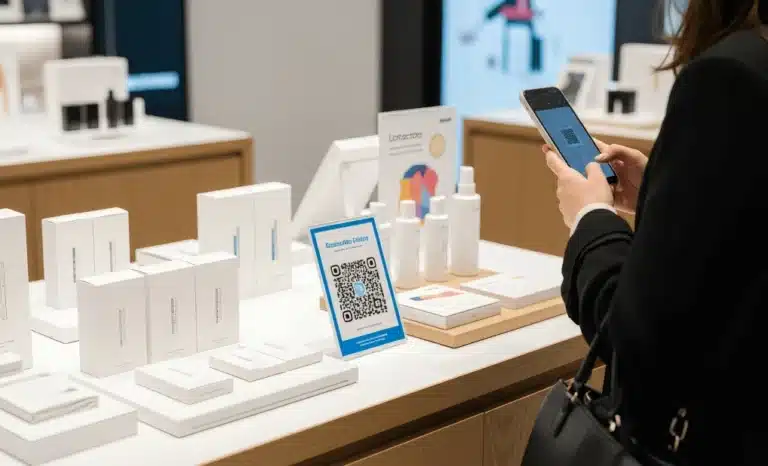
A multilingual AI QR code is a single dynamic QR that opens in the visitor’s device language and then continues the conversation in whatever language they actually choose to type. One code on the menu, the product label, or the museum wall. Every visitor gets answers in the language that feels most natural to them in that moment. No selector screens, no app downloads, no separate prints for each market.
For any business that serves an international audience, this changes the math behind printed materials, signage, and packaging. What used to require four codes for four languages now needs one. And the experience on the other side is no longer a static page translated once and forgotten. It is a real conversation that follows the visitor, not the device.
What is a multilingual AI QR code?
A multilingual AI QR code is a dynamic QR linked to a conversational AI destination that adapts to the visitor on two levels. First, the destination opens in the language set on the user’s browser or device. Second, the conversation continues in whichever language the user actually writes in, even if that differs from the device default.
On QRCodeKIT, this works through Cleo, the native conversational AI layer built into the QR code itself. Cleo is not a translation widget added on top of a landing page. It is a conversational AI that draws from a single knowledge base the owner sets up once and answers questions naturally across languages, following the user rather than locking them into the language their phone happens to be configured in.
The result is one QR code, many languages, one source of truth, and a conversation that meets the visitor where they actually are.
How one QR code works for every language
It works because the language logic happens after the scan, in two stages. The first stage reads the browser language settings the device sends with every request and serves the opening view in that language. The second stage is the conversation itself, which adapts to whatever language the visitor uses when they start typing.
Picture a French tourist with a phone set to French standing in a small restaurant in Italy. They scan the QR on the table. The menu opens in French because that is what their device reports. They start reading, then notice an unfamiliar ingredient. They prefer to ask about ingredients in English because that is the language they share with their travel companion. They type the question in English. Cleo answers in English and the conversation continues there.
No app downloads. No manual language switch. No dropdown buried in a corner. The code responded to the device first, then to the person.
Why does this matter for real visitors?
Most multilingual systems assume device language equals user preference. For locals, that is usually true. For everyone else, it often is not. Travelers carry phones set to their home language while moving through countries where they prefer to communicate in English. Expats keep their devices in the language of their adopted country but switch to their native language for anything personal. Multilingual households mix languages depending on context, mood, and who is in the room.
A multilingual QR code that only reads device settings forces all of these people into a box that does not fit. A multilingual AI QR code that also reads what the user actually writes lets them out of it. The conversation feels human because it behaves like a human would: it listens to what you say, not just to where you came from.
This is the part that distinguishes a multilingual AI QR code from a traditional multilingual landing page. A landing page is a document, frozen at the moment it was written. A conversation is alive. It follows the person.
What about translation versus localization?
Machine translation has improved enormously and for most informational use cases it is more than sufficient. A guest asking about restaurant opening hours, an allergen in a sauce, or whether parking is free will get an accurate, useful answer in their own language. The grammar will be right. The meaning will be clear. The visitor will get what they need.
Where this becomes more delicate is in marketing copy, brand voice, and culturally specific phrasing. A literal translation of a clever tagline often lands flat or, worse, awkwardly. An idiom that works in English may not exist in Korean. Humor rarely survives a direct translation. A call to action that feels warm in Spanish can come across as pushy in German if it is rendered word for word.
Advanced AI can adapt tone, idioms, and cultural references rather than just substitute words. For luxury hospitality, premium retail, or brand-led campaigns, this matters. For a quick service restaurant explaining what is in a dish, plain translation does the job. Knowing which mode you need is part of setting up the experience well.

Use cases by industry
The pattern repeats everywhere. A physical object, a visitor with a question, a need to communicate across language barriers. A multilingual AI QR code resolves all three with one scan and one ongoing conversation.
- Restaurants and cafés serving international tourists, where a single code on the table replaces printed multilingual menus and answers questions about ingredients, allergens, and preparation in whichever language the diner prefers to type in.
- Hotels and short-term rentals where global guests need information on check-in, amenities, local recommendations, and house rules at any hour, in their native or chosen language.
- Museums and cultural venues offering visitor information, exhibit context, and accessibility details without printing dozens of brochures per language.
- Retail and consumer goods using product packaging that serves INCI lists, allergen information, usage instructions, and care guides across markets without redesigning packaging per country.
- Ecommerce post-purchase experiences, where the QR on the box opens a conversation about setup, returns, or warranty in the buyer’s preferred language.
- Tourism information points at airports, stations, and city centers, where one scan replaces stacks of multilingual maps and pamphlets.
Why dynamic QR is essential for multilingual experiences
The whole model only works if the QR code is dynamic. A static QR is permanent. Whatever you encode at creation is what every scanner gets forever. That is fine for a fixed website URL, but it is the wrong foundation for a multilingual conversational experience.
A dynamic QR points to a destination you control through the platform. You can change what sits behind the code without reprinting anything. Add a new language. Update opening hours. Refine an answer that visitors keep asking. Replace a discontinued product. The same code on the same printed material keeps working with the updated content.
This is where easy updates change the operational reality of multilingual content. You are not managing a stack of printed versions that go out of sync with the business. You are maintaining one knowledge base, and every future scan reflects the latest version.
All QR codes generated with QRCodeKIT are dynamic by default. There is no static option to manage and no migration to plan.
What the scan data and customer feedback reveal
Every scan generates information. Time, approximate location, device type, and, through the conversational layer, what people actually ask about and which language they choose to ask in. For a multilingual setup, this data answers questions you would otherwise have to guess at.
The richest signal comes from comparing two layers. Which languages do users start in, based on their device settings? And which languages do they continue the conversation in once they begin typing? The gap between those two numbers tells you something device language alone cannot. It might show that a significant share of visitors arrive on French devices but prefer to chat in English. Or that scans from German devices regularly switch to Italian. Each of those patterns suggests where to invest next, both in knowledge base depth and in marketing campaigns.
Where do the scans come from? Geographic patterns reveal whether your reach is local, regional, or international, and whether campaigns in specific countries are translating into actual scans on the ground.
What do visitors ask most often? If hundreds of scans produce the same three questions, those answers belong on the printed material itself, or they signal a gap in the knowledge base. The conversational data gives you a feedback loop a static multilingual page never could.
This is the loop that makes multilingual content a living resource instead of a one-time translation project. You see what is working, you refine, you publish. The same QR reflects every change.

Common mistakes when setting up a multilingual QR code
A few patterns come up often enough to flag. Some are technical, some are about mindset.
- Printing separate codes for each language out of habit, when a single dynamic AI QR would do the same job with less material and clearer analytics.
- Relying entirely on raw machine translation for marketing-sensitive copy and discovering later that the brand voice does not survive the trip into another language.
- Treating the knowledge base as a launch task rather than a living document, then watching the experience drift out of sync as menus change, products evolve, and policies update.
- Ignoring the difference between device language and the language the user actually chooses to write in. The two are correlated, not identical, and the gap is where most missed opportunities live.
- Forgetting to review the analytics. The data only helps if someone actually looks at it and decides what to do next.
Frequently asked questions
Does a multilingual AI QR code need a separate landing page per language?
No. One QR points to one destination that adapts at the moment of the scan and then follows the user through the conversation. The owner manages one knowledge base, not several. Adding a new language does not require new printed materials or new codes.
What happens if my device language does not match the language I want to use?
Cleo handles this naturally. The destination opens in the language set on your device, but the moment you start writing in another language, the conversation continues there. You do not need to change device settings or pick a language from a menu.
Can the same physical printed QR work in multiple countries?
Yes. Because the language logic happens after the scan and the QR is dynamic, the same printed code works across multiple countries. Product packaging, signage, and marketing materials can be standardized globally without losing the local experience.
Can content be updated after the QR is printed?
Yes. Dynamic QR codes are designed for exactly this. You can update the knowledge base, add languages, refine answers, or change the destination behind the code at any time. The printed code itself never needs to change.
What does the analytics actually show about language use?
Scan data includes the language reported by the visitor’s device and, through the conversation, the language they actually choose to type in. Comparing the two reveals which languages your audience prefers in practice, not just in theory, and where to focus future content work.
All images and visual content in this article were created using RealityMAX.