How to use a QR code for recall management
When a product issue surfaces, the speed and precision of the response decides everything. The size of the loss. The damage to consumer trust. The regulatory exposure. For decades, recalls have worked the same way: a press release, a recall notice to retail partners, an alert through national food safety or medicines agencies, and a hope that the message reaches the right shelves and households before more product is consumed or used.
That model is leaking value at every step. Knowing how to use a QR code for recall management changes the shape of the problem. Instead of broadcasting a recall communication to the entire market and pulling whole product lines from shelves, teams can isolate affected products at the batch level, update the destination behind those specific codes, and turn every simple scan into a direct line to the consumer holding the affected unit. This guide walks through how QR codes work in a recall scenario, why dynamic QR codes built on GS1 Digital Link are the foundation, and how to plan a workflow that actually reaches the people who need to hear from you.
Why traditional recalls are slow and imprecise
Most recalls still operate on a broadcast model. A safety issue is detected, a notice is issued, and the message travels through retailers, regulators, and press channels in the hope of reaching the consumer. The structural problem is well documented: average consumer awareness of food recalls typically sits well below 50 percent, and recovery rates of affected products from the field are often lower still.
There are three reasons for this. First, the communication channel is indirect. The brand talks to retail partners, retailers talk to customers, and a lot is lost in translation. Second, traditional barcodes and static QR codes carry no batch-level granularity, so when something goes wrong, entire SKUs or production runs are pulled rather than the specific affected units. Third, once a recall notice goes out, there is no built-in way to know whether the message reached the consumer who actually has the product in their kitchen or medicine cabinet.
QR codes change the equation because they move the conversation directly to the person holding the product. The packaging becomes the channel. A single QR code can store up to 4,296 alphanumeric characters, which is more than enough to embed batch numbers, expiration dates, product codes, and tracking data into each unit.
How do QR codes work in a recall scenario?
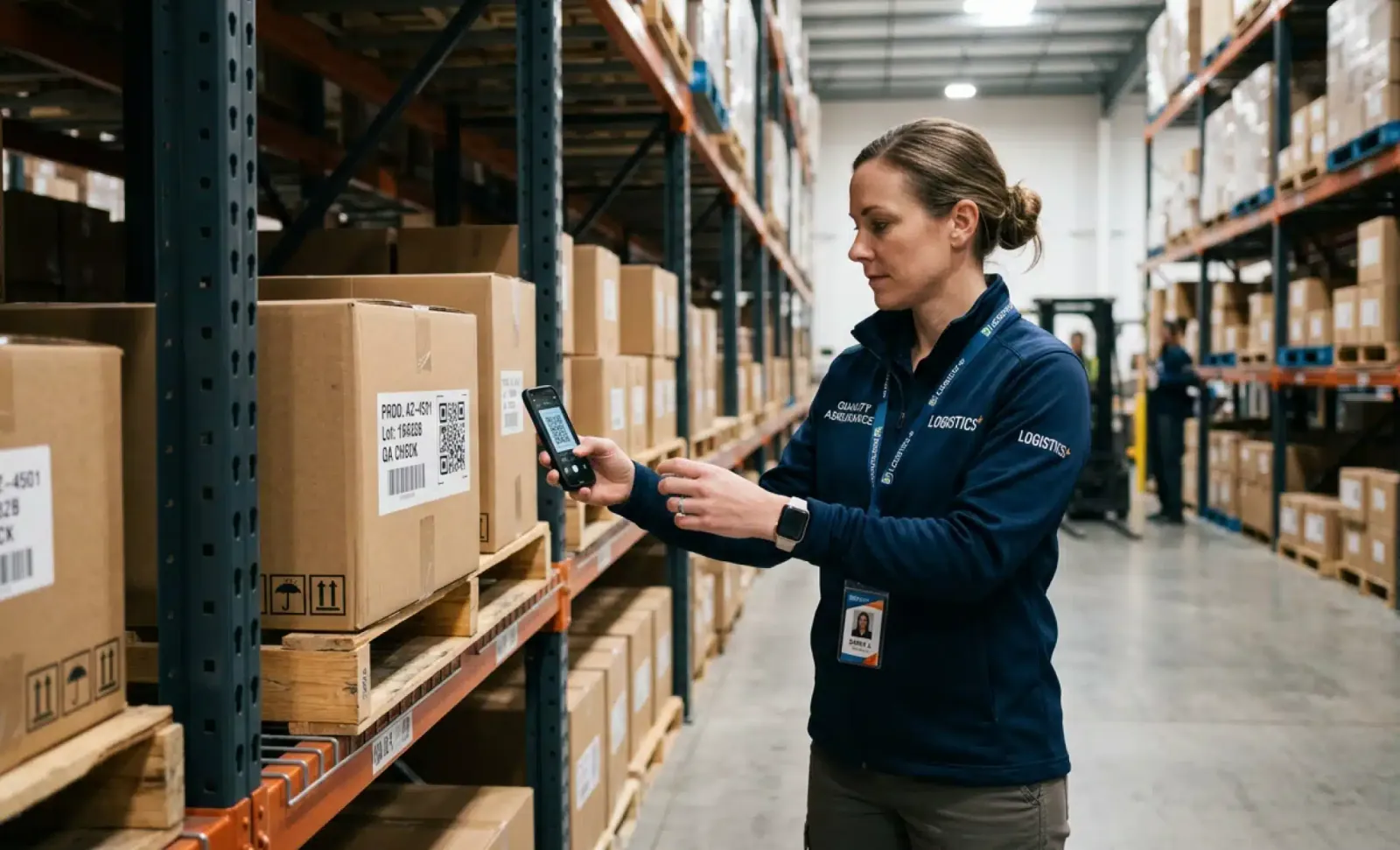
QR codes work in a recall scenario by tying every physical unit to a digital destination the brand controls. When a consumer or retailer performs a single scan, the QR code data is read by their phone camera or by dedicated barcode scanners in a warehouse, and the system resolves the code to a web page that reflects whatever the brand has configured. In normal operations, that destination is a product page. During a recall, the destination for affected products is switched to a recall notice with safety information and return instructions.
The key difference from traditional barcodes is that QR codes carry far more data and resolve to a live web destination rather than just identifying a SKU. This means a single scan can deliver instant access to compliance documentation, batch details, expiration dates, and recall communication in real time.
From full-batch recall to surgical recall
The first structural shift is granularity. A traditional barcode identifies the product, not the batch. If a contamination event is traced to a single production lot from a single facility on a single day, the legal and operational response under a barcode-only system is often to recall the entire SKU across multiple lots, because there is no reliable way for consumers or retailers to distinguish affected units from unaffected ones at the point of contact.
QR codes carrying batch and lot information allow recalls to become surgical. When a customer scans the code, the system already knows exactly which production run that unit came from. Affected products route to the recall notice. Unaffected units continue to show the normal product page. Retailers can use the same logic at the shelf, scanning to verify authenticity and recall status rather than clearing entire categories.
The financial impact of this shift is significant. Pulling one batch instead of six, or one regional production run instead of a national SKU, can reduce the cost of a recall by an order of magnitude while improving the safety outcome, because affected products are identified more accurately. The same granularity supports better inventory tracking in normal operations. QR code inventory management can reduce error rates from the 20 to 25 percent range typical of manual data entry down to under 5 percent, which means the inventory records feeding into a recall scope decision are far more reliable from the start.
Why are dynamic QR codes essential for recall management?
Dynamic QR codes are essential for recall management because the destination behind the code can be updated at any time without reprinting the physical product. A static QR code points to a fixed destination encoded into the pattern itself. To change where a static code leads, the code itself has to change, which means reprinting packaging, which is impossible once the product is already on shelves or in consumer homes. Static QR codes simply cannot serve a recall function.
Dynamic QR codes solve this. The code on the packaging is permanent, but it resolves through a redirect layer the brand controls. When a recall is triggered, the destination for the affected batch is switched from the normal product page to a recall notice containing safety information, return or refund instructions, and any specific guidance regulators require. Every consumer who scans that unit, whether they bought it yesterday or six months ago, lands directly on the recall communication.
The same flexibility supports normal operations between recalls. Dynamic QR codes can be edited at any time to redirect users to new content, push promotional offers, update product details, or correct information without reprinting a single package. This is what makes dynamic codes suitable for situations where information changes frequently, and a recall is simply the most critical version of that scenario. The ability to provide updated information directly on the packaging also strengthens customer engagement in normal periods, because the same channel that handles recalls is the one that delivers product details, usage instructions, and supplementary content the rest of the time.
QRCodeKIT has supported dynamic QR codes since 2009, and the redirect logic is exactly what makes recall workflows possible. Without that layer, the QR code is just a decoration on the box.

What role does GS1 Digital Link play in QR code recall workflows?
GS1 Digital Link is the standard URI format for QR codes carrying structured product data. It encodes the GTIN, the batch or lot identifier, and where required the unique serial number, all within a single QR code that resolves to a web destination. This is the foundation that makes batch-level recall possible.
The structured format matters for three reasons. First, the data is machine-readable, so inventory management systems, warehouse management system tools, and regulatory databases can interpret the same code without custom integration. When tied to inventory platforms through API integration, scans push updates across connected systems in real time, eliminating the lag between physical inventory movement and digital records. Second, the GTIN, batch, and lot fields make the scope of a recall verifiable. When a notice says “batch 24L0817 of GTIN 09501101530003 is affected,” the system can match that statement directly to the codes in the field. Third, GS1 Digital Link is the format regulators are aligning around for the transition away from linear barcodes by 2027, and it underpins the structure of the upcoming Digital Product Passport in the EU.
A QR code generator that supports GS1 Digital Link gives the recall team a foundation that works across regulatory regimes and across the supply chain. A generator that does not is a future bottleneck.
How does QR code data improve quality control and food safety?
QR code data improves quality control and food safety by giving every unit a verifiable digital identity that can be traced through the entire production process. Each scan can confirm the source of raw materials, the manufacturing processes the unit passed through, the batch it belongs to, and its expiration dates. When a quality issue is detected, this same data narrows the recall scope to exactly the affected products, protecting consumers without disrupting unaffected inventory.
In the food industry specifically, this kind of traceability is increasingly the baseline. Food brands using QR codes can track each unit from raw materials through production to retail, and food products carrying batch-level codes give regulators and consumers the same visibility into safety information. The same logic applies in pharma, cosmetics, and consumer electronics, where compliance requirements around product safety and supply chain security are tightening every year.
Put it into practice
Create a dynamic QR code free and see it work. No credit card required.
Get started freeA practical workflow for implementing QR codes in recall management
Implementing QR codes for recall management is not just about generating codes and printing them. The workflow itself is where the theory becomes operational. A well-designed flow has five clear phases, and each one is faster and more precise when the QR layer is in place from the start.
- Detection. The quality control team identifies an issue through internal testing, retailer reports, customer complaints, or regulatory inspection. The trigger event is logged.
- Scope definition. Using batch and lot data already encoded in the QR codes, the team identifies exactly which production runs are affected. This step takes hours rather than days because the data is structured, not buried in spreadsheets.
- Content update. The destination behind the affected codes is switched from the normal product page to a recall notice containing safety information, return instructions, and contact details. Unaffected batches keep their normal destination.
- Communication. Retail partners receive the batch list and can verify units at the shelf by scanning. Customers who scan an affected unit, whether at home or in store, see the recall message immediately. Traditional channels such as press releases and regulator notices continue in parallel but are no longer the only line of contact.
- Tracking. Every scan on the recall destination is logged. The team can see how many customers have been reached, in which regions, and through which scans. This data feeds back into regulatory reporting and into closing the recall.
The recall page itself should be built for the audience that will actually see it. QR codes can serve content in multiple languages based on the consumer’s device settings, which matters for products distributed across borders and ensures the safety message reaches a broader consumer base without translation delays.
How do QR codes integrate with existing inventory and supply chain systems?
QR codes integrate with existing systems through API integration that links the QR code platform to inventory management, warehouse management system tools, and quality control databases. When a unit is scanned at any point in its journey, from raw materials intake to retail shelf to consumer hands, the QR code data updates the connected inventory records in real time. This eliminates manual data entry, reduces the lag between physical movement and digital tracking, and gives operations leads a real-time view of the product’s journey through supply chain management.
The same integration is what makes a recall fast. Instead of pulling batch data out of one system, identifying affected codes in another, and updating destinations one by one, a properly integrated setup lets the team trigger the destination change for thousands of codes in a single operation. Real time tracking of consumer scans during the recall then feeds back into the same systems, closing the loop on inventory accuracy and giving the team a defensible record of recall reach for compliance purposes.
How this fits into regulatory compliance
Recall management is a regulated activity, and the QR approach aligns well with existing frameworks rather than replacing them. EU Regulation 178/2002 sets food traceability and recall obligations across the European Union, requiring food businesses to identify the immediate supplier and the immediate customer for every product and to remove unsafe food from the market without delay. Batch-level QR codes make both obligations easier to fulfill, because the traceability data is already encoded at the unit level and the recall mechanism is already in place at the consumer interface.
In pharmaceuticals, the Falsified Medicines Directive 2011/62/EU requires serialization of prescription medicines, with each pack carrying a unique QR code that can be verified at dispense. Dynamic QR codes carrying GS1 Digital Link data extend this verification logic naturally, and they support the kind of authenticity checks and rapid recall the directive was designed to enable.
For consumer goods more broadly, the EU Digital Product Passport will require structured product data carried on QR codes across categories including batteries, textiles, and electronics. Recall mechanisms built on the same QR infrastructure will be a natural extension rather than a separate system.
What are the key benefits of using QR codes for recall management?
The key benefits of using QR codes for recall management cluster around speed, precision, and reach. Recalls move from full-batch withdrawal to surgical scope. Communication reaches the consumer directly through the packaging they already hold. Compliance documentation is generated automatically through scan data. Error reduction in inventory tracking improves the quality of every decision feeding into a recall. Customer confidence holds up because the recall is handled visibly and competently.
A short summary of the main advantages:
- Quick identification of affected products at batch or lot level rather than full SKU
- Instant access to recall information for consumers through a simple scan
- Real time data on recall reach and consumer action
- Error reduction in inventory tracking from above 20 percent down to below 5 percent
- Compliance documentation generated automatically from QR scans
- Multilingual recall communication served through a single QR code
- API integration with existing inventory and quality systems
Common mistakes when implementing QR codes for recalls
Teams approaching this for the first time often make the same mistakes, and they are worth flagging early.
- Using static QR codes that cannot redirect. The code is locked to a fixed destination and cannot serve as a recall channel once the product is in market.
- Missing batch-level granularity in the QR code data. If every unit of a SKU resolves to the same destination regardless of batch, the surgical recall capability is lost.
- Poor print quality and weak placement. QR codes printed in low contrast or on materials that degrade in transit become unscannable exactly when they are needed most. High contrast printing on durable materials, placed somewhere visible and accessible on the packaging, is a basic requirement.
- No defined plan for what happens when an affected code is scanned. The recall destination is created in a rush, without clear instructions for the customer, without a return or refund path, and without language localization.
- Treating recall communication as separate from the QR code platform. The recall notice lives in a press release, the QR resolves to the normal product page, and the two never connect.
- No API integration with inventory or quality systems. Updating destinations manually for thousands of batches is slow and error-prone. The platform should accept programmatic updates so the recall workflow can be triggered cleanly.
A useful test: walk through a hypothetical recall scenario before one is needed. If the team cannot complete the five workflow steps within a few hours using the current setup, the setup is not recall-ready.
How can QR codes improve recall communication for consumers?
QR codes improve recall communication for consumers by delivering the recall notice through the packaging the consumer already has in their hands. Instead of relying on news coverage or retailer notices, the scan itself delivers the message, in the consumer’s language, with clear next steps for return or refund. This raises consumer reach rates substantially over traditional broadcast methods and gives the brand a measurable record of who was reached and when.

What data should be encoded in a QR code for recall scenarios?
At minimum, the GTIN, the batch or lot number, and where regulation requires it, the unique serial number. GS1 Digital Link is the standard format for encoding these together in a QR that resolves to a web destination. A single QR code can hold up to 4,296 alphanumeric characters, which is enough room for structured product identification, expiration dates, and supplementary batch details without needing a second code.
Can existing static QR codes be converted to dynamic for recall use?
Not directly. A static QR code has its destination encoded into the pattern, so changing the destination means changing the code. Future production runs should use dynamic QR codes from the start, and existing inventory carrying static codes will need to fall back on traditional recall channels until it cycles out of market.
How quickly can a dynamic QR code be redirected to a recall notice?
The destination change itself takes seconds in the platform. The full workflow including scope definition, recall page preparation, and internal sign-off typically takes hours rather than days, compared to the multi-day cycles of traditional recall communication. The speed advantage comes from the data already being structured and the channel already being in place.
What happens to consumer trust after a QR-driven recall?
Direct, fast, and clearly communicated recalls tend to support consumer confidence rather than erode it. The recall reaches the consumer through the brand’s own channel, the instructions are clear, and the return or refund path is built in. Consumers see a brand that handles problems competently, which over time is worth more than a brand that hopes the message never has to be sent.
All images and visual content in this article were created using RealityMAX.
Related articles
AI QR code for accessibility
A QR code on a wall is a small promise. Point your camera, get the information you need. For most people that promise holds. For someone who is blind,…

Calculate the roi of a dynamic QR code
Most QR code campaigns are reported with one number: total scans. That number tells you almost nothing about return on investment. It tells you how many people…

How to create custom QR codes for marketing?
If you’re looking for how to create custom QR codes for marketing, here’s the first truth: basic black-and-white QR codes just don’t cut it anymore. In a…
Two free dynamic QR codes. Yours forever.
No credit card. No expiry. The original dynamic QR platform since 2009.