May 29, 2026
GS1 Digital Link 2027: what European brands need to know
TL;DR
- GS1 Digital Link 2027 refers to the Sunrise 2027 transition, the point by which retail point of sale systems worldwide are expected to scan 2D barcodes such as QR codes at checkout.
- The shift is driven by retailers, not regulators, and it turns the ordinary barcode into a web link that can carry GTIN, batch, lot, and expiry data from a single code.
- Preparing packaging and product data can take 18 to 36 months, so brands that start now avoid being deprioritized when retailers begin enforcing the requirement.
- GS1 Digital Link is also the recommended data carrier for the EU Digital Product Passport, so the two efforts are best planned as one project rather than two.
GS1 Digital Link 2027 is shorthand for a change that is already underway across European retail. By the end of 2027, large retailers expect their checkout systems to read 2D barcodes, primarily QR codes built on the GS1 Digital Link standard, alongside the linear barcodes they have scanned for decades. For brand owners, packaging managers, and supply chain leaders, this is less a marketing trend and more an infrastructure change you will be asked to support. This guide explains what the standard is, why retailers are pushing it, what the deadline means in practice, and how to prepare at a sensible pace.
What is GS1 Digital Link 2027?
GS1 Digital Link 2027 marks the point by which retail point of sale systems are expected to read 2D barcodes powered by the GS1 Digital Link standard. The standard takes the data a traditional barcode holds and formats it as a structured web address, so one code can serve shoppers, supply chain partners, and regulators from the same scan.
The 2027 date comes from GS1 Sunrise 2027, a global initiative led by GS1 to move retail checkout to 2D barcodes by the end of that year. Sunrise 2027 is the program. GS1 Digital Link is the technical standard that makes a single code useful to so many different people. Together they describe a coordinated move away from a barcode that only a till can read and toward a code that a phone, a scanner, and a back office system can all understand.
What can a GS1 Digital Link carry that a traditional barcode cannot?
A traditional 1D barcode carries one thing: a GTIN, the global trade item number that identifies the product. A GS1 Digital Link encodes that same GTIN inside a structured web URI and adds room for batch, lot, expiry, and serial data. The result is a single code that any QR capable device can read and resolve to the right information.
That difference sounds small on the surface and changes a great deal underneath. The linear barcode answers one question, which is what the product is. GS1 Digital Link answers several at once. It can tell a checkout system the expiration date, tell a warehouse the batch number, and send a shopper to a product page, all from the same printed square. Each audience sees the slice of data that is relevant to them, drawn from one consistent source on the packaging.
Why are retailers driving the transition to 2D barcodes?
Retailers are leading this change because the benefits land first at their end of the supply chain. Richer data at the point of sale means faster recall management, tighter inventory control, and automatic enforcement of expiration dates at the till. A code that carries batch and expiry turns the checkout into a final safety check rather than a simple price lookup.
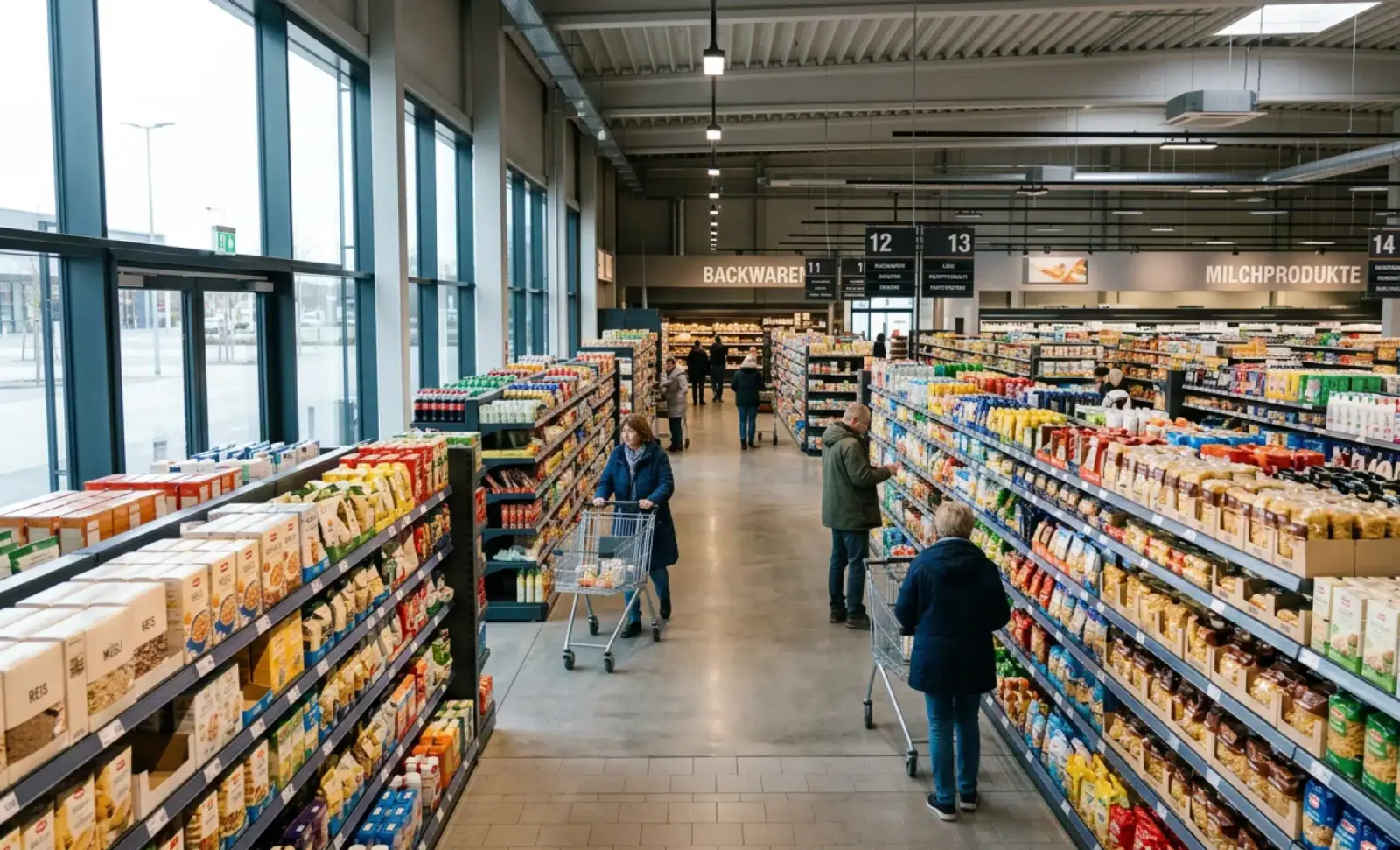
Several large European retailers have already signalled that they want 2D ready products on their shelves by 2027 or sooner. Their reasoning is practical. When a product is recalled, item level data lets a retailer stop the affected batch at the till instead of pulling an entire product line. When stock needs counting, codes that carry more context make inventory accuracy easier to maintain. Regulatory readiness is part of the picture too, since the same data supports traceability requirements that are arriving across the retail sector. For retailers, the move to 2D barcodes is an operational upgrade with a clear return, which is why they, rather than regulators, are setting the pace.
What does the Sunrise 2027 deadline mean in practice?
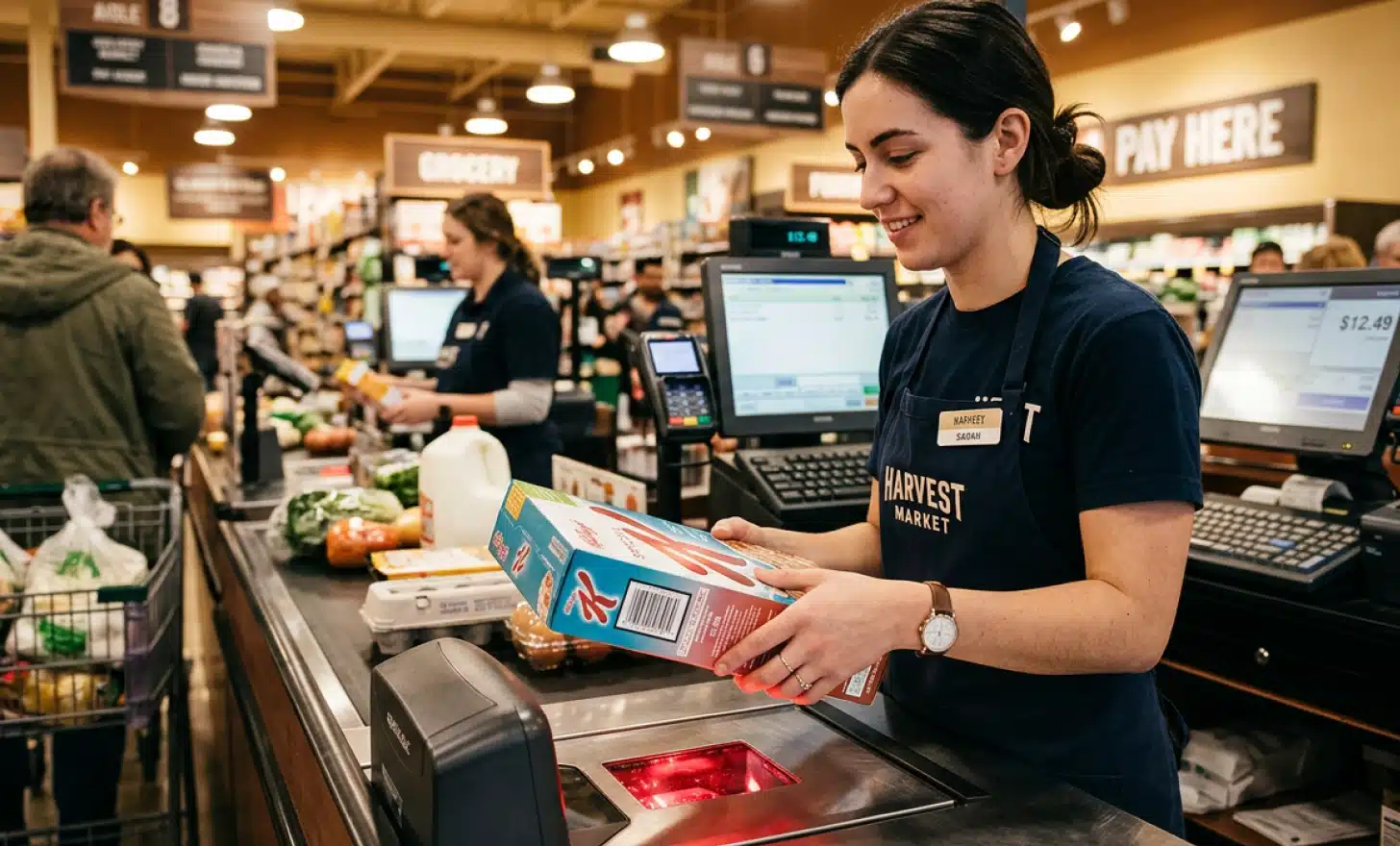
In practice, Sunrise 2027 means retail checkout systems are being prepared to scan both 1D and 2D barcodes by the end of 2027. It does not mean every product must switch on a single day. It means retailers will be ready, and they will increasingly expect the brands on their shelves to be ready too.
The important nuance for brand owners is timing. Retailers will begin asking for 2D ready packaging before the formal deadline, not on the day itself. Packaging cycles are long, and a brand that waits until late 2027 risks arriving after its retail partners have already started favouring suppliers who prepared early. The realistic goal is to have compliant packaging flowing through your production well ahead of the date, so the transition feels routine rather than urgent. Brands that treat 2027 as a finish line, rather than the middle of a multiyear transition, are the ones most likely to be caught short.
What can brands and retailers do with item level data?
The clearest way to understand the value of GS1 Digital Link is to look at what item level data unlocks for each group that touches the product. The same code serves four different needs without any of them getting in the way of the others.
At the checkout
When a code carries expiry and batch information, expired products can be flagged and pulled automatically, and a recall can be enforced as a hard stop at the till. Instead of relying on staff to remember which batch is affected, the system simply refuses the sale. That is a meaningful upgrade in both safety and consumer trust.
Across the supply chain
The same data supports real time movement tracking and more accurate inventory. Each handoff, from manufacturer to distribution to store, can read the code and confirm what moved, when, and in what quantity. Better visibility across the supply chain reduces guesswork and shrinkage.
For consumers
One scan can open a product page with ingredients, usage instructions, sustainability information, recipes, or brand content. This is where consumer engagement lives. A shopper standing in the aisle gets answers without searching, and the brand gets a direct channel to the person holding the product.
For regulators
Traceability data is available at any point in the product lifecycle. The same code that helps a shopper choose a product also lets a regulator confirm its origin and history. One data carrier, many legitimate readers.
Put it into practice
Create a dynamic QR code free and see it work. No credit card required.
Get started freeHow does GS1 Digital Link connect to the EU Digital Product Passport?
GS1 Digital Link is the recommended data carrier format for the EU Digital Product Passport, which begins rolling out across product categories from 2026 onward under the ESPR framework, Regulation 2024/1781. In short, the QR code that makes a product 2D ready for retail can also be the code that carries its Digital Product Passport.
This overlap matters because it changes how you should scope the work. A brand preparing for Sunrise 2027 is, in large part, building the same foundation it will need for the Digital Product Passport: clean product data, a reliable code on the packaging, and a system that resolves that code to the right information. Treating these as one program, rather than two competing compliance projects, saves duplicated effort and avoids printing two different codes for two different reasons. Plan the data carrier once, then let both initiatives draw from it.
How should brands prepare for GS1 Digital Link 2027?
Preparation is a sequence, not a switch, and for larger organisations it can take 18 to 36 months. The work spans packaging, data systems, and testing, so it pays to map the route early. A practical roadmap looks like this:
- Assess your current packaging and barcode infrastructure to understand what already exists and what needs to change.
- Engage GS1 to obtain or verify your GTIN and company prefix, the identifiers everything else is built on.
- Pilot 2D codes with a small set of products in selected markets before scaling.
- Implement dual marking during the transition period, printing the traditional 1D barcode alongside the new 2D code so nothing breaks at checkout.
- Update your PIM, ERP, and supply chain systems so they can feed accurate GS1 Digital Link URIs.
- Test at retail point of sale and across supply chain handoffs to confirm the codes resolve correctly everywhere they are read.
- Plan for ongoing data governance, because the content behind the code will keep changing long after the first print run.
The early steps are about identification and structure. The later steps are about keeping the data honest over time, which is where many projects underestimate the effort.
Why are dynamic QR codes the right foundation?
The GS1 Digital Link standard works with static web addresses, but real brand needs rarely stay still. Consumer content changes, recalls happen, and regulatory requirements evolve. A dynamic QR code lets you update where a scan leads, and the information behind it, without reprinting a single package. The code on the carton stays the same. What it points to can change the moment you need it to.
This is the practical reason many brands choose a dynamic foundation. If a recall requires a different message tomorrow, or a Digital Product Passport gains a new data field next year, a dynamic destination absorbs the change without a new print run. A dynamic QR platform such as QRCodeKIT, which has worked in dynamic QR codes since 2009, fits this pattern because the link can be managed centrally while the printed code stays fixed on the shelf. For a standard meant to serve consumers, retailers, and regulators over a product’s whole life, the ability to update without reprinting is less a convenience and more a requirement.

What mistakes do brand owners make with Sunrise 2027?
Most missteps come from misreading the nature of the transition rather than from the technology itself. The common ones are worth naming so you can plan around them:
- Treating Sunrise 2027 as a single deadline to hit, when it is a transition that can take 18 to 36 months to complete properly.
- Underestimating data governance, since feeding GS1 Digital Link URIs requires clean, structured product data that many organisations do not have ready.
- Ignoring the consumer facing layer and running the project as a supply chain exercise only, which wastes the engagement value the standard makes possible.
- Treating GS1 Sunrise 2027 and the EU Digital Product Passport as separate compliance projects when they overlap heavily and share the same data carrier.
Avoiding these four is mostly a matter of framing. Start early, get the data right, remember the shopper, and run the two initiatives as one.
Frequently asked questions about GS1 Digital Link 2027
Is GS1 Digital Link 2027 a legal requirement?
Not in the way a regulation is. Sunrise 2027 is a retailer driven initiative coordinated by GS1, so the pressure to comply comes from retail partners preparing their point of sale systems, rather than from a law with a fixed penalty. That said, the same data carrier supports regulatory requirements such as the EU Digital Product Passport, so the practical effect is that most brands will need to act regardless.
Will traditional barcodes stop working in 2027?
No. The point of Sunrise 2027 is that checkout systems will be able to read both 1D and 2D barcodes. During the transition, dual marking lets brands print the familiar linear barcode alongside the new 2D code, so existing scanners keep working while 2D capability is rolled out.
What is the difference between a QR code and a data matrix in this context?
Both are 2D barcodes that can carry GS1 Digital Link data. QR codes are the more common choice for retail because consumer phones read them easily, while a data matrix is often used where space is tight, such as small or industrial packaging. The underlying GS1 Digital Link structure can sit inside either format.
How long does it take to prepare for GS1 Digital Link?
For a large organisation, preparation commonly takes 18 to 36 months once you account for packaging redesign, data system updates, piloting, and testing across retail and supply chain handoffs. Smaller catalogues can move faster, but the data governance work tends to take longer than teams expect in every case.
Can one code really serve consumers, retailers, and regulators at once?
Yes, and that is the central idea of the standard. A GS1 Digital Link encodes structured data in a web URI so that each audience can access the part relevant to them from the same scan. A shopper sees product information, a retailer’s system reads expiry and batch data, and a regulator can reach traceability records, all from one code on the package.
All images and visual content in this article were created using RealityMAX.
Related articles

AI QR code reduces customer support tickets
Learn how an AI QR code reduces customer support tickets by answering routine questions at the point of need, freeing agents for the cases that need them.

QR codes for resorts
TL;DR QR codes for resorts absorb the operational pressure of peak summer occupancy by moving repeatable interactions into the guest’s phone. They shorten…
Pharmaceutical serialization with QR codes
Every box of prescription medicine that crosses a border, sits on a pharmacy shelf, or reaches a patient now carries something it did not carry twenty years…
Two free dynamic QR codes. Yours forever.
No credit card. No expiry. The original dynamic QR platform since 2009.