April 10, 2026
State of dynamic QR codes in 2026: What 1.1 billion scans reveal
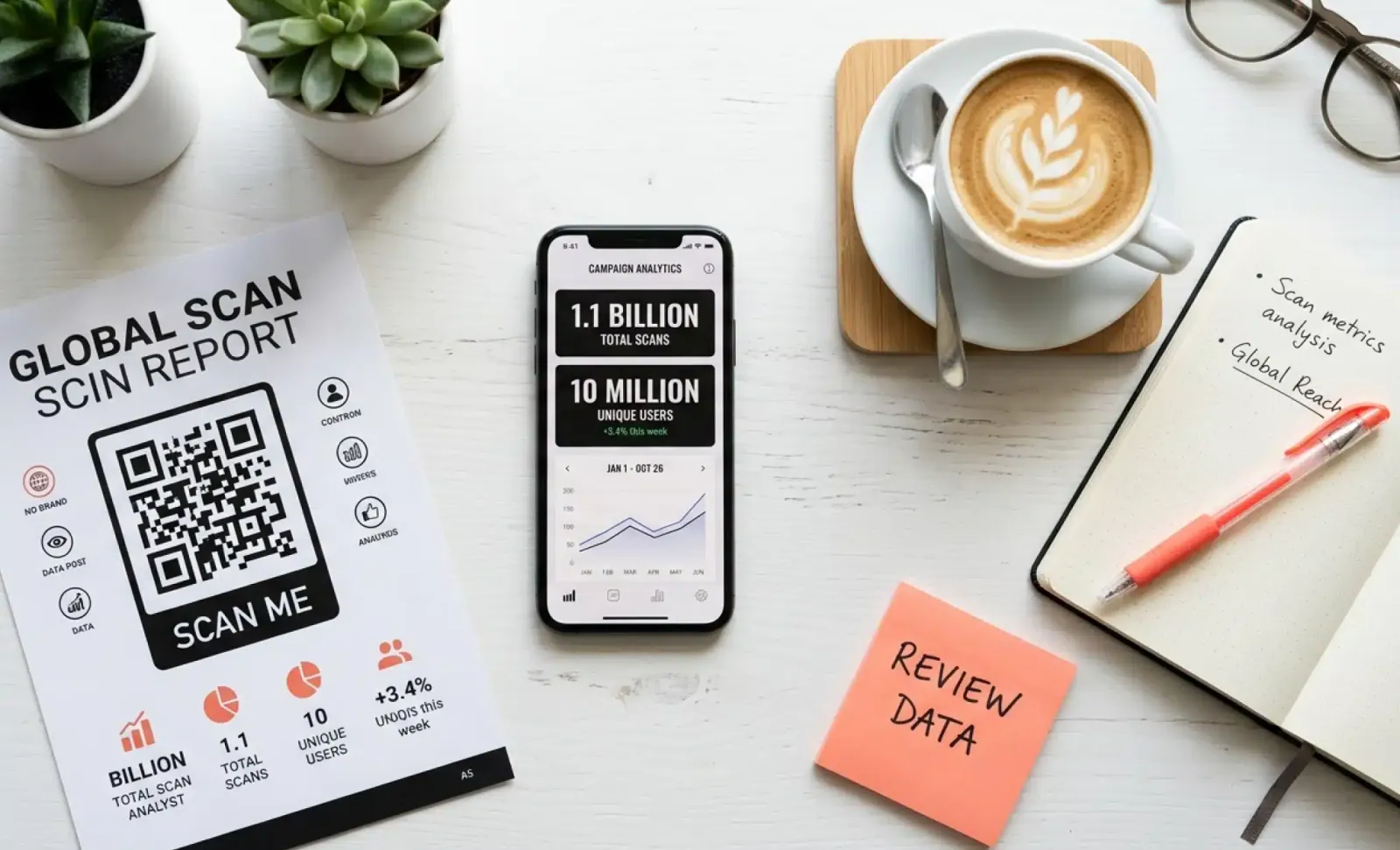
Surveys tell you what people say they do. Platform data tells you what they actually do.
Most QR code reports published in 2026 are built on consumer polls, useful, but inherently limited. They capture opinions and intentions, not behaviour. What we’re sharing here is different: 17 years of real usage data from 1M+ companies that have created, managed, and tracked dynamic QR codes on our platform since we invented the format in 2009.
This is what dynamic QR codes look like in practice.
The numbers behind the format
The scale of dynamic QR code adoption becomes clear when you look at platform-level data rather than survey responses.
To date, businesses have created over 10 million QR codes on our platform, generating more than 1.1 billion scans across campaigns, products, menus, and marketing materials worldwide.
These aren’t experimental deployments. They represent years of active use by restaurants, retailers, agencies, and enterprises: companies that rely on dynamic QR codes as operational infrastructure, not as a marketing experiment.
What types of QR codes do businesses actually deploy?
When given the full range of QR code types, businesses consistently gravitate toward the same four formats:
Website QR codes top the list. They connect any printed surface (packaging, signage, business cards, ads) to a URL that can be updated without reprinting. For most businesses, this is the starting point.
File download QR codes rank second. Product manuals, catalogues, certificates, and onboarding documents are common use cases. The appeal is simple: one printed code, always pointing to the latest version of a file.
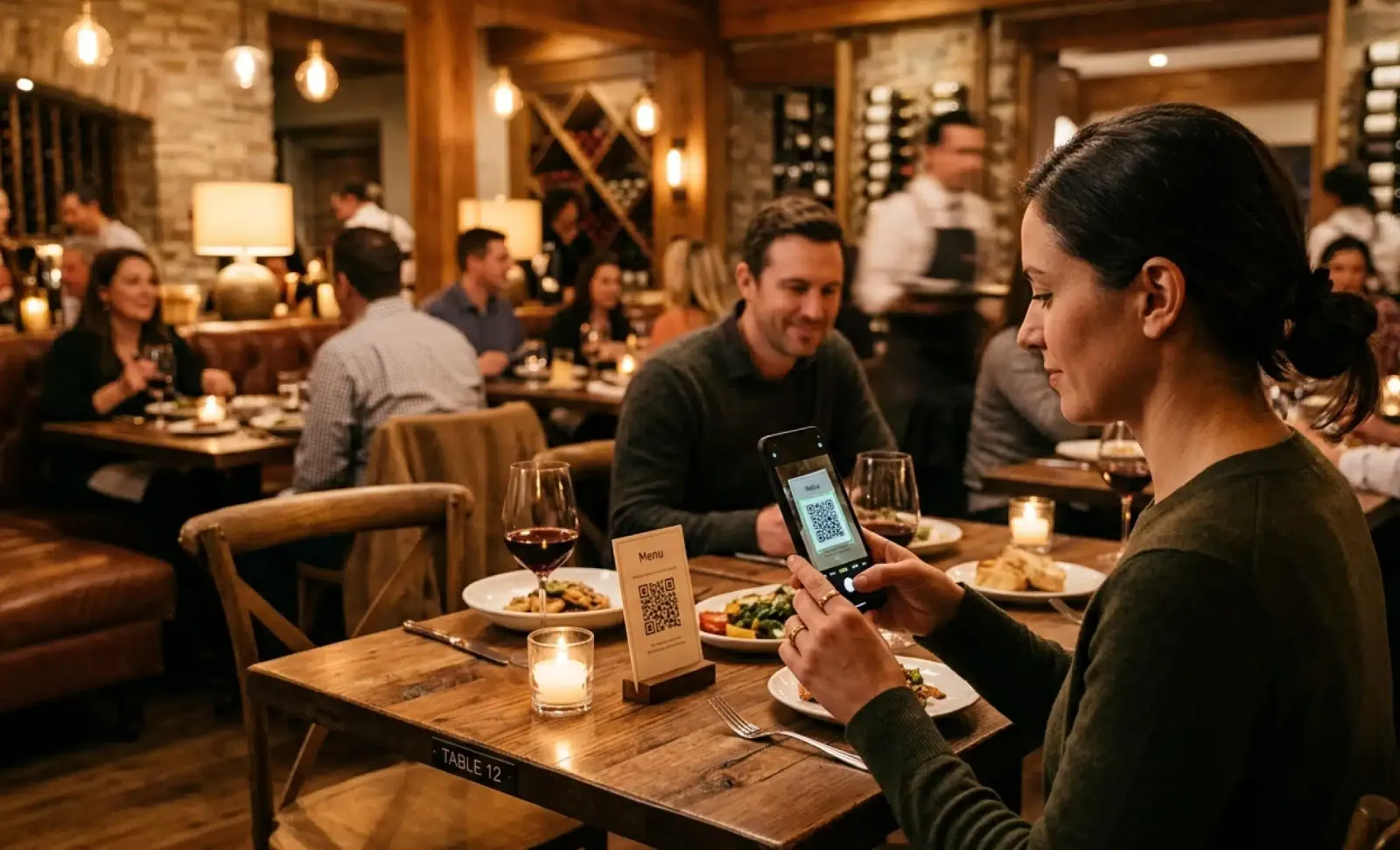
QR menus have moved from pandemic workaround to permanent fixture. Restaurants and hospitality businesses use them to manage daily specials, multilingual menus, and time-based
content, all from one code.
Digital business cards round out the top four. Professionals replace paper cards with scannable profiles that stay current long after the first meeting.
The pattern across all four is consistent: businesses choose QR code types that reduce operational friction and eliminate the need to reprint every time something changes.
Put it into practice
Create a dynamic QR code free and see it work. No credit card required.
Get started freeWhich industries are leading adoption?
Dynamic QR code usage is not evenly distributed. Based on our platform data, three sectors account for the majority of active deployments.
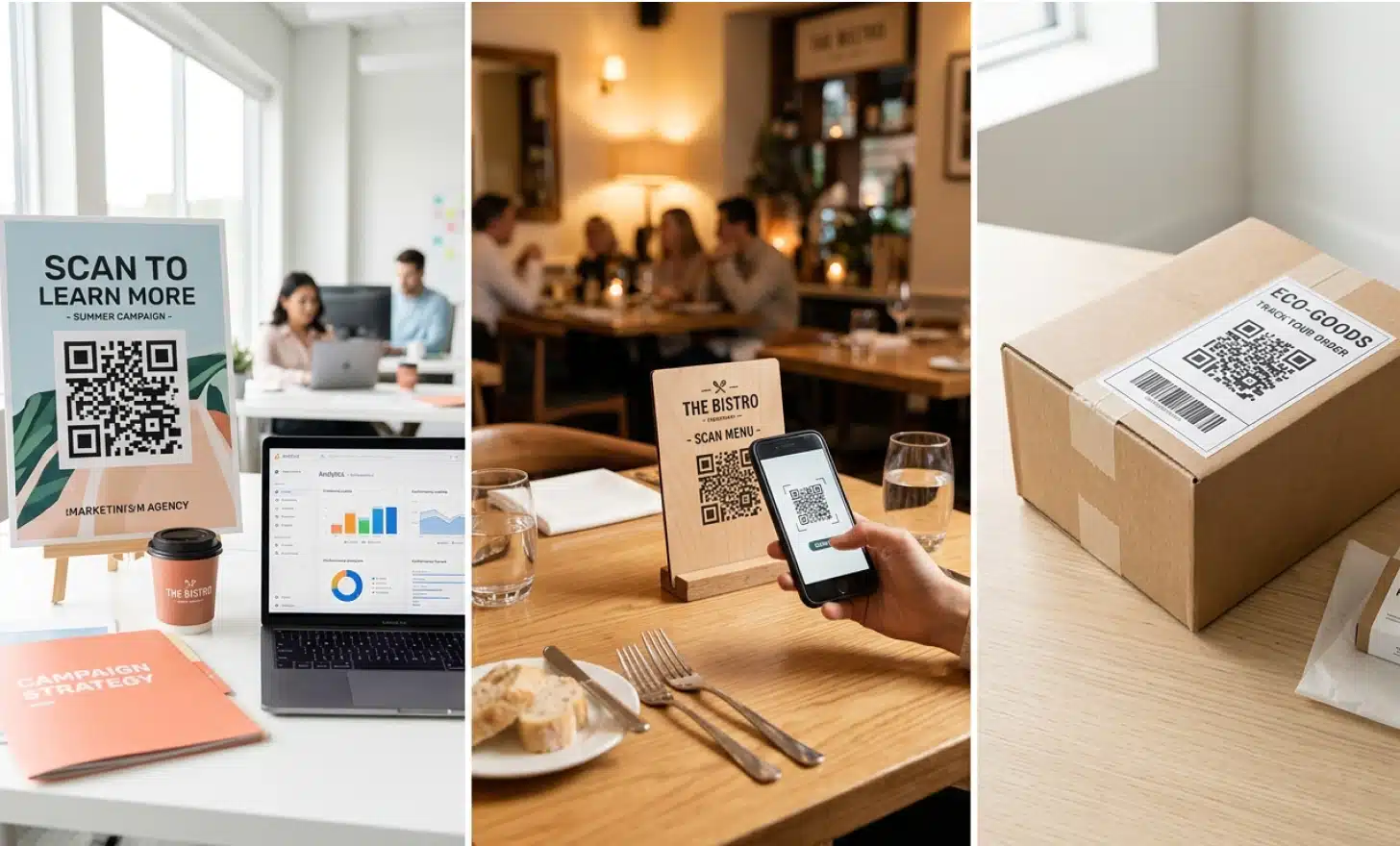
Marketing agencies lead adoption. For agencies, dynamic QR codes solve a problem that has existed since print advertising began: how do you measure whether a poster, flyer, or direct mail piece actually worked? Dynamic QR codes make print trackable, updatable, and reportable, without asking the client to reprint anything mid-campaign.
Restaurants and hospitality follow closely. The QR menu became standard during COVID, but it stayed because it genuinely improved operations. Staff spend less time replacing physical menus. Managers update content in real time. And increasingly, AI handles the questions that used to require a staff member (allergen queries, dish recommendations, order guidance) directly from the scan.
E-commerce and retail complete the top three. Every package shipped is a potential touchpoint. Dynamic QR codes on product packaging let brands redirect customers to new collections, seasonal offers, or post-purchase content without touching the label. The code printed six months ago can point somewhere entirely new today.
Dynamic QR codes are actively managed, not set and forgotten
One of the most common misconceptions about QR codes is that businesses create them once and leave them. Our data tells a different story.
The platform processes close to 10,000 QR code updates per week. That means businesses are regularly changing destinations, refreshing content, and adapting campaigns, long after the original print run.
This is the operational reality that separates dynamic from static. A static QR code is a fixed link. A dynamic QR code is a managed asset. The companies getting the most value from the format are the ones treating it that way: updating destinations when campaigns end, redirecting old codes to new offers, and using scan data to decide what to show next.
A common mistake, by contrast, is letting codes go stale. An expired link or an outdated destination is one of the most cited sources of negative QR code experiences, and it’s entirely preventable with a dynamic format and basic link monitoring.
Where in the world are QR codes being scanned?
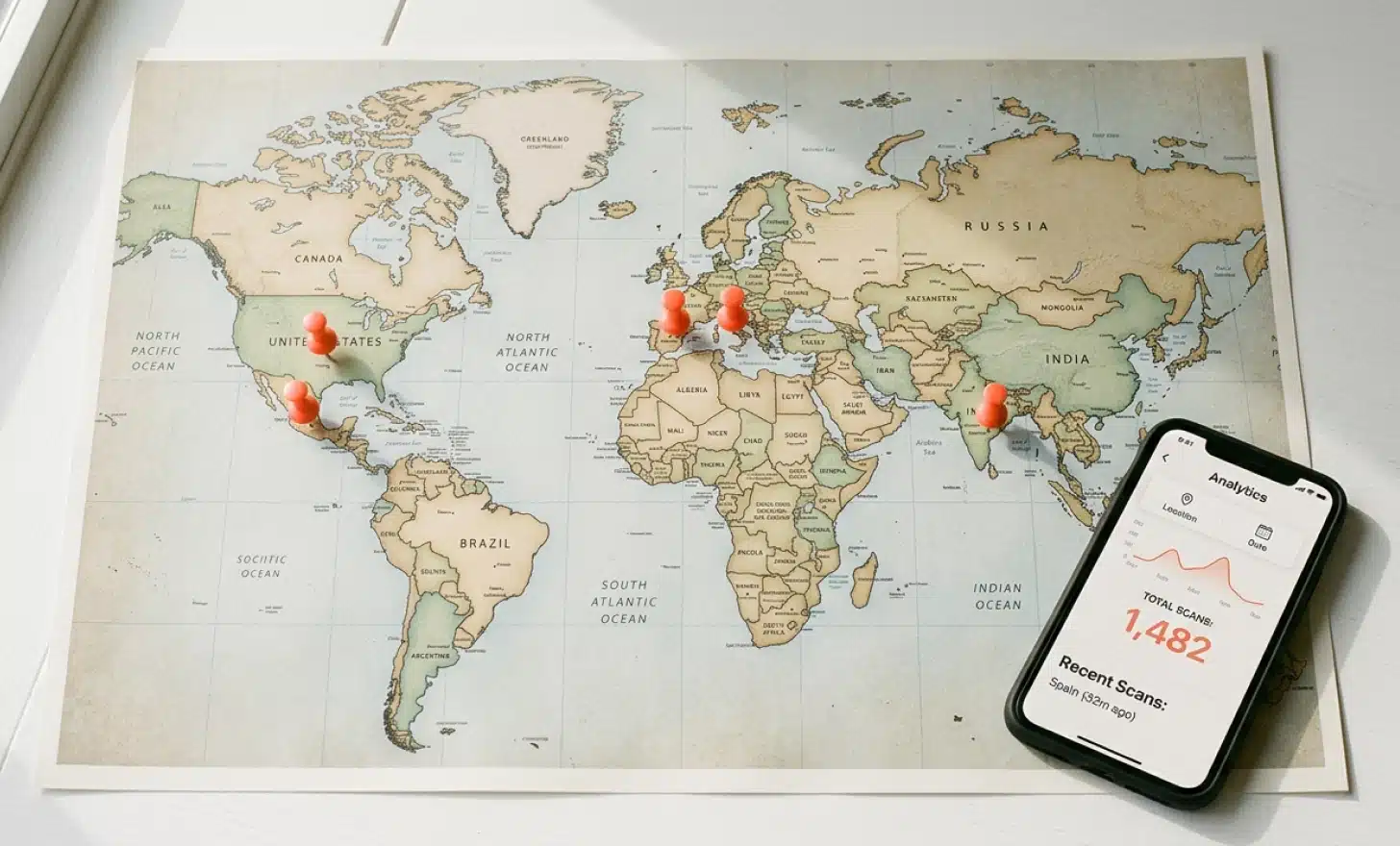
Dynamic QR code activity spans every major region, with particularly strong concentration in North America, Europe, and Latin America.
The US leads by a clear margin, but the geographic spread is notable. India in second place reflects the rapid growth of QR adoption across one of the world's largest smartphone markets. Italy and Spain in third and fourth reflect the deep adoption of QR menus and retail QR codes in Southern European hospitality, while Mexico rounds out the top five as one of the fastest-growing markets in Latin America.
The diversity of this list also confirms something important: dynamic QR codes are not a single-market trend. They are being used at scale across different regulatory environments, languages, and business cultures.
What comes next: AI inside the scan
The original idea behind the dynamic QR code was straightforward: separate the printed marker from the digital destination so the destination could change without reprinting. That idea has been validated at scale.
The next layer is already in motion. AI QR codes don’t just redirect to a page; they start a conversation. An AI assistant living inside the scan can answer questions, handle allergen queries, guide a customer through a purchase, or surface the right information based on what the user asks, without any staff involvement and without sending the user to a generic landing page.
This shifts what a scan can do. Instead of a destination, it becomes an interaction. For the industries already leading adoption (hospitality, agencies, e-commerce) that’s a meaningful operational upgrade, not just a feature.
QRCodeKIT invented the dynamic QR code in 2009. Today, 1M+ companies worldwide use our platform to create, manage, and track their QR code campaigns.
All images and visual content in this article were created using RealityMAX.
Related articles

How beach clubs use QR codes?
There is a particular kind of frustration that belongs specifically to beach clubs. You are settled in. The sun is right. You have found the exact angle on…
AI QR code for seasonal menu
Every summer, bars and restaurants face the same quiet operational pressure. The weather shifts, supplier availability changes, local produce comes into…
AI QR code for allergen information
Food allergies are not a minor inconvenience. For millions of people, a single overlooked ingredient can mean a medical emergency. Restaurants know this. The…
Two free dynamic QR codes. Yours forever.
No credit card. No expiry. The original dynamic QR platform since 2009.