June 10, 2026
Why does every boutique hotel need a QR code for boutique hotel branding?
TL;DR
- A QR code for boutique hotel use works only when it reinforces the brand: a branded code, quality materials, and thoughtful placement.
- Five use cases matter most for small luxury properties: digital compendiums, in room dining, local recommendations, activity bookings, and guest feedback during the stay.
- Dynamic QR codes update without reprinting and provide scan analytics, which suits properties where the experience evolves season by season.
- A conversational AI layer like Cleo answers guest questions in their own language, without staffing multilingual concierges around the clock.
A QR code for boutique hotel branding is not the same decision as a QR code for a chain property. In a boutique hotel, the experience is the product. Every object in the room, every printed card, every interaction with the front desk carries the brand. A QR code placed thoughtfully extends that experience. A generic code stuck on a laminated sheet undermines it. This article walks through the use cases that matter most for small luxury properties, and how to deploy them in a way that feels boutique rather than budget.
Why do boutique hotels need QR codes more than chain properties?
Boutique hotels need QR codes because they serve high expectations with small teams. A property with 10 to 80 rooms cannot match the operational scale of a chain, but it can match the guest experience by letting QR codes handle routine information while staff focus on the personal touches that define the stay.
Think about what a small team actually deals with in a day. A guest arriving at midnight wants the wi fi password and breakfast hours. A couple from Japan wants to know which local restaurants take reservations. Someone with a nut allergy wants the full ingredient list for the in room dining menu. None of these moments require a human being, but all of them shape how the stay feels. When hotel guests can scan a code and get an immediate answer, the team is free for the moments that do require a person: the welcome, the recommendation told as a story, the small gesture that earns a repeat visit.
What should a QR code for boutique hotel branding look like?
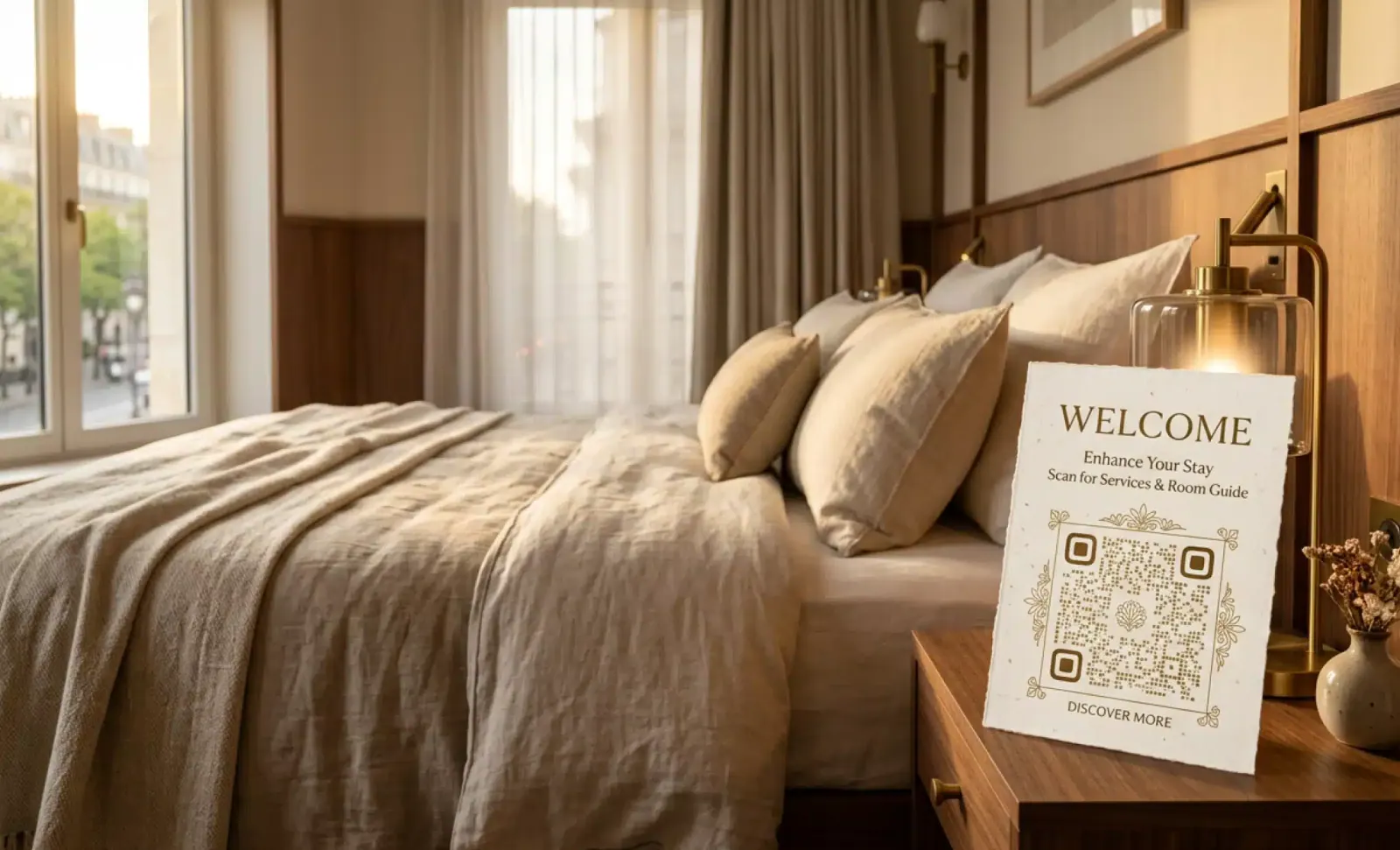
Before deciding what to QR-enable, decide how the codes will look. A QR code for boutique hotel use should carry the hotel logo and brand colors, sit on quality materials, and feel designed rather than added. This decision matters more for a boutique property than for any chain, because the brand is visual everywhere.
Guests notice the difference even if they never articulate it. A black and white code printed on office paper reads as cost cutting. A branded code embossed on the same card stock as the welcome note reads as intention. Platforms like QRCodeKIT allow the code itself to incorporate the logo and palette, so the scannable element becomes one more branded touchpoint instead of a visual interruption. In a property where the wallpaper was chosen deliberately, the QR code should be too.
Which QR code use cases improve the guest experience most?
Five use cases deliver the most value in a boutique setting. Each replaces a moment of friction with a moment of ease, and each keeps the small team focused on hospitality rather than logistics. Together they cover the full arc of a stay, from the first hour in the room to the final impression.
- In room compendiums and amenity guides. Replace the bulky printed binder with a single elegant code that links to current information about property amenities, house rules, and services. The binder dates quickly. The digital version never does.
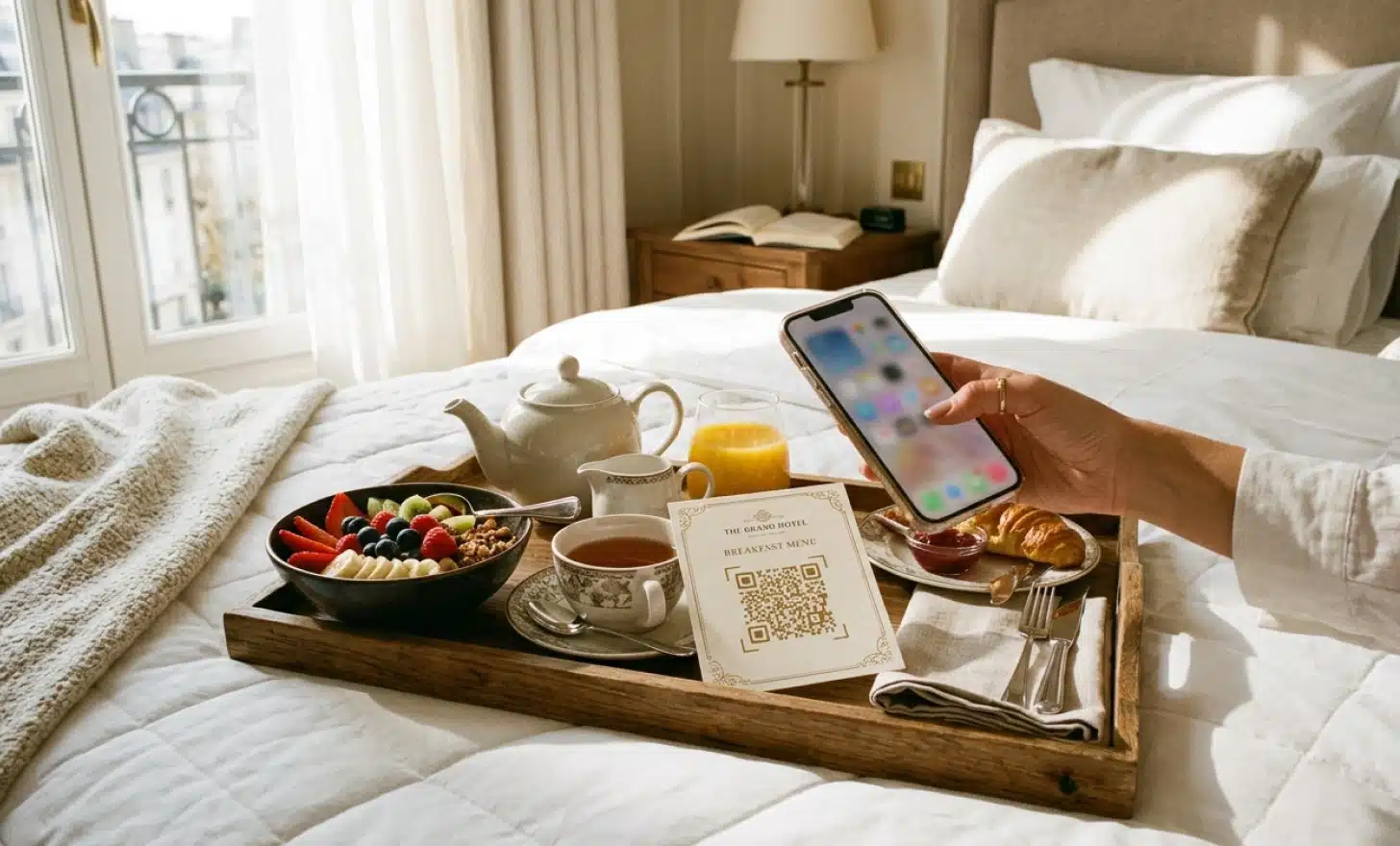
- Room service and in room dining. Digital menus update in real time, so a sold out dish disappears immediately and allergen details stay accurate. Guests order room service from their phone in their own language, without calling down.
- Local recommendations and concierge content. Curated guides to restaurants, local attractions, and experiences that change with the seasons. The new partnership with the vineyard down the road goes live the same afternoon.
- Activity and spa bookings. A code on the bedside card links to live availability, so guests book a massage at 11 pm without waiting for the front desk to open.
- Guest feedback during the stay. A discreet code invites impressions while they are fresh. If something is wrong, the team hears it on day one and recovers the situation before it becomes a public review.
How do QR codes help boutique hotels serve international guests?
QR codes solve the language problem that small properties cannot solve with staffing. International guests arrive with questions in their own language, and no boutique hotel can keep multilingual concierges at the front desk around the clock. A conversational AI layer at the destination answers in whatever language the guest chooses.
This is where Cleo, the conversational AI from QRCodeKIT, fits the boutique context naturally. The hotel configures its content once: amenity hours, dining options, dietary information, directions, recommendations. When a guest scans the code, they land on the hotel’s page and find a conversation ready to answer in their language. A guest from Berlin asks about the spa schedule in German. A guest from Seoul asks whether the tasting menu can be made vegetarian, in Korean. The page stays the hotel’s page. The conversation simply removes the language barriers that printed materials never could.
Why are dynamic QR codes essential for boutique hotels?
Dynamic QR codes are essential because a boutique hotel is never finished. The destination behind a dynamic code can be edited at any time without reprinting anything, so the beautiful card in the room keeps working as menus, partnerships, and event schedules change. The physical object stays. The content evolves.
This is the opposite of how static codes behave. A static code, the kind found across the wider hospitality industry, locks one fixed destination forever and provides no analytics. For a property built on seasonal menus, rotating art, refreshed spa offerings, and special evenings for returning guests, that means reprinting every card stock touchpoint with each change, or worse, leaving outdated information in guest rooms. Dynamic codes remove that trade off entirely. Print once on beautiful materials, then let the experience behind the code grow with the property.
Where should QR codes be placed in guest rooms?
Placement should follow the design language of the room, not interrupt it. The strongest locations are the in room compendium, the dining menu card, the bedside table card, and the bathroom amenity guide. Each code sits where the relevant question naturally arises, printed on the same materials as everything else.
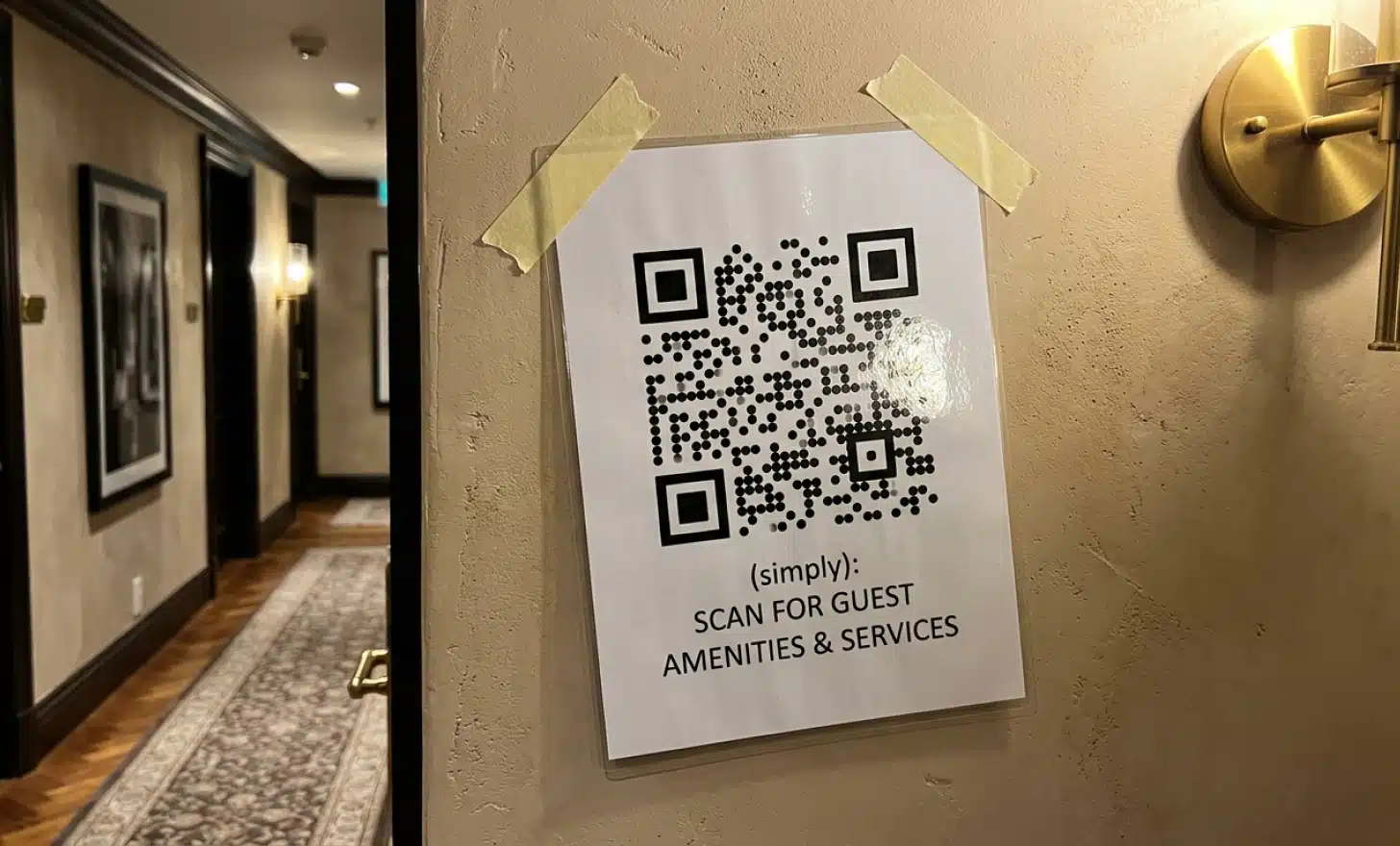
Boutique hotels obsess over visual detail, and the QR code deserves the same care as the lighting and the linen. Integrate the code into the existing stationery suite rather than adding a separate laminated sign. Keep one code per surface, with a short line of context, and resist placing QR codes on every flat surface. Two or three thoughtful placements in the room, plus one at the front desk and one in the restaurant, cover the entire stay without turning the property into an airport.
Put it into practice
Create a dynamic QR code free and see it work. No credit card required.
Get started freeWhat can scan analytics teach a boutique hotel about its guests?
Scan analytics show which content guests engage with, when they engage with it, what devices they use, and which countries they come from. For a boutique owner, this turns quiet guest behavior into a readable signal about what the property’s guests actually want during their stay.
The advantage here belongs to the small operator. A chain needs committees to act on data. A boutique owner sees that the local recommendations page gets three times the scans of the spa page, and adjusts the concierge content that same week. Country level data reveals that a growing share of guests read in French, which informs everything from menu translations to the wine list. Peak scan times show when guests are planning their evenings, which helps the team time suggestions at the desk. This is hotel operations refined by evidence, applied at a speed only a small property can manage.
Should QR codes replace printed materials in hotel rooms?
No. The strongest boutique approach is hybrid: a beautiful printed welcome card or short compendium alongside a QR code that links to deeper, always current content. Some guests prefer paper, and a boutique hotel should never make any guest feel that their preference is the wrong one.
Print carries texture, weight, and permanence that a screen cannot. Digital carries depth, currency, and language flexibility that print cannot. The welcome card states the essentials in two elegant paragraphs, and the code beneath it opens the full guide, the live menus, and the conversation in any language. Guests who never scan anything still have all the essential information in hand. Guests who scan get everything else. Operational efficiency improves without a single guest being pushed toward a behavior they did not choose.
What mistakes do boutique hotels make with QR codes?
The most common mistakes all share one root: treating the QR code as a cost cutting tool borrowed from chain hotels rather than an extension of the boutique experience. The technology is rarely the problem. The deployment is.
- Treating codes as a way to remove service rather than to free staff for personal touches.
- Generic black and white codes that clash with a carefully built brand identity.
- Static codes that lock the experience to one version and offer no data in return.
- Linking to PDF menus and brochures that read poorly on a phone screen.
- Skipping multilingual setup, forcing international guests to translate everything themselves.
- Removing all printed alternatives and leaving less tech comfortable guests behind.
A boutique hotel that gets the deployment right will outperform a larger property with better technology and worse judgment.
Frequently asked questions about QR codes for boutique hotels
Can guests use QR codes for contactless check in at a boutique hotel?
Yes. A code shared before arrival or placed at the front desk can link to a check in form, so late arrivals complete the process from their phone. Many boutique properties pair this with a personal welcome on arrival, keeping the human moment while removing the paperwork.
How do guests scan QR codes without a special app?
Every modern smartphone camera reads QR codes natively. Guests point the camera at the code and tap the link that appears. No download, no login, no instructions needed, which is exactly why adoption works across all guest ages and nationalities.
Can a QR code work as a digital business card for the hotel?
Yes. A digital business card QR code at the front desk or on the key card holder lets departing guests save the hotel’s contact details, website address, and booking link in one tap, which makes direct rebooking easier than searching later.
How often can the content behind a dynamic QR code be updated?
As often as needed, with changes live immediately. Seasonal menus, new event schedules, updated spa availability, and refreshed local guides all flow through the same printed code without any reprinting cost or delay.
Do QR codes work for promoting special offers to repeat guests?
Yes. The destination behind a code can feature current promotions, loyalty perks, or invitations to special evenings, and because the code is dynamic, the offer can change weekly while the printed materials in the room stay exactly the same.
All images and visual content in this article were created using RealityMAX.
Related articles
How to generate a QR code for a playlist?
Learn how to generate a QR code for a playlist on Spotify, YouTube, or Apple Music. Simple steps, design tips, and dynamic tracking to grow your audience.
QR code verticals in 2026
A clear look at the QR code verticals in 2026 growing fastest, from retail and pharma to payments and logistics, plus the regulation driving each shift.

QR code on a company annual report
Learn how to use a QR code on a company annual report: what to link, why dynamic QR codes matter, and how to design placements that readers actually scan.
Two free dynamic QR codes. Yours forever.
No credit card. No expiry. The original dynamic QR platform since 2009.