How to write a QR code data retention policy

TL;DR
- A QR code data retention policy is a section inside your broader data retention framework, not a standalone document.
- It must state what scan data you collect, the lawful basis, how long you keep each category, and how you delete it.
- Dynamic QR codes give you a deletion control that static codes cannot match.
- Bring conversational AI transcripts and a fixed review cadence into scope before they become a gap.
A QR code data retention policy answers a deceptively simple question: how long should you keep the data a scan generates, and why? Every scan produces information with a lifecycle, and that lifecycle is now scrutinized by regulators, customers, and auditors. Getting it wrong is the most common form of QR code GDPR compliance failure, while getting it right is mostly a matter of being specific. This guide walks through what to collect, how long to keep it, and how to document the whole thing so it survives an audit.
Why does a QR code data retention policy matter?
A QR code data retention policy matters because every scan creates data with a defined lifecycle, and supervisory authorities increasingly ask how long that data lives. A clear policy demonstrates accountability and protects you from the most common GDPR complaint of all: keeping personal data longer than the original purpose requires.
GDPR (Regulation 2016/679) sets out a principle called storage limitation. Personal data must be kept no longer than is necessary for the purposes it was collected for. A retention policy is how you prove, on paper, that you understand and apply that principle to QR scan data specifically. Without one, “we collect scans” quietly turns into “we keep everything forever,” which is exactly the posture regulators look for.
What data does a QR code scan actually collect?
A typical QR code scan collects first-party data: a timestamp, device type and operating system, country-level location derived from IP, the source code identifier, and browser type and language. On its own, much of this is not personal data. Combined with other identifiers, or paired with downstream input, some of it can fall squarely inside GDPR.
Knowing exactly which fields you hold is the foundation of any data retention schedule, so map them honestly:
- Timestamp: when the scan happened. Rarely identifying on its own.
- Device type and operating system: useful for analytics, not identifying in isolation.
- Country-level location: usually derived from IP. The location itself is broad, but the IP address behind it can be personal data.
- Source code identifier: which code was scanned. Operational, not personal.
- Browser type and language: helps optimize the destination experience.
- Downstream data at the destination: form submissions, or a conversation with a conversational AI layer. This is the field most likely to be personal data QR teams underestimate, and it needs the closest attention.
The first four items rarely identify an individual by themselves. The risk lives in combination and in anything captured after the scan, which is where most QR code privacy questions actually arise.
What is the lawful basis for processing QR scan data?
Before you decide how long to keep QR scan data, decide why you are processing it. GDPR requires a documented lawful basis, recorded before collection begins. The basis you choose, whether legitimate interest, consent, contract, or legal obligation, directly shapes both the retention period and the data subject rights the user can exercise.
For most operational analytics, legitimate interest is the workable basis, provided the processing is proportionate and a user would reasonably expect it. Consent becomes relevant the moment you move into marketing, profiling, or storing conversation transcripts beyond what the experience needs. Contract applies when the scan fulfils a service the user asked for, and legal obligation applies when a law requires you to retain certain records. Whichever basis you land on, write it down next to the data category it justifies. The basis and the retention period are two halves of the same decision.
How do you determine the right retention period?
The right data retention period is the shortest time that still serves your documented purpose. There is no universal number. Ask four questions: how long does the team actually use the data for decisions, how long does the campaign cycle run, does any law or sector rule mandate a minimum, and would a typical user be surprised the data still exists?
Operational analytics often justify a longer window than a single campaign, because teams compare performance across months or years. Campaign measurement, by contrast, can usually be aggregated and then cleared once the campaign closes. Audit and accountability needs sometimes set a floor rather than a ceiling, since certain records must be kept for a defined minimum. The final test is the most underused one: data subject expectations. If a reasonable person would be uncomfortable learning the data is still on file, that is a strong signal your retention period is too long.
What should a QR code data retention policy include?
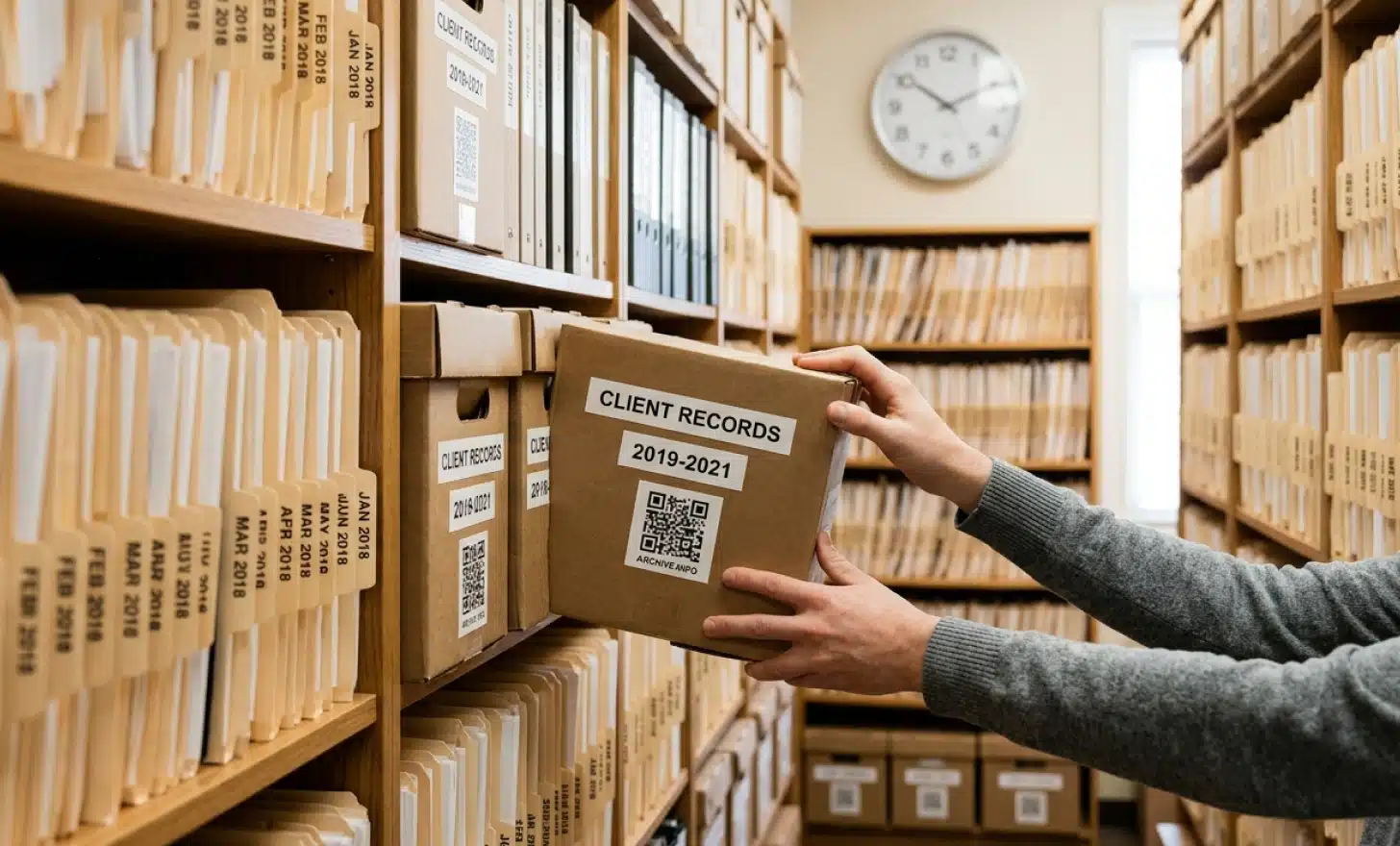
A defensible QR code data retention policy covers seven things: scope, data categories, lawful basis, retention period, deletion process, data subject rights, and review cadence. Each element should be specific enough to survive scrutiny. Vague language is the fastest route to a policy that collapses the moment an auditor asks a follow-up question.
Start with scope, which states which QR codes and which data the policy governs, so nothing is ambiguous about what is in and out. The data categories section lists what is collected at each stage of the QR lifecycle, from the raw scan event through to anything captured at the destination. Against each category you record the lawful basis. The retention period follows, expressed as an explicit timeframe with a short rationale rather than an open-ended phrase. The deletion process explains how data is removed once its period ends and, just as importantly, who owns that task. The data subject rights section sets out how you handle access, rectification, deletion, and portability requests in practice. Finally, the review cadence fixes how often the policy is revisited, because a retention review that never happens is the same as having no policy at all.
How do dynamic QR codes change data retention?
Dynamic QR codes give you a control that static codes simply cannot offer. When you delete a dynamic code on the platform, the redirect stops working and the analytics tied to it are removed. A static code keeps resolving to its destination until that destination is taken down, with no central record to clear and no clean way to retire the associated data.
This matters for your policy because deletion is one of the hardest steps to enforce in practice. Platforms built around dynamic QR data, such as QRCodeKIT, let you retire a code and its associated analytics as a documented deletion step, which is far easier to evidence in an audit than chasing down a printed code that lives on a thousand flyers. The contrast is worth naming directly in the policy: dynamic codes are governable across their full lifecycle, while a static code, once printed, is effectively out of your hands. Documenting platform deletion as the deletion mechanism turns a vague intention into a repeatable procedure.
Put it into practice
Create a dynamic QR code free and see it work. No credit card required.
Get started freeHow should the policy handle conversational AI on QR codes?
When a scan leads to a conversational AI layer such as Cleo, the conversation itself becomes data. Your policy should state plainly whether transcripts are stored, for how long, whether they are used to improve the AI, and how a user’s deletion request is handled. Conversation text is frequently the most sensitive information a QR experience collects.
People type things into a conversation that they would never enter into a form, which is why this category deserves its own line in the schedule rather than being folded into general analytics. Decide whether transcripts are retained at all, and if so, set a deliberately short period unless the user has consented to longer. Be explicit about secondary use: if conversations are used to refine the assistant, say so, and describe the safeguards. Then connect it to data subject rights, so a deletion request reliably reaches the transcript store and not just the scan log. Features like this are also the classic blind spot in older policies, one more reason the review cadence matters.
What is the difference between anonymization and pseudonymization?
The difference is decisive for retention. Anonymized data cannot be linked back to an individual, so it falls outside GDPR and can be kept indefinitely for trend analysis. Pseudonymized data can still be re-identified with additional information, so it remains personal data and stays fully subject to your retention period, your deletion rules, and the user’s rights.
Many teams assume that stripping a name is enough to put data beyond the regulation. It is not. If the data can be reconnected to a person using a key, a lookup table, or any other held information, it is pseudonymized, not anonymized, and the clock on your retention period keeps running. Your policy should state which transformation you apply, to which data, and at what stage of the lifecycle. Doing this well is often what lets you keep aggregated QR analytics retention figures long term while safely deleting the raw scan data storage underneath them.
What are the most common mistakes in QR data retention policies?
The most common mistake is a vague retention period such as “as long as necessary” with no actual timeframe attached. Close behind it are copy-pasting a cookie policy, treating QR data as a separate silo, skipping any review process, and leaving deletion without a named owner. Each one quietly weakens the policy at the exact moment an audit tests it.
Watch for these in particular:
- Vague retention periods such as “as long as necessary” with no specified timeframe.
- Copy-pasting a website cookie policy without adapting it to QR-specific data.
- Treating QR data as separate from the organization’s broader retention framework.
- No documented review process, so the policy ages out of date.
- No clear deletion procedure and no accountable owner for carrying it out.
- Forgetting to update the policy when new features arrive, such as a conversational AI layer.
Most of these share a root cause: the policy was written once and never tested against how the data is actually handled day to day. Data minimization is not only about collecting less. It is also about deleting on schedule, which only happens when someone is responsible for it.
What does a sample QR retention schedule look like?
A sample schedule pairs each data category with a realistic period and a short rationale. The figures below are illustrative starting points, not legal recommendations. Your own periods should follow from your documented purposes and any sector requirements. The value of the exercise is the specificity, since precise timeframes are what make a policy defensible under audit.
Treat each row as a decision you can justify, not a default you inherited. When a regulator or customer asks why a number is what it is, the rationale column is the answer you want to already have written down.

Is QR scan data considered personal data under GDPR?
It depends on context. Many fields, such as device type or country-level location, are not identifying on their own. But an IP address, or any field combined with other identifiers, can be personal data, which pulls the whole scan into GDPR scope. Assess each field in combination, not in isolation.
How long can I keep QR code analytics?
Only as long as your documented purpose requires. Aggregated, properly anonymized analytics can be kept indefinitely because they sit outside the regulation. Raw, potentially identifying scan data should carry an explicit retention period tied to a specific operational or campaign need, after which it is deleted.
Do I need a separate retention policy just for QR codes?
No. QR-specific retention belongs as a section within your organization’s existing data retention policy, not as a standalone document. Keeping it integrated avoids contradictory rules across systems and ensures QR data is governed by the same review cycle and accountability structure as everything else you hold.
Who is responsible for deleting QR scan data?
Your policy should name an accountable owner, often the data protection officer or a delegated IT or marketing lead, and describe the deletion mechanism in concrete terms. For dynamic codes, that mechanism includes deleting the code on the platform, which removes the redirect and the analytics attached to it.
Can deleting a dynamic QR code remove its data?
On a dynamic QR platform, deleting the code stops the redirect and removes the analytics tied to it, which is why it belongs in your documented deletion process. Static codes do not offer this, since they keep resolving to their destination until that destination itself is removed, with nothing central to delete.
All images and visual content in this article were created using RealityMAX.
Related articles

Voice enabled QR code
Learn what a voice-enabled QR code is, how audio playback differs from voice interaction, and where each fits, from museum guides to multilingual menus.

Scan QR codes on iOS
Learn how to scan QR codes on iOS devices easily and for free. Read QRs with your iPhone or iPad built-in camera or use different solutions.
3D printable QR code
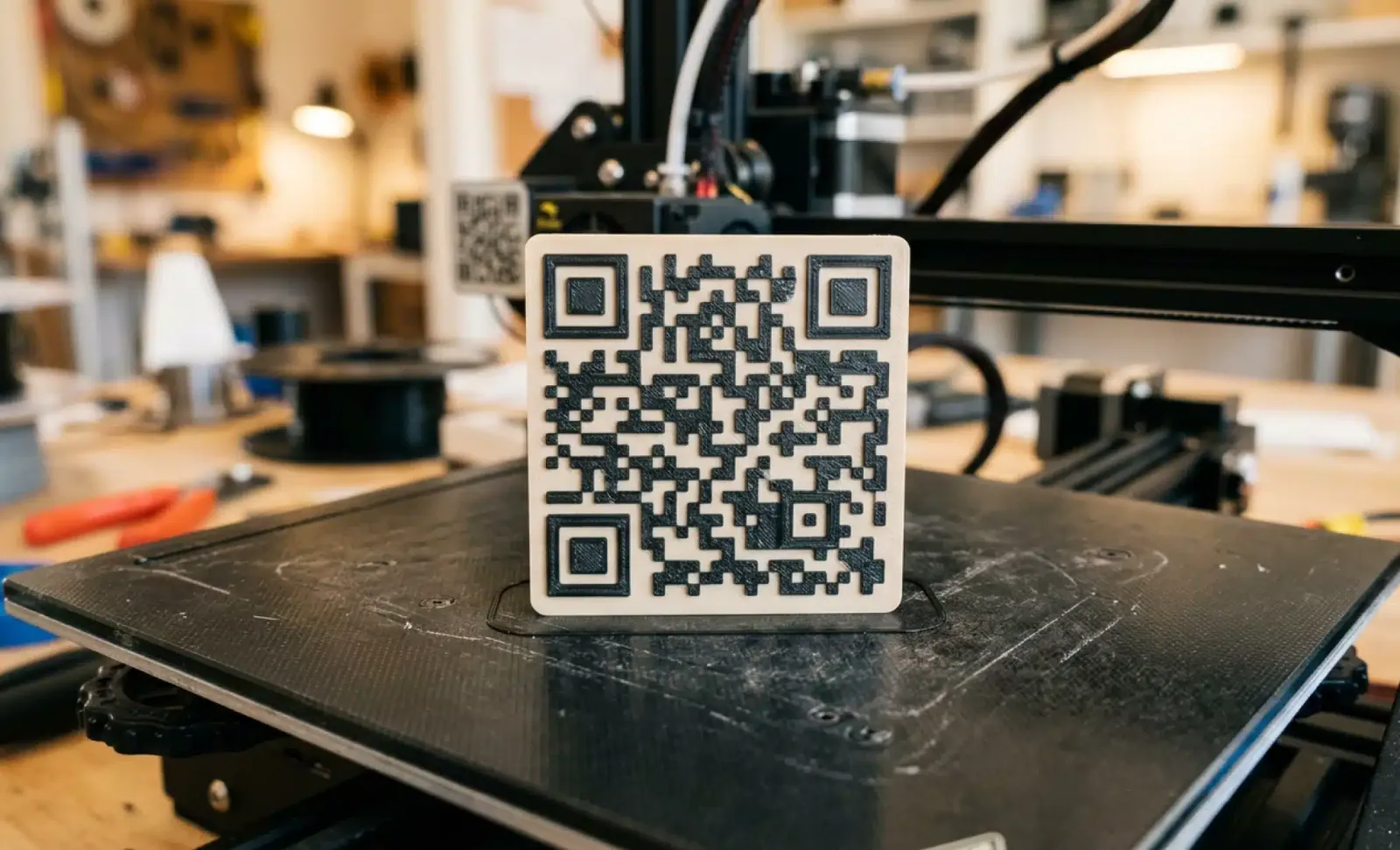
Learn how to make a 3D printable QR code, from SVG to STL file and slicer settings, so your 3D printed QR tag stays sharp, durable, and easy to scan.
Two free dynamic QR codes. Yours forever.
No credit card. No expiry. The original dynamic QR platform since 2009.