June 30, 2026
What the Taylor Swift wedding QR code story teaches us about invitations and guest privacy
TL;DR
- Around July 3, 2026, Taylor Swift and Travis Kelce are reportedly getting married in New York City, with invitations individually watermarked with each guest’s name so any leaked photo can be traced back to the source.
- The Taylor Swift wedding QR code conversation is less about celebrity and more about a question every couple faces: how much of your wedding stays private, and who gets to share it.
- Dynamic QR codes let couples link an invitation to a private wedding website, point each guest to a personalized page, and switch off access once the day is over.
- You do not need celebrity security to plan thoughtfully. The lesson is to decide what privacy you want, then use the right tools to support it.
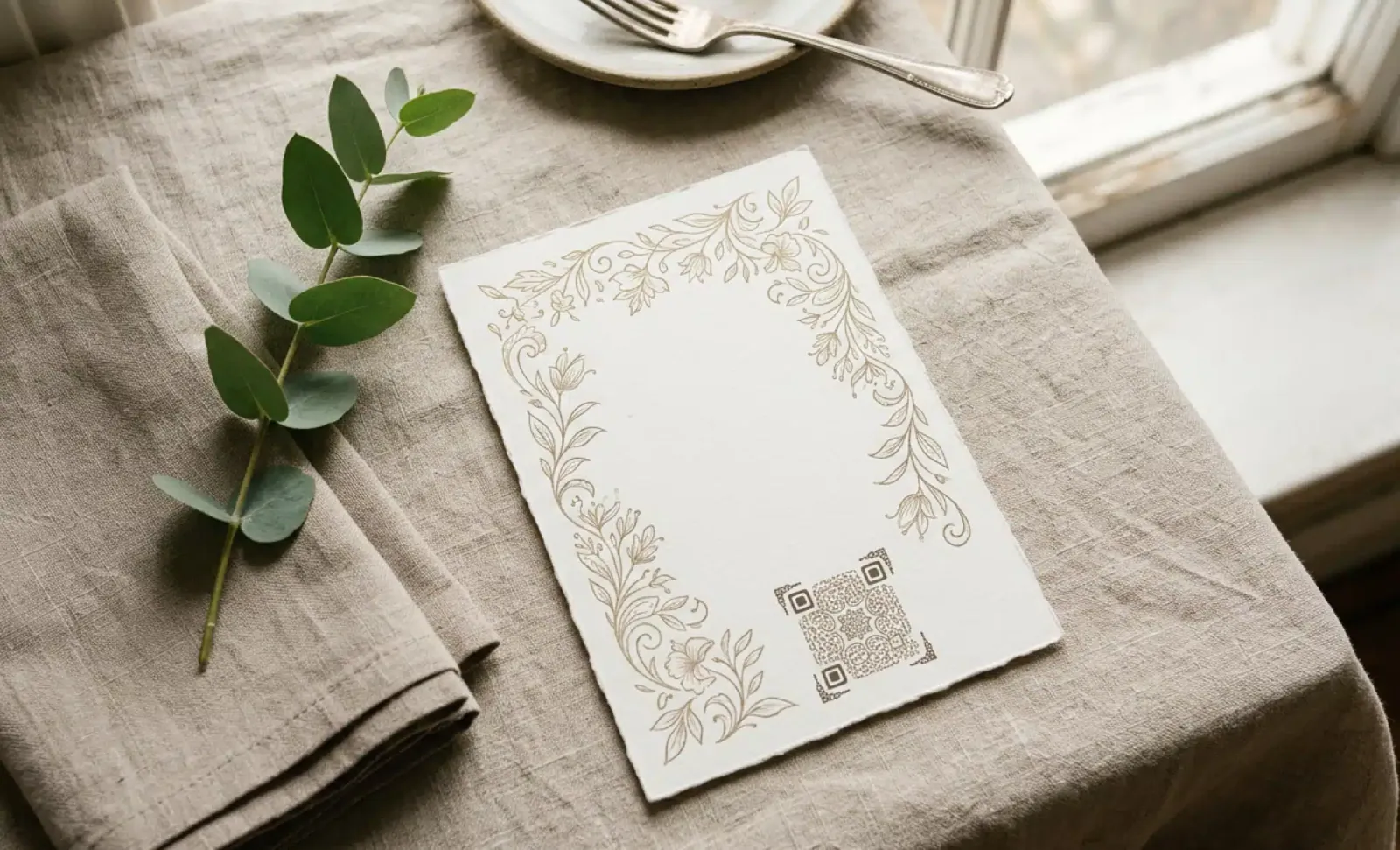
Around July 3, 2026, Taylor Swift and Travis Kelce are reportedly getting married in New York City over the Fourth of July weekend, in what has become one of the most security-conscious celebrations in recent memory. One detail caught the attention of wedding planners more than the guest list. According to press reports, each invitation was individually watermarked with the guest’s first and last name repeated throughout the design, so any photo posted online could be traced back to the person who shared it. The venue was reportedly not printed on the invitation at all. That single idea is why the Taylor Swift wedding QR code discussion is worth a closer look, because the thinking behind it scales down to ordinary weddings, and QR codes can play a quiet but useful part in it.
Why is the Taylor Swift wedding QR code conversation worth couples’ attention?
It matters because it turns wedding privacy from a celebrity problem into a planning decision any couple can make. Reports describe a smaller gathering followed by a much larger celebration, with invitations that name only the city and the date. The watermarking and the hidden venue are not paranoia. They are a clear statement of expectations, and that part is something any couple can borrow.
Most couples will never need street closures or a thousand-person guest list. What translates is the mindset. The couple reportedly decided, in advance, exactly what information would travel and who could share it, then built that decision into the materials guests received. A wedding is a private event held in public view, and this planning simply makes that tension visible. Once you see it, you can make deliberate choices about it, whatever the scale of your day.
What privacy problems show up at almost every wedding?
Almost every wedding leaks something the couple wished it had not. A relative posts ceremony photos before the couple shares their own. A surprise first look reaches a group chat. An RSVP form lands in the wrong inbox, or the home address on a save the date circulates well beyond the guest list. Most couples treat this as background noise. Some want more control.
The friction is rarely dramatic. It is the guest who tags the location, the coworker who shares the dress reveal, the forwarded invitation that quietly turns a curated guest list into an open one. None of it is usually malicious. It happens because the default tools for sharing wedding details are public by nature, and nobody set a clear boundary at the start. The celebrity approach is interesting precisely because it sets that boundary early and makes it legible to everyone holding an invitation.
What does a watermarked invitation say about trust between a couple and their guests?
A watermarked invitation is not an act of suspicion. It is a way of making the couple’s wishes impossible to misread. When your name appears throughout the design, you understand without being told that this moment is not yours to broadcast. The message is gentle but unmistakable: please keep this between us.
That reframes a conversation often described as control. Being a good wedding guest has always meant respecting the couple’s wishes, whether that is a dress code, a seating plan, or an unplugged ceremony. Modern tools just make those wishes clearer and easier to honor. A guest who knows a leak could be traced is less likely to post on impulse, not out of fear, but because the expectation is now obvious. Trust works better when both sides understand the rules.
How does a wedding QR code support privacy and access control?
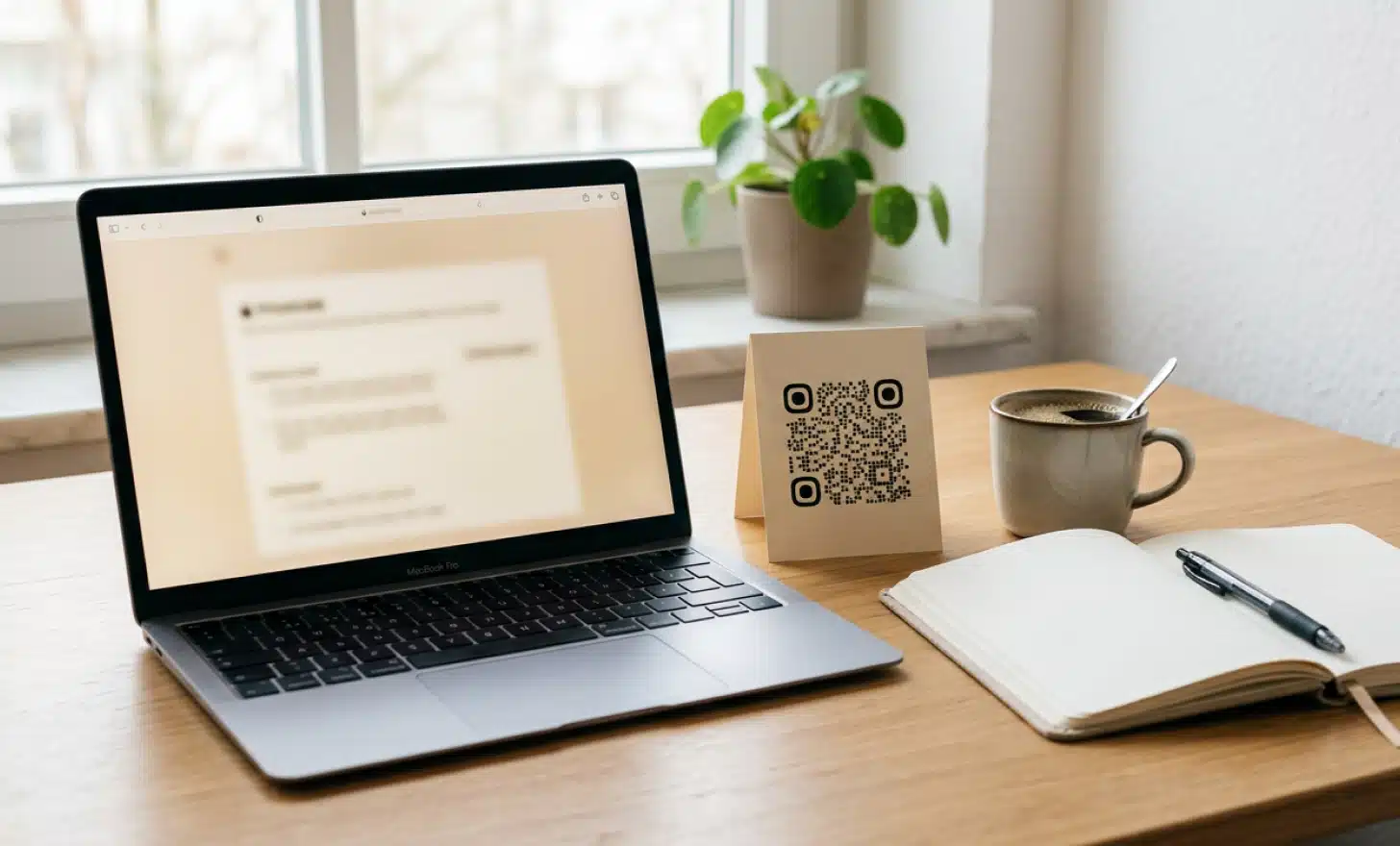
A wedding QR code helps by acting as a private, controllable door to your wedding information rather than a public broadcast. A wedding QR code is a scannable code that connects printed materials like invitations, programs, and place cards to digital content such as RSVP forms, schedules, photo galleries, and registries. Because QRCodeKIT codes are dynamic, the couple can change what a code links to at any time without reprinting anything.
That dynamic quality is what opens up the privacy angle, and it is worth being precise about how. The control lives in two places: the QR code, which decides where a scan goes, and the destination page, which decides what a visitor can see once they arrive. A few practical scenarios show how that combination works. These are illustrative examples, not features of any specific wedding.
Imagine a code printed on the invitation that opens a wedding website protected by a password you share only with invited guests. The venue, schedule, and dress code live behind that page, so the printed invitation can stay vague while the real details stay private. You might create a separate personalized link for each household, so a forwarded screenshot is far less useful to someone who was never invited. You could point a program code to content timed to the event itself, and route photo sharing into a single gallery you own rather than letting images scatter across accounts you cannot reach. Then, once the celebration ends, you redirect or disable the code so the wedding details stop being reachable. The printed code never changes. What sits behind it does.
What can everyday couples borrow from the celebrity wedding playbook?
You can borrow the thinking behind the precautions without the budget. Here are scaled down versions of what the reported planning suggests, framed as ideas to adapt:
- Watermark your digital materials. Adding the recipient’s name across a shared schedule or gallery does at home what physical watermarking did for those invitations, and it signals that the content is personal.
- Keep the venue off the printed invitation. Share only the city and date in print, and put the exact location behind a private wedding website that opens from a scanned code.
- Ask guests for a simple sharing agreement. A short note about what to share and what to hold back, linked from a code, sets expectations before anyone arrives.
- Own the photo flow. Point guests to a controlled gallery you manage rather than relying on images spread across personal accounts.
The point is not to copy a celebrity wedding. It is to notice that each move answers a real question about who sees what, then apply the ones that fit your day.
Put it into practice
Create a dynamic QR code free and see it work. No credit card required.
Get started freeDoes every couple really need this much privacy?
Honestly, no, and pretending otherwise would be silly. Most couples do not need watermarked stationery, a hidden venue, or layered security, and treating a backyard wedding like a state secret would only make guests feel watched rather than welcome. There is real joy in a wedding that spills happily onto social media, and many couples want exactly that.
The lesson is not maximum privacy for everyone. It is intentional privacy for each couple. Some people want their whole day shared widely. Others want the ceremony kept close and the party loose. Most fall somewhere in between. The mistake is drifting to one extreme by default, either total openness because nobody set a boundary, or anxious lockdown because a headline made privacy feel mandatory. The better path is to decide deliberately what you want shared, then choose tools that quietly support that choice. A QR code is one of those tools, useful when it fits and easy to leave out when it does not.
How can couples planning now use QR codes thoughtfully?
Start with intent, then choose the features that match it. If you are planning a wedding now and privacy matters to you, a few simple choices go a long way:
- Use dynamic QR codes so the destination can evolve through planning and switch off afterward.
- Link to a password-protected wedding website if you would rather not publish your venue and schedule openly.
- Give each household its own personalized link if a leak would be especially painful.
- Talk to your guests early about what you hope they will and will not share.
- Route photo sharing into a single gallery you control instead of letting images scatter.
If you want to design your own wedding codes, QRCodeKIT is one option for creating dynamic QR codes you can update at any time. None of this requires technical skill, and none of it has to feel heavy. The goal is a day that reflects your choices, not a security operation.
What does this whole conversation tell us about wedding planning in 2026?
It tells us that privacy has become a mainstream wedding topic in a way it was not a decade ago. This wedding did not invent guest etiquette or photo boundaries, but it pushed them into open conversation. Couples who once never thought about a leak are now asking sensible questions about what travels beyond the room.
Whether or not anyone adopts watermarked invitations, that question is here to stay. The tools will keep improving, and the norms around sharing a wedding will keep shifting. What endures is the simple, useful habit the moment has surfaced: decide what you want to keep close, say so clearly, and let your planning reflect it.
How do I make my wedding invitations private?
Keep sensitive details off the printed piece and put them behind a private link. Print only the city and date, then use a QR code on the invitation that opens a password-protected wedding website where invited guests find the venue, schedule, and dress code. A dynamic code lets you update those details without reprinting and disable them after the wedding.
Can a QR code be tied to a specific guest?
You can create a separate personalized link for each guest or household, so an invitation points to a page made for that recipient. A forwarded screenshot then becomes far less useful to someone who was not invited. With dynamic codes you can also adjust or switch off a destination if circumstances change before the day arrives.
What is a watermarked wedding invitation?
A watermarked wedding invitation embeds identifying information, usually the guest’s name, throughout the design so the couple can trace any leaked image back to the person who shared it. Taylor Swift and Travis Kelce reportedly used this technique on their physical invitations, and a scaled down digital version works for shared galleries and schedules too.
How do I prevent wedding photo leaks?
You cannot prevent every leak, but you can shape the flow. Set expectations with guests early, consider an unplugged ceremony, and route photo sharing into a single gallery you control through a QR code rather than relying on guests’ personal accounts. Owning the gallery means you decide what becomes public and when.
Can I update what a QR code links to after my wedding?
Yes, if it is a dynamic QR code. The printed code stays fixed, but its destination can change at any time, so after the celebration you can redirect a wedding website code to a thank you page or switch off access entirely. That removes the long tail of public exposure that often lingers once the day has passed.
All images and visual content in this article were created using RealityMAX.
Related articles
QR codes for FIFA world cup
QR codes for FIFA World Cup 2026 help bars, restaurants, and small businesses turn match day crowds into loyal customers, with practical ideas to set up today.
QR code for freebies
K-pop fandoms have always made things for each other. Photocards, hand fans, bracelets, washi tape, tiny prints handed across a barrier with a shy smile. A QR…
PDF menu cost
A PDF menu looks free but it is not. See the six components of the real PDF menu cost, a worked yearly example, and how to calculate it for your own restaurant.
Two free dynamic QR codes. Yours forever.
No credit card. No expiry. The original dynamic QR platform since 2009.